Skip to content
AI NEWS JOURNAL
AI, IN PERSPECTIVE

Search AI news

Search headlines, summaries and articles to connect the dots.

Newest first

Manus has just quietly unveiled its 2.0 manifesto.

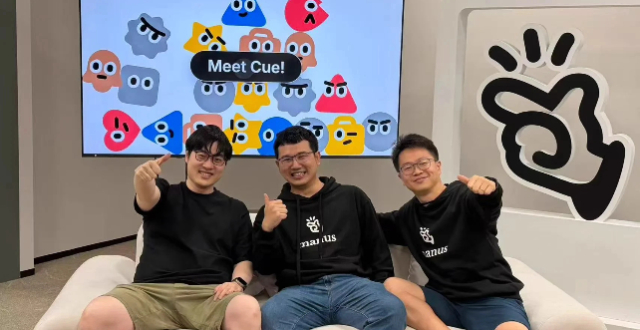
On October 26, Zhang Tao (online alias HideCloud), co-founder and product partner at Manus, recently published a lengthy article on his WeChat official account “Qianyun Sisi,” titled “Transforming Manus with Manus.” The piece opens with an image that left a deep impression on him. He had submitted several requirements and bug reports to an engineer; when he checked back a while later, he found that the engineer’s computer had multiple Codex and Manus sessions running side by side. Clicking on any one of them, he typed in what he had just been working on...

Manus,刚刚悄悄发布了自己的2.0宣言
Timeline and related coverage

Manus has just quietly released its 2.0 manifesto.

On October 26, Zhang Tao (online alias HideCloud), co-founder and product partner at Manus, recently published a lengthy article on his WeChat public account “Qianyun Sisi,” titled “Transforming Manus with Manus.” The piece opens with an image that left a deep impression on him. He had submitted several requirements and bug reports to an engineer; when he checked back later, he found that the engineer’s computer had multiple Codex and Manus sessions open. Clicking on any one of them, he saw that the input was precisely the original requirement he’d just posted on Slack—without a single word changed. Even more surprising to him was that this engineer was simultaneously working on over ten or twenty tasks. At Manus today, this has become the norm. The article is packed with information, but a few key points are especially worth noting. Internally, Manus has created a unified code entry point called Manus-mono, accompanied by a manual designed for AI, enabling the AI system to view the entire project landscape across repositories. With a single request, one person can complete all client-side development. The mobile team has consistently consisted of only seven members, yet they manage two products and four apps, keeping their progress largely in sync with the web version. All product managers have submitted code to Manus, and roughly half of them can independently bring their requirements to production. Some product managers even turn their written requirements into video presentations. Meanwhile, the marketing team now has a “digital colleague” that schedules its own tasks, proactively reminds everyone of project deadlines, and even reaches out across teams to clarify feature details. In September, the company’s per-capita AI spending exceeded $10,000, with a small number of individuals consuming as much as $70,000 to $80,000 in a single month. Zhang Tao dedicated an entire section to addressing external skepticism. The timing of the article’s release is also noteworthy. At the end of September, Manus launched version 2.0 along with its personal AI agent app, Cue; in early October, the parent company Butterfly Effect announced the completion of a new round of financing exceeding $500 million, while simultaneously opening 17 positions in Beijing. Seen against this backdrop, the article reads less like a routine update and more like a manifesto marking the Manus team’s entry into the 2.0 era. It discusses how the organization leverages AI to evolve, while revealing the company’s product roadmap, cost structure, and hiring standards. 01 Manus itself serves as a showcase for 2.0 If you compare the internal practices described in the article with the feature list of Manus 2.0, you’ll find…

Timeline and related coverage

An agent that helps users snatch up iPhone foldable-screen models is reshaping e-commerce in the AI era.

Shopify AI saw transaction orders grow by a factor of 13. In the early morning of October 16, pre-orders began for Apple’s first foldable-screen phone, the iPhone Duo. Priced from $1,999, initial production capacity was tight, and delivery dates quickly slipped to January next year. This time, it wasn’t just people glued to their screens vying for the launch. This year, Agents have become the strictest “parents” to iPhone Duo scalpers. | Image source: Apple On the MacRumors forum, one user who missed out vented their frustration, while on Reddit others boasted about using Muse bots to snatch up multiple units in a single go—before even a human could click, the inventory had already been swept away by AI. Muse is Meta’s personal Agent, launched on September 8; shortly after its debut, it topped the free charts in the U.S. App Store, with downloads soon surpassing 2.5 million. According to Meta, shopping has become one of Muse’s primary use cases. Around the time the iPhone Duo went on sale, Muse even released a new version optimized for this device, with an update note that emphasized making in‑chat shopping more convenient. AI-driven shopping has moved from demo stages at product launches straight into real‑world stock‑picking scenarios. But not every retailer welcomes these new customers. In late September, Amazon began banning Muse. By October, users of Musk’s Grok Bot encountered the same warning when placing orders on Amazon: unauthorized AI agents continuing to access the platform violates Amazon’s terms of service. Meanwhile, another company, Shopify, took the exact opposite approach. On September 21, Shopify CEO Tobi Lütke announced a deep partnership with Muse, enabling Muse to process checkout through Shop Pay across all Shopify stores. And Shopify’s financial reports already show early returns from this strategy: in the first quarter of this year, orders generated via AI search grew nearly thirteenfold year over year, while store traffic driven by AI increased eightfold. Closing doors on one hand, opening them on the other—when more and more purchasing decisions are handed over to Agents, will the question of “whether or not to let Agents in” become…

Timeline and related coverage

Apple responds to iPhone foldable-screen issue: users can apply for a replacement; reports indicate Tencent’s “Green Bubble” short-form series has surpassed 100 million monthly active users; Anthropic may go public next month | Geek Morning Brief

Anthropic publicly filed its Nasdaq IPO application, targeting a listing during the week of November 16. Anthropic has officially embarked on its path to going public. The company, founded just five years ago and at the heart of the generative AI boom, could set a historic record with this IPO. In documents submitted to the U.S. Securities and Exchange Commission (SEC), Anthropic disclosed plans to list on the Nasdaq under the ticker symbol “ANT,” aiming for an IPO during the week of November 16. The company will issue Class T special shares held by Class T directors. In its prospectus, Anthropic reported first-half revenue of $16.29 billion, compared to $1.16 billion in the same period last year; a net loss of $80.75 billion versus $12.97 billion a year earlier; and an operating loss of $693 million, down from $2.14 billion in the prior-year period. As of September 30, no single customer accounted for more than 10% of the company’s revenue over the nine-month period, with 79% of revenue coming from customers outside the top five. On the partnership front, under an agreement with SpaceX AI, Anthropic has committed to cumulative spending of up to $120.5 billion through 2029. The company also revealed that capital expenditures are expected to rise significantly, potentially requiring additional financing sooner than currently anticipated; it will not pay any dividends in the foreseeable future and has not yet entered into any agreements for major acquisitions; furthermore, it may issue convertible notes totaling up to $42 billion. As of September 30, no single customer accounted for more than 10% of the company’s revenue over the nine-month period, with 79% of revenue coming from customers outside the top five. Regarding partnerships, under an agreement with SpaceX AI, Anthropic has agreed to incur cumulative expenditures of up to $120.5 billion through 2029. (Source: Sina Tech) Apple responds to iPhone Duo internal screen cracking issue: only a small number of devices affected, eligible for replacement. Shortly after the iPhone Duo’s launch, some users reported hinge malfunctions causing cracks in the internal display. Apple has now addressed these reports in a statement to MacRumors, stating that only a very limited number of devices are impacted. Apple did not specify the cause of the cracks nor disclose whether it plans to release a repair solution.

Timeline and related coverage

Morning Briefing | Apple responds to cracks in the iPhone Duo’s inner screen / Anthropic files for a public IPO, aiming for the largest IPO in history / Xpeng’s Robotaxi receives approval for Level 4 demonstration operations

· OpenAI releases GPT-6.1 Terra, with API prices cut in half and faster computer performance · Apple officially rolls out iOS 27.2: Apple Music gets a new black-and-white design, and the iPhone Duo now supports the Apple Pencil · Huawei’s Enjoy series has cumulatively shipped over 160 million units #Follow iFanr’s official WeChat account: iFanr (WeChat ID: ifanr) for more exciting content delivered to you第一时间.

Timeline and related coverage

Kimi releases K3.1 Pro, offering more features at a lower price to challenge Opus 5.5.

Author | Yu Hang Yuan Editor | Jing Yu On the morning of October 23, Kimi officially posted a 24-second video on X and its Video Account. The scene shows a retro‑style vintage computer, with Kimi Code running on the screen and lines of Three.js code being typed into the terminal, generating a complex 3D scene. Keen-eyed netizens quickly spotted the answer in the model bar at the top left: “Model: Kimi K3.1.” Kimi’s official teaser video for K3.1 | Image source: X @Kimi_Moonshot Using an antiquated machine to run some of today’s most cutting‑edge 3D code—this stark contrast itself conveys what Moonshot AI is trying to say. A dozen hours later, just after midnight on October 24, right on Programmer’s Day, Kimi K3.1 Pro officially launched, accompanied by a Highspeed version that’s two to three times faster. The company promises that the full model weights will be released before November 4. More than three months have passed since the previous generation, K3, was unveiled. In those three months, Moonshot AI has experienced more than most companies see in an entire year. 01 “More for the same price”—what’s new in 0.1? First, let’s clarify what K3.1 Pro is. It isn’t an entirely new model. Moonshot AI explicitly states that K3.1 Pro is a post‑training variant of K3; the underlying architecture remains unchanged—still a hybrid expert architecture with 2.8 trillion total parameters and 104 billion activation parameters, still featuring a 1 million‑token context window, and still natively supporting image and video inputs. What has changed is the post‑training phase. According to the company, they’ve invested “significantly increased post‑training compute power,” conducting large‑scale joint reinforcement learning across hundreds of downstream tasks. To support this, they completely reengineered the underlying infrastructure—including the reinforcement learning framework, sandbox environment, and long‑context reasoning capabilities. In essence, the same brain has been retrained from scratch on how to perform its tasks. The results are reflected in benchmark scores. On Terminal‑Bench 4.0, which evaluates coding agents, K3.1 Pro achieved 65.7%, surpassing GPT‑6 Astra’s 58.2% and falling short of Claude Opus’s 66.4% by less than one percentage point. As for the previous generation, K3…

Timeline and related coverage

Google’s AI search feature deals a severe blow to the online publishing industry: traffic plummets, lawsuits abound, and compensation mechanisms are only just being explored.

In 2024, Google launched AI Overviews, and in May 2025 it rolled out AI Mode, causing a significant drop in search traffic from Google across several major media outlets—The New York Times saw its share of search traffic fall from 44% to 35.5% over three years. Among DCN members, 19 experienced traffic losses ranging from 1% to 25% in May–June 2025, with DMG Media reporting a peak decline of 89% in click-through rates. Publishers filed multiple lawsuits, but all were dismissed by U.S. judges; Google subsequently introduced an opt-out option, enhanced source attribution, and launched a news AI pilot involving 400 media organizations, along with a content‑paying test program.

Google’s AI search changes upended online publishing

Why it matters:The report systematically examines the structural impact of Google’s AI-powered search feature on the publishing ecosystem, covering a timeline (2024–2025), empirical data (from third-party institutions), responses from multiple stakeholders (publishers, regulators, courts, and nonprofit organizations), and recent countermeasures (opt-out mechanisms, source optimization, and licensing and paid-access pilots). The content is information-dense, timely, and policy-relevant.

Timeline and related coverage

Open WebUI v0.12.4 Released: On-Demand Skill Loading, Context Compression Visualization, and Hundreds of Accessibility Improvements and Bug Fixes

Open WebUI v0.12.4 is a major maintenance release of the open-source large language model frontend, published before the trusted metadata date of 2026-10-25. Key updates include on-demand skill loading (requires enabling the built-in Skills tool and is disabled by default), explicit marking of the context compression process during chat, accessibility enhancements that address over one hundred WCAG compliance issues, and 26 feature fixes and behavioral adjustments verified through GitHub PRs/issues—covering strengthened permission controls and bug fixes for scenarios such as Safari, RTL, and multi-folder support. No new models, APIs, or third-party services were introduced, nor were any performance benchmarks, user data, or regulatory information included.

Timeline and related coverage

AI Graveyard: A Continuously Updated List of Failed AI Projects and Startups

TechCrunch reported on October 25, 2026, reviewing several AI projects from 2023 to 2026 that failed to meet expectations, including startups and products such as Relay, Character.ai, Sora, and Humane AI Pin, as well as failed attempts or major adjustments by major companies like OpenAI, Apple, and Microsoft.

The AI graveyard: a running list of projects and startups that didn’t make it

Why it matters:This report provides an industry‑wide, phenomenon‑driven overview, with broad coverage and a clear timeline (including specific shutdown or delay dates), and cites S&P Global Market Intelligence data to substantiate the high attrition rate—42%—of enterprise‑level AI projects. It combines detailed case studies with structural analysis, making it a highly valuable reference.

Timeline and related coverage

Lighthouse: The First Trusted Digital Assistant Dedicated to the History of the U.S. Civil Rights Movement Has Been Released

The paper arXiv:2610.30158v1, published on October 24, 2026, introduces Lighthouse, the first digital assistant dedicated to exploring the history of the U.S. Civil Rights Movement, based on archival data from South Carolina. Its core innovation lies in adopting trustworthy content and user harm mitigation as design principles, employing a neuro-symbolic hybrid architecture that integrates large language models with rule-based symbolic reasoning.

Lighthouse: On Building a Trustworthy Digital Assistant for Exploring History with Civil Rights Archives

Why it matters:This study is the first to apply AI‑assisted historical exploration to the sensitive and pivotal period of the Civil Rights Movement, explicitly introducing dual constraints—“trustworthiness” and “harm modeling”—which set it apart from general‑purpose chatbots. Its methodology (neurosymbolic integration), evaluation approach (including a human‑consensus‑based gold standard for subjective questions), and data scale (over 18,000 original archival documents) all hold significant academic demonstrative value.

Timeline and related coverage

1Password launches the “AI Proxy Login” feature: AI can log in to accounts on behalf of users, without ever accessing their passwords.

On October 22, 2026, 1Password launched a new platform called “1Password for Agents,” which allows users to authorize AI agents—such as Claude Duet, ChatGPT Work, Grok Bot, and others—to log into their personal accounts on their behalf. The agents themselves cannot access, store, or view the original passwords; the entire process relies on digital identity verification, real-time user confirmation, and automatic password filling by the password manager.

Timeline and related coverage

Flint-interactive: An interactive data visualization programming language for AI agents

Microsoft Research has unveiled Flint-interactive, a domain-specific language for building highly expressive, semantically rich interactive data visualizations. Its compiler automatically maps user interactions—such as clicks and brush selections—to semantic events and uses high-level operators to drive coordinated updates across multiple elements, including charts, tables, and text, significantly reducing the cost and development complexity of creating reliable interactive visualizations with AI agents.

Timeline and related coverage

The U.S. nonprofit organization U.S. Hunger leverages Amazon QuickSight to make data-driven decisions in addressing hunger.

U.S. Hunger leveraged the AWS Social Entrepreneur Accelerator to integrate with Amazon QuickSight, consolidating multi-source operational data—from Impact Manager, NetSuite, Salesforce, and more—into the SPICE in-memory engine. This enables leadership to directly explore applicant profiles, share KPI definitions, and analyze policy impacts, with plans to build an enterprise‑level KPI framework by Q4 2026. Its data practices emphasize AI augmenting human judgment rather than replacing expert expertise.

Timeline and related coverage

Claude Mods: The first implementation of an attention interface, a human-programmable agent interaction layer

Claude Mods is Anthropic’s programmable plugin system for Claude Code, representing an early form of the “Attention Interface”—it shifts the traditional machine-oriented agent harness toward a customizable interaction layer centered on human attention. Users can write Mods in TypeScript/JS or have Claude generate them automatically using natural language, thereby determining when to be interrupted, what content to see, and what decisions to make.

Timeline and related coverage

Claude Mods: A programmable attention interface that reshapes the collaboration paradigm between humans and AI agents

Claude Mods is a programmable plugin system for developers launched by Anthropic, marking a shift of the ‘agent harness’ from a machine-side interface to a human-side interface—namely, the ‘Attention Interface’. It enables users to customize Claude Code’s behavior, rendering, and interaction logic via TypeScript/JavaScript, thereby facilitating co-design workflows between humans and AI. This mechanism has already been applied to built-in features (such as You Should Know) and supports users in building plugins themselves or having them generated with Claude’s assistance.

Timeline and related coverage

Smartsheet launches the Model Context Protocol (MCP) server, enabling AI agents to connect directly to real-time project data on AWS.

Smartsheet has officially launched the general‑purpose Model Context Protocol (MCP) server, which uses a standardized protocol to enable AI agents to read and write structured data—such as project tables, rows, columns, and automations—in Smartsheet. The service is now available within the AWS ecosystem, supporting access from two types of clients: Amazon Quick, aimed at business users, and Kiro, designed for developers. This allows for natural‑language‑driven cross‑tool task updates, status synchronization, and context‑aware development.

Timeline and related coverage

AWS releases a technical preview: Amazon Quick and Bedrock AgentCore enable the construction of governable, conversational supply chain intelligence systems.

AWS has launched a modular agent architecture based on the Model Context Protocol (MCP), leveraging AgentCore to standardize enterprise‑level tool interfaces. Amazon Quick provides a natural‑language interaction interface for business users, enabling real‑time, approval‑driven supply chain decision support across ERP, procurement, monitoring, and other systems. This solution is currently in technical preview and is not guaranteed to be production‑ready or available for customer deployment.

Timeline and related coverage