Skip to content
AI NEWS JOURNAL
AI, IN PERSPECTIVE

Search AI news

Search headlines, summaries and articles to connect the dots.

Newest first

A roundup of the most anticipated AI-powered wearable devices in 2026: over ten new models, including Bee, Friend, Limitless, and more, make their debut.

On October 25, 2026, TechCrunch published a review summarizing more than ten AI-powered wearable devices, including Bee, Friend, Limitless, Muse Charm, Nirva, Omi, Plaud NotePin, Rabbit R1, Stream Ring, and others, covering their pricing, functional positioning, market availability, and privacy controversies.

The hottest AI wearables and gadgets you should know about

Why it matters:This report is an annual roundup of new products published by the authoritative tech media outlet TechCrunch on October 25, 2026. It covers both mainstream AI hardware manufacturers and startups, providing a comprehensive overview in terms of price, form factor, core features, release timelines, and points of contention. All statements are based solely on facts explicitly stated in the source material, with no speculation or extrapolation.
Timeline and related coverage

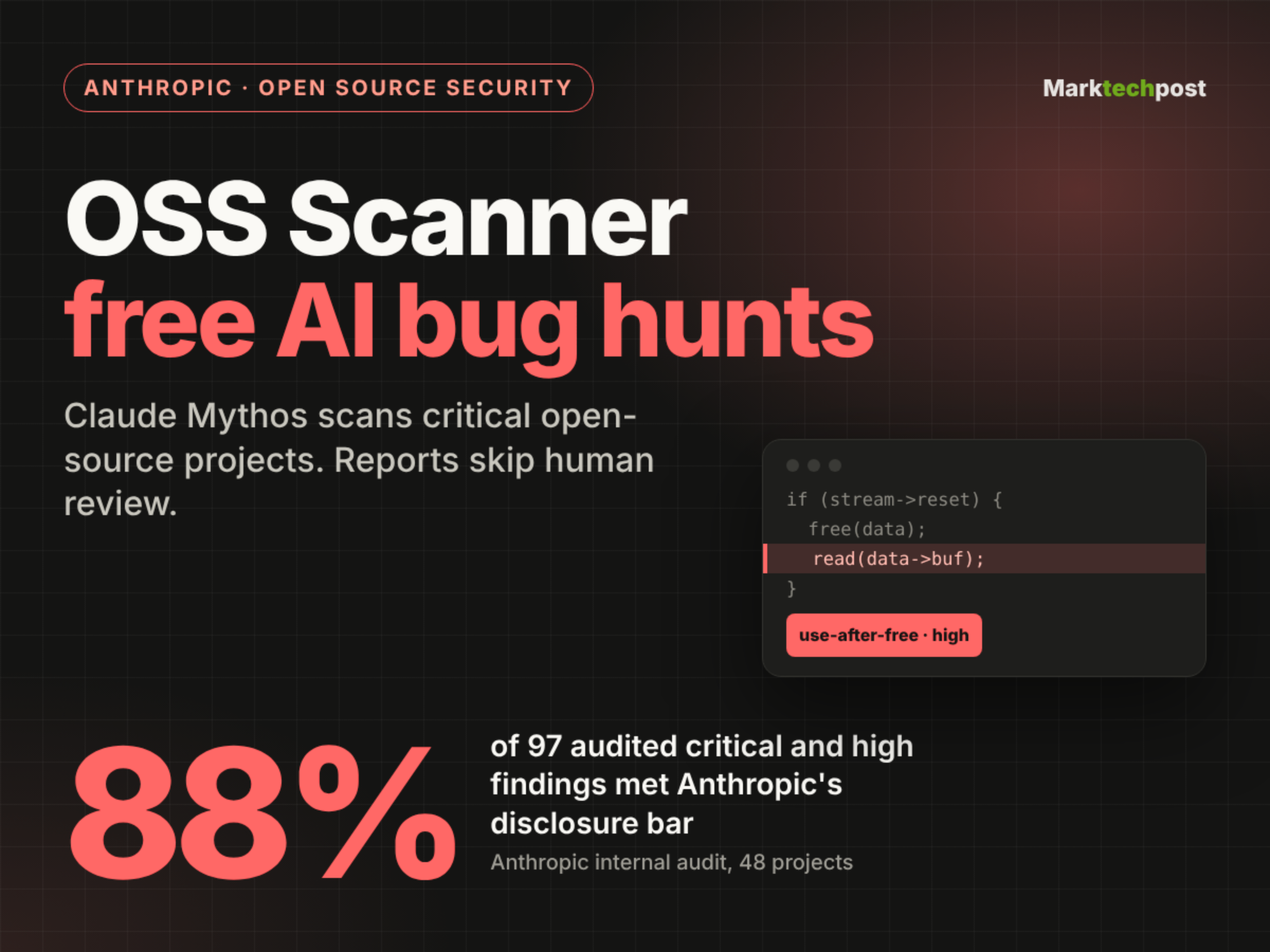
Anthropic launches OSS Scanner, a free AI-powered vulnerability scanner for critical open-source projects.

Anthropic launched OSS Scanner on October 8, 2026—a free, opt-in AI vulnerability-scanning tool powered by strong models such as Claude Mythos, designed specifically for critical open-source projects. As of October 19, it had onboarded 114 projects and, within 11 days, reported 77 high-severity and 803 medium-severity vulnerabilities (according to model ratings), with 88% of sampled audit results meeting its disclosure standards.

Anthropic Launches OSS Scanner, a Free AI Vulnerability Scanner

Why it matters:This tool represents a large-scale implementation of LLMs in the open-source security domain, characterized by zero cost, full automation, and offline auditing; however, bypassing the human review stage introduces risks of false positives and duplicate issues. Its accuracy metrics—88% detection rate and 1% false positive rate—and real-world project feedback (e.g., wolfSSL, curl) provide an empirical benchmark for the current state of AI‑driven vulnerability discovery.

Timeline and related coverage

Kimi releases K3.1 Pro: Terminal task capabilities top the charts, with simulation debugging and multimodal programming showcasing the nascent form of embodied intelligence.

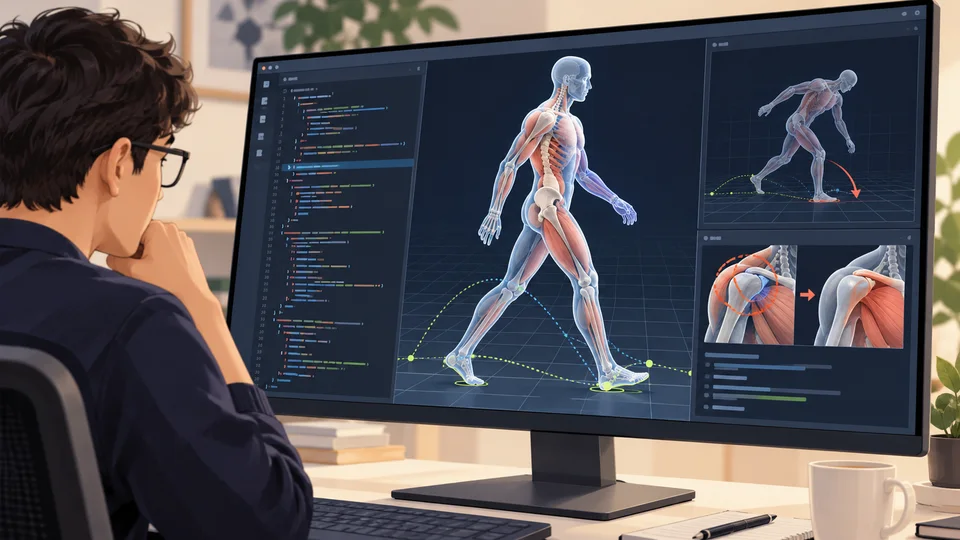
On October 25, 2026, Kimi released the K3.1 Pro model, which ranked first in the Terminal-Bench 4.0 terminal task benchmark with a 67.2% success rate. Its capabilities—including autonomously fixing emulator errors, performing physics simulations, conducting audio analysis, constructing 3D scenes, and editing videos—point toward exploring pathways in embodied intelligence technology.

根据报道中的虚拟人行走训练和模拟器调试制作的编辑示意,非软件实拍截图

Why it matters:The material is based on a hands-on test report published with authorization from Titanium Media, covering authoritative third-party benchmark data (such as Artificial Analysis and Terminal-Bench 4.0), official self-test results, and the author’s multi-scenario functional validation. It highlights the K3.1 Pro’s substantial advancements in execution performance, simulation closed-loop capabilities, and multimodal programming, while clearly noting performance limitations and undisclosed information (e.g., Flash/Ultra has not yet been released), in compliance with fact-checking and source attribution requirements.

Timeline and related coverage

Panel manufacturers are collectively raising prices to cope with upstream cost pressures driven by AI, but downstream acceptance remains low, putting pressure on end-product quality control.

Starting in September 2026, panel manufacturers such as TCL CSOT, BOE, and HKC have issued price‑increase notices one after another. The primary reason is the rapid growth of AI large models, which has led to a sharp surge in demand for HBM, squeezing capacity for mature‑process chips and driving up the prices of key components like driver ICs, PCBs, and glass substrates. Upstream suppliers, including Corning, have also raised their prices in tandem. Despite clear cost pressures, downstream TV and monitor brands have yet to broadly increase purchase prices, while end users continue to report frequent quality‑control issues such as overheating and black spots. As a result, these price hikes have not yet translated into actual sales or improved user experiences.

AI大模型狂飙,面板行业也扛不住了

Why it matters:The materials system reveals the cross‑chain transmission mechanism through which the AI industry impacts indirectly related hardware sectors—rather than driving panel demand directly, it triggers a full‑chain cost repricing via the reallocation of wafer‑fabrication capacity. At the same time, it highlights a significant gap between price‑increase behavior and actual market feedback (price rigidity, declining shipments, and user complaints), underscoring the deep‑seated contradiction between industry bargaining power and product competitiveness.

Timeline and related coverage

Microsoft open-sources Agensh: a decentralized framework that supports 1024 autonomous, collaboratively operating AI coding agents.

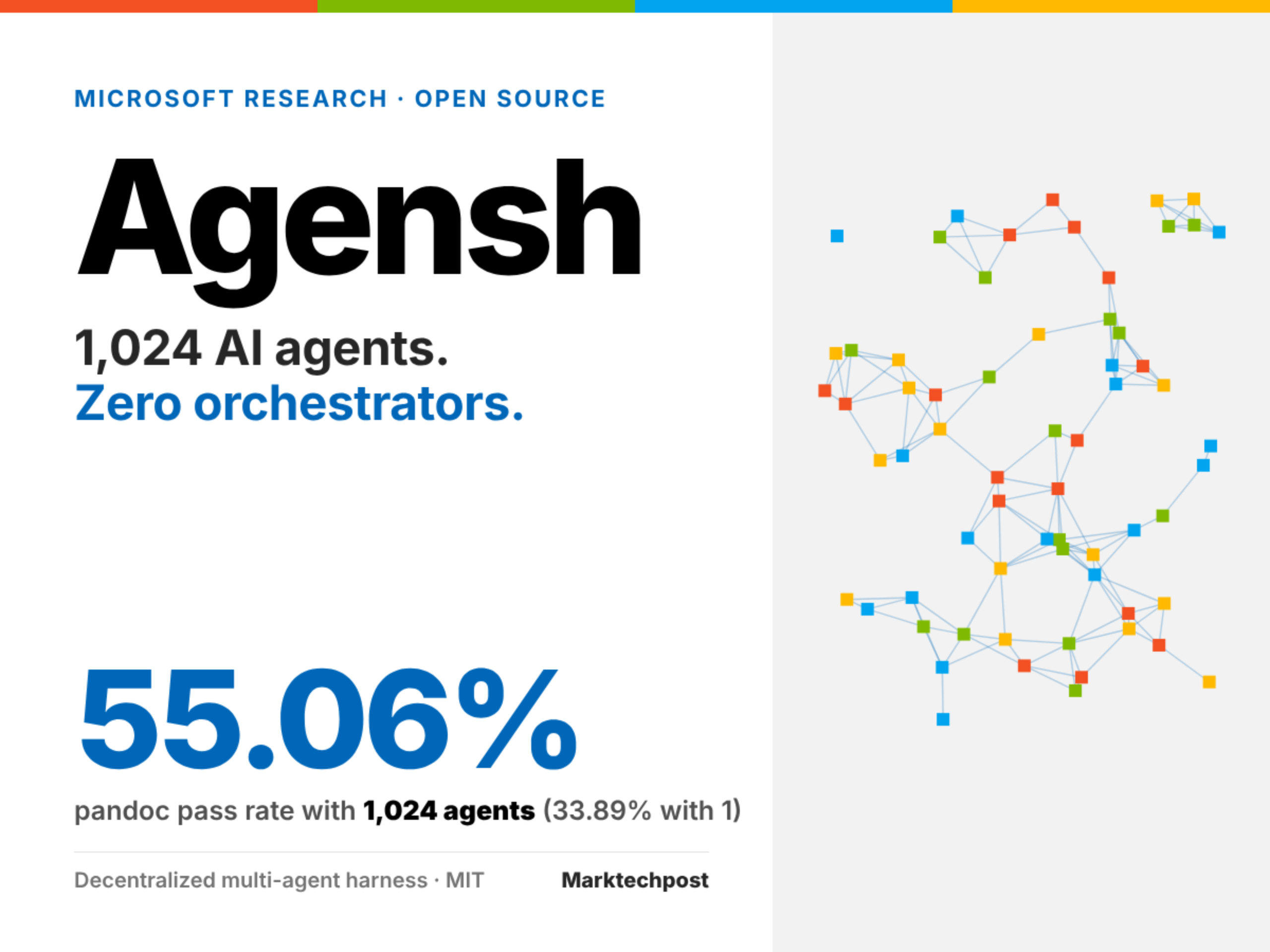
On October 25, 2026, Microsoft Research open-sourced Agensh, a multi-agent runtime framework that operates without a central coordinator, enabling 1 to 1,024 LLM-powered coding agents to self-organize and collaborate on ProgramBench. The system achieves decentralized coordination through shared dashboards inspired by Gitea, Mattermost, and DeLM, with all agents following the same prompt-driven five-step loop; its scalability has been validated in a Linux + Docker environment.

Microsoft Open-Sources Agensh: A Multi-Agent Harness for 1,024 Agents

Why it matters:This achievement represents a significant evolution in multi-agent system architectures—abandoning the traditional “master‑agent” paradigm and enabling large‑scale self‑organization through prompt engineering and lightweight service composition. Empirical results on ProgramBench (e.g., 128 agents achieving a 49% improvement in task load balancing across five tasks) establish a new benchmark for distributed AI engineering. Released under the MIT License and compatible with mainstream single‑agent tools such as Copilot CLI, it offers valuable guidance for practical development.

Timeline and related coverage

Taking on NVIDIA head-on to challenge Apple—Microsoft’s high-end AI PC gamble

Microsoft is courting local AI developers and high-end creators with the Surface Laptop Ultra, which features NVIDIA RTX Spark. The hardware brings large-capacity unified memory, CUDA, and RTX graphics capabilities to a portable device, but whether it can sustain competition against Macs will still depend on app optimization, agent-based experiences, and real-world workflows.

Why it matters:Ultimately, this competition comes down to whether on-device AI can genuinely boost creativity and development efficiency, and whether the associated costs—hardware, software, and migration—are justified. Hardware opens up new possibilities, but the ecosystem and real-world user experience determine how many users those possibilities can reach.

Timeline and related coverage

Apple’s first foldable-screen iPhone, the Duo, has already experienced widespread screen cracking shortly after going on sale.

Multiple users have reported that Apple’s first foldable smartphone, the iPhone Duo, develops screen cracks and splits right above the hinge shortly after unboxing, with failures occurring at a high rate. Cases have been documented in both Australia and China, reportedly due to tolerances in the hinge assembly. Apple has yet to issue an official response, and the outcome of the after-sales service assessment will determine whether the device will be replaced free of charge or require costly out-of-pocket repairs.

Why it matters:The incident involves widespread early‑stage quality issues with a new device, directly challenging the boundaries between consumer rights and corporate responsibility. Coupled with public concerns about the applicability of the “three‑guarantee” regulations and the positioning of AppleCare+ services, it carries significant warning implications and serves as a valuable reference for rights protection.

Timeline and related coverage

Sebastian Raschka has released an eight-video course titled “Building a Reasoning Model from Scratch.”

On October 24, 2026, Sebastian Raschka published an eight-part, over-11-hour hands-on video course on Python and PyTorch in Ahead of AI magazine (magazine.sebastianraschka.com), systematically covering the evaluation of inference models, scaling during inference, reinforcement learning (RLVR), and knowledge distillation, with all methods implemented using the pre-trained Qwen3-0.6B model.

Why it matters:This course is the author’s advanced technical educational offering, following “Building Large Language Models from Scratch.” It focuses on the core evolutionary direction of today’s mainstream LLMs—enhancing inference capabilities—covering the entire technical pipeline from setting up the foundational environment to GRPO reinforcement learning and self‑distillation. The author explicitly states that all implementations are “hand‑crafted from scratch,” fully reproducible, and highly instructive with significant engineering reference value.

Timeline and related coverage

Anthropic open-sources the OS-level sandbox sandbox-runtime: providing container-free file and network isolation for AI agents.

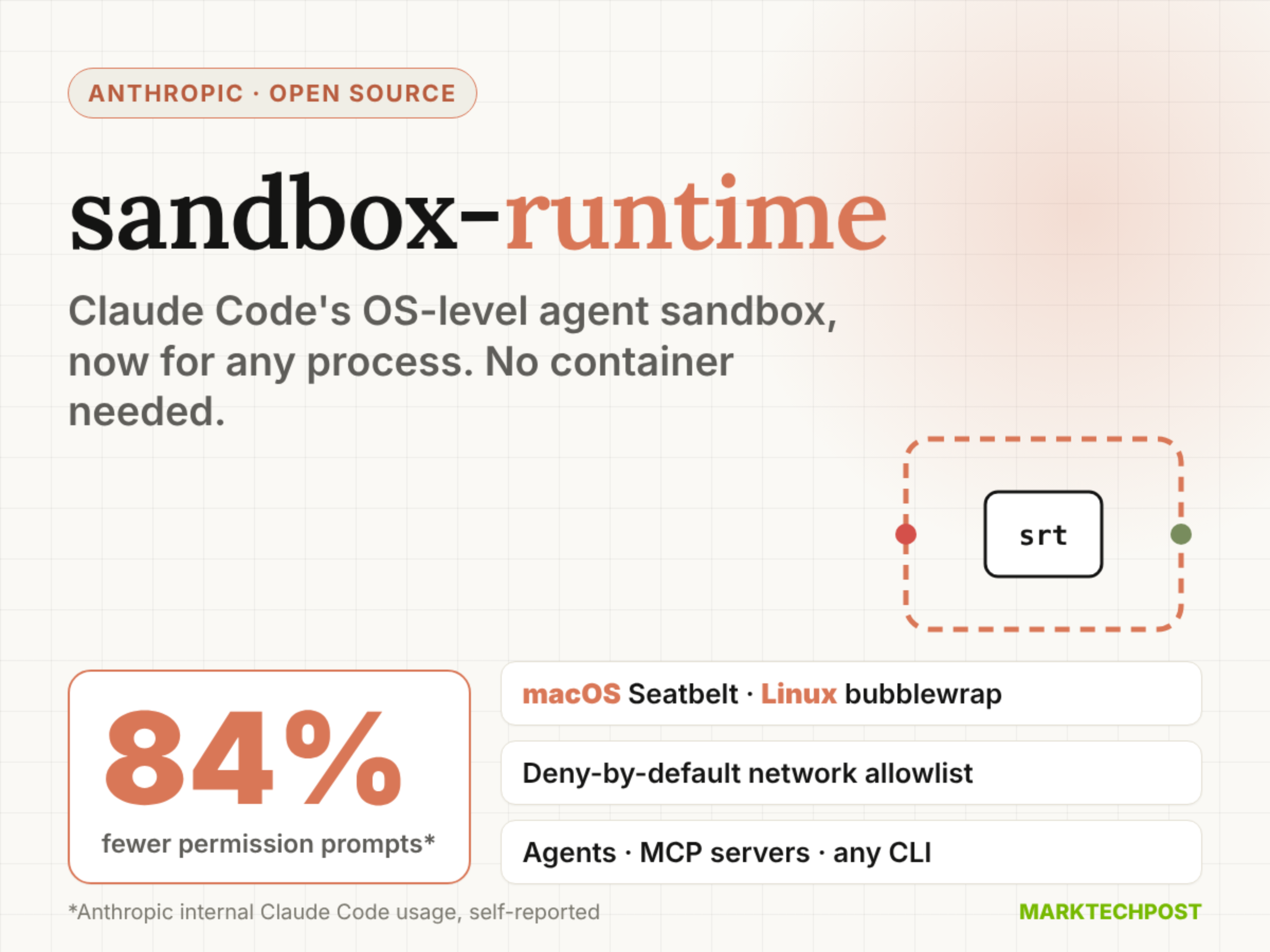
On October 24, 2026, Anthropic open-sourced sandbox-runtime (srt), an OS-level sandboxing tool that operates without containers, designed to restrict file read/write and network access permissions for AI agents, MCP servers, and CLI tools. It supports macOS (Seatbelt), Linux (bubblewrap), and Windows (alpha), with npm package version 0.0.81 under the Apache-2.0 license.

Meet Anthropic’s sandbox-runtime: OS-Level Sandboxing for AI Agents, No Containers

Why it matters:This tool represents a significant advancement in AI security infrastructure—achieving fine-grained, full-process-tree coverage through the operating system’s native isolation mechanisms, directly addressing the risks of prompt injection and privilege escalation, and has already been deployed for internal validation within Claude Code.

Timeline and related coverage

Letta platform releases a tutorial on building stateful engineering collaborators: supporting core memory, shared state, and portable workflows.

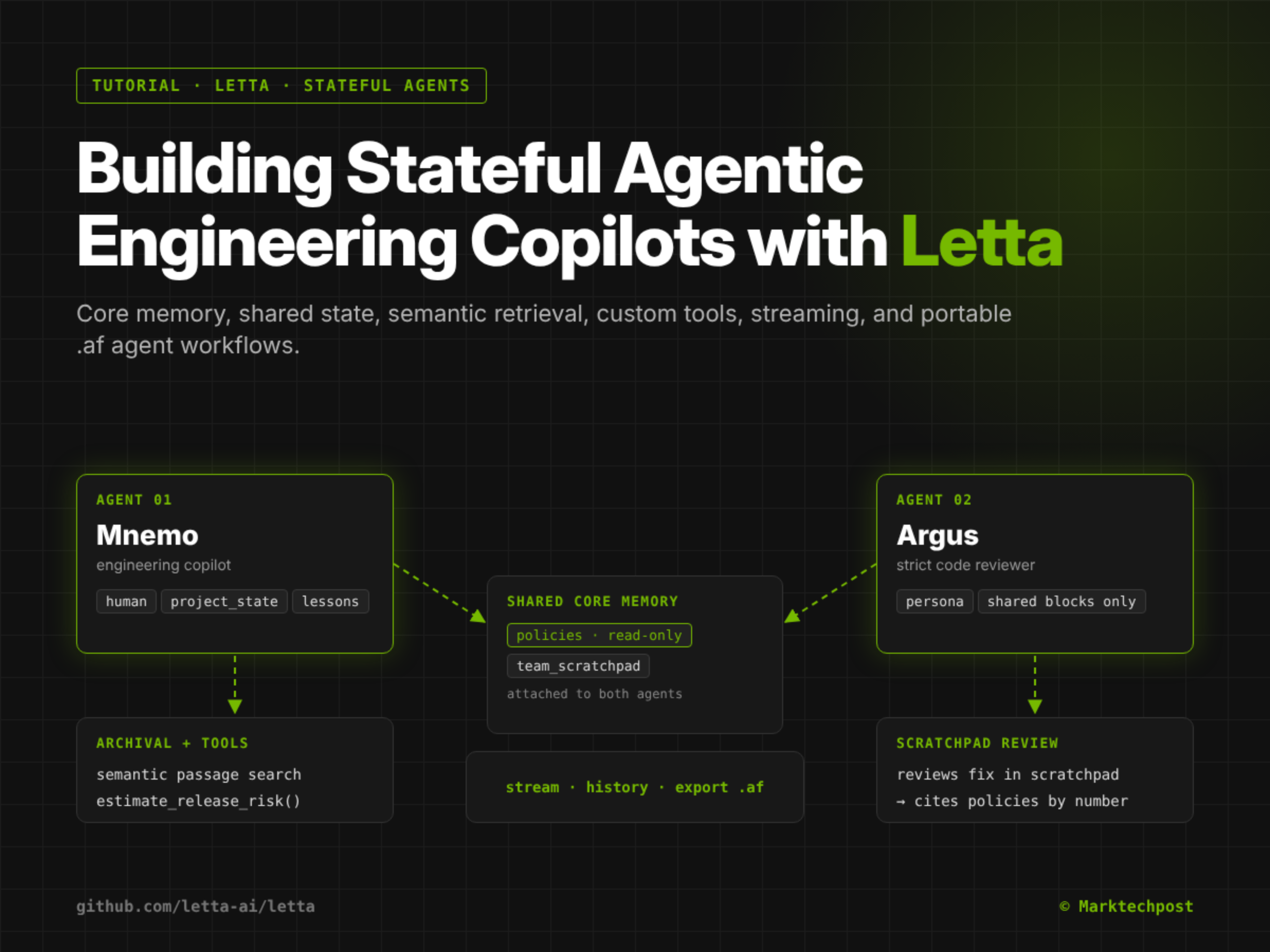
MarkTechPost published a tutorial on October 24, 2026, detailing how to build an agentic copilot with persistent state using the Letta framework. The guide covers capabilities such as verifiable core memory, multi-agent shared memory, semantic retrieval of archived knowledge, custom Python tool integration, streaming responses, and .agent format (.af) export. The content serves as a technical practice guide and does not provide performance metrics, security audits, or production‑environment validation.

Stateful Agentic Engineering Copilots with Letta: Core Memory, Shared State, Semantic Retrieval, Custom Tools, Streaming, and Portable Agent Workflows
Timeline and related coverage

NVIDIA has released the open-source small language model Nemotron 3.5 Bolt E4B 4GB, optimized for on-device voice assistants, game NPCs, and robots.

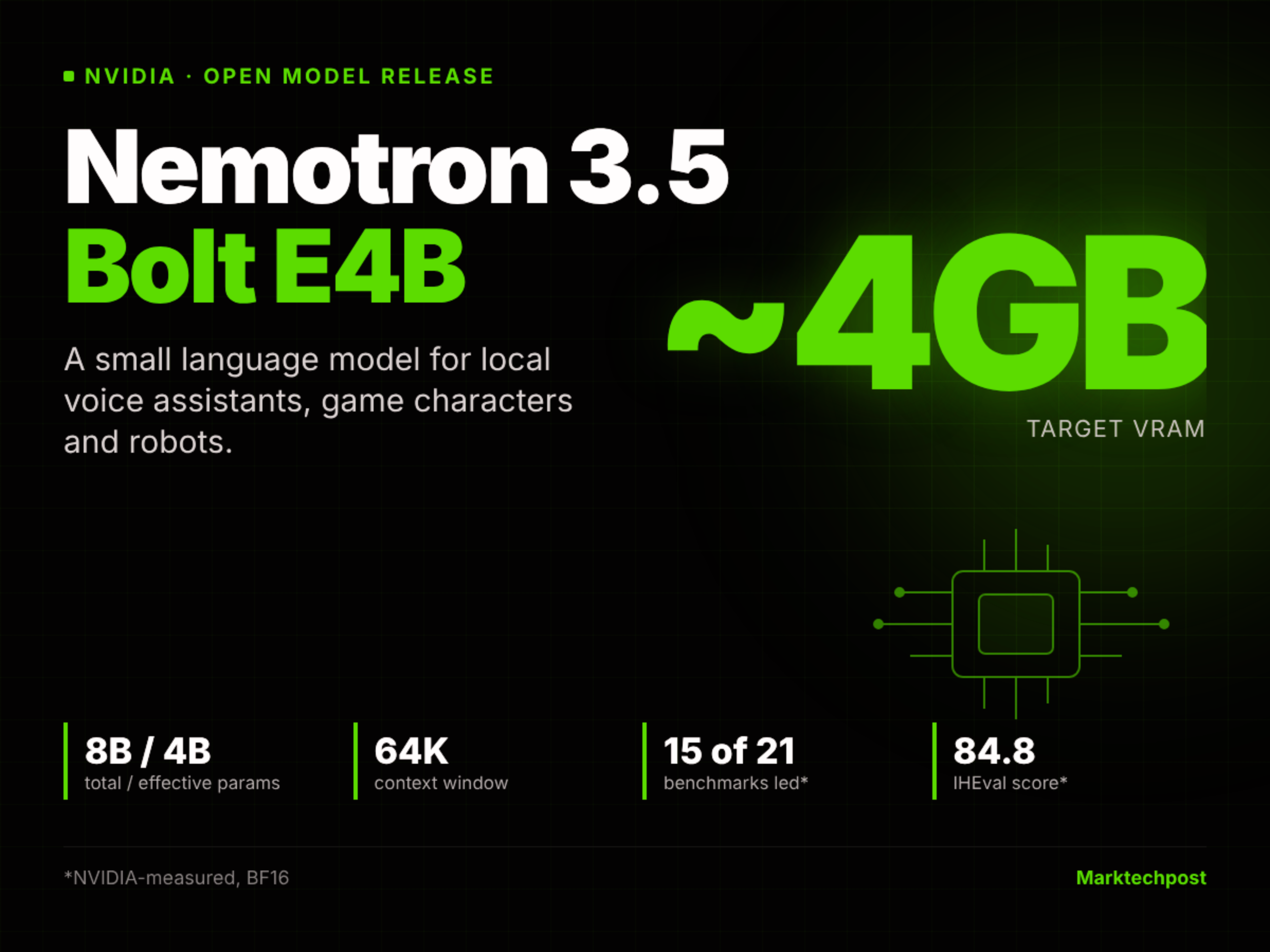
NVIDIA, leveraging Google’s Gemma 4 E4B model and employing only reinforcement learning (RL) for post-training, has launched Nemotron 3.5 Bolt E4B 4GB—a small open-source language model with 8B total parameters, 4B effective parameters, and a 64K context window. It is designed to run on edge devices such as RTX and Jetson with approximately 4GB of VRAM, supporting multi-turn tool calls and low-latency voice interaction.

NVIDIA Releases Nemotron 3.5 Bolt E4B 4GB: An Open Small Language Model for Local Voice Agents, Game Characters and Robots
Timeline and related coverage

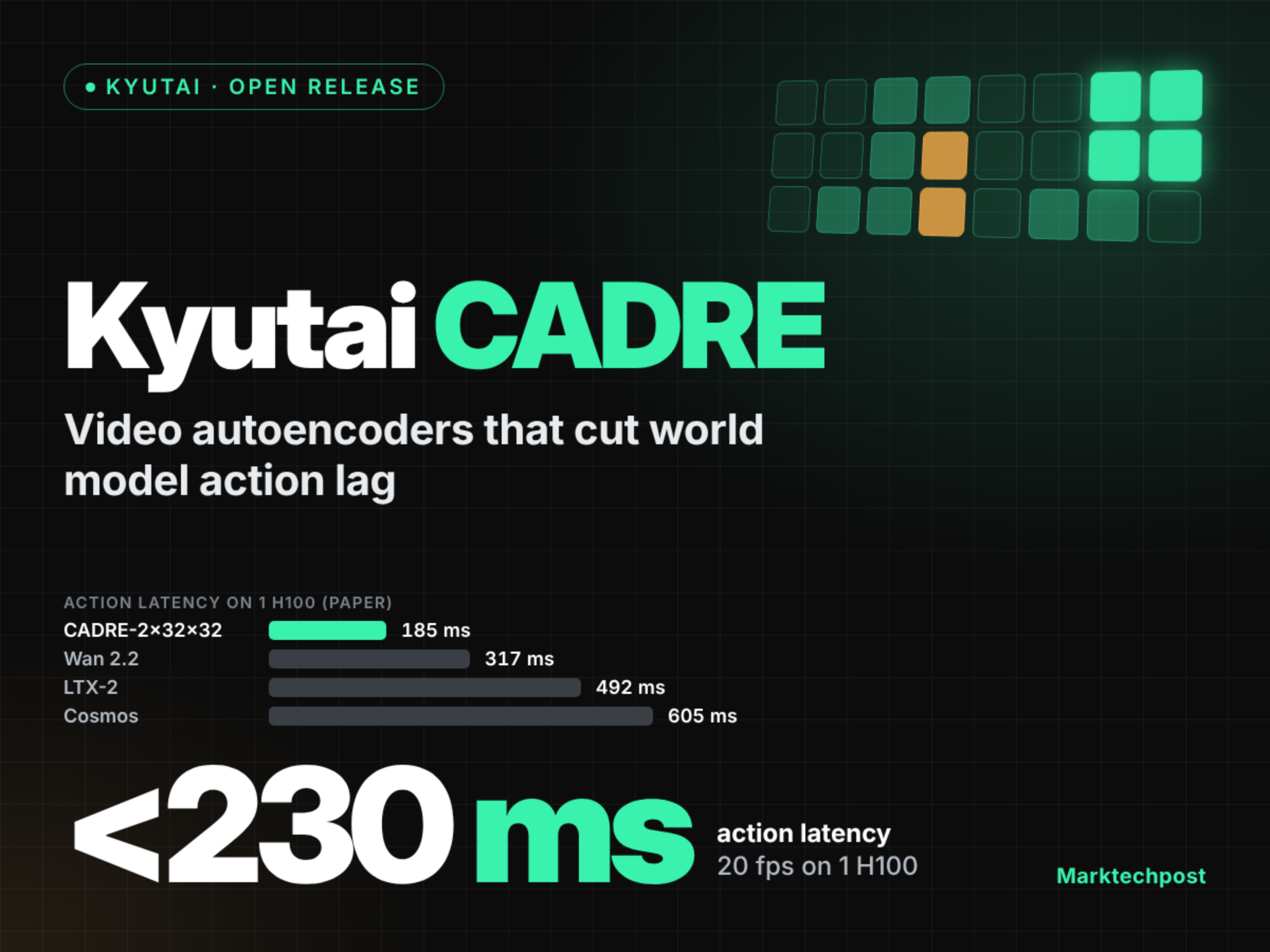
Kyutai releases the CADRE video autoencoder family: designed for interactive world models, with end-to-end action latency reduced to below 230 milliseconds.

On October 23, 2026, Kyutai unveiled CADRE—a family of seven open-source causal diffusion-based video autoencoders designed to reduce action latency in world models. On a single H100 GPU, measured response latency was as low as 185 ms, with inference throughput reaching 23.4 fps, and the scene FVD metric dropping to 162.6 (compared to 599.7 for Wan 2.2). However, in robotic manipulation tasks, its action following rate (ARR) lagged behind both Wan 2.2 and Cosmos.

Kyutai CADRE: Video Autoencoders That Cut World Model Lag Below 230 ms
Timeline and related coverage

Amazon SageMaker AI has launched a Multi-Step Reinforcement Learning (MTRL) framework, supporting end-to-end training of agents to accomplish multi-step tasks.

AWS has launched the Multi-Turn Reinforcement Learning (MTRL) feature, enabling users to train large‑model agents on SageMaker AI using full task trajectories and final outcome feedback, without requiring step‑level annotations. A end-to-end demonstration is provided using Wordle as an example, covering AgentCore deployment, data preparation, GRPO training, reward design, and cost analysis.

Timeline and related coverage

Bayer Crop Science has built the multi-agent decision-making engine ADE based on Amazon Bedrock AgentCore.

Bayer Crop Science has built the Agentic Decision Engine (ADE) on Amazon Bedrock AgentCore—a natural-language multi-agent platform for breeding experts, analysts, and researchers—as an enhancement layer rather than a replacement for its existing Connected Decision Engine (CDE). The system is now live in production, serving over 100 R&D users and enabling approximately 80% of issues to be resolved independently through 22 domain-specific agents and about 20 API tools.

Timeline and related coverage