








THE NEXT THING, IN PERSPECTIVEIndependent AI news

The latest AI news, in focus.

Official announcements and industry reporting. Follow the timeline of AI.

Today's news

News feed
When Traction Becomes Personal Exposure: What The Joonko Guilty Plea Means For Founders
01 / IN FOCUS

Former Joonko CEO Pleads Guilty to Securities Fraud: False Customer and Revenue Statements Result in Personal Liability for the Founder

Crunchbase AI
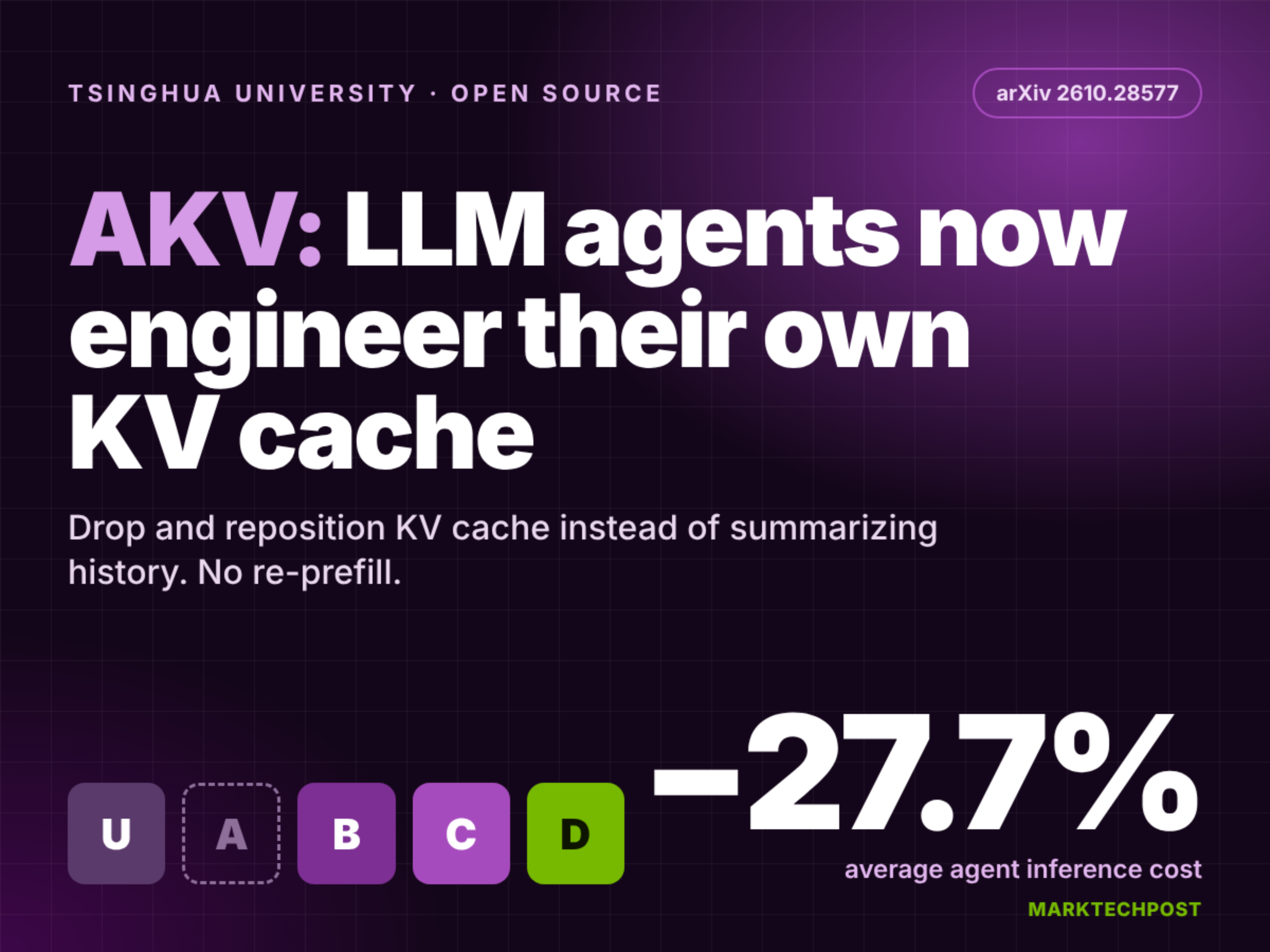
Tsinghua AI Open-Sources AKV, a Cache Engineering Server for LLM Agents on SGLang
02 / IN FOCUS

Tsinghua University and The Chinese University of Hong Kong jointly open-source AKV: an engineering service system for KV caching tailored to LLM agents.

MarkTechPost
Multi modal perceived conversation success prediction for spontaneous autistic and non-autistic dyadic interactions
03 / IN FOCUS

The study proposes a multimodal approach to predict the successful perception of dyadic conversations between individuals with and without autism.

arXiv cs.CL
Rethinking Structured Generation: Can Graph-Based Reasoning Resolve Ambiguity?
04 / IN FOCUS

The study proposes a new paradigm of fuzzy-aware structured generation driven by graph reasoning.

arXiv cs.CL
An Agentic Approach with Evidence-Grounded Verification for Multimodal Emotion Reasoning in Conversation
05 / IN FOCUS

A new arXiv paper proposes an intelligent agent framework for traceable multimodal emotion reasoning, supporting evidence verification and prompt repair without weight updates.

arXiv cs.CL
Knowledge Graphs Quality Assessment in the Era of LLMs: A Conceptual Framework
06 / IN FOCUS

The study proposes a knowledge graph quality assessment framework for the era of large language models.

arXiv cs.CL
Validating the Comparison, Not Just the Scorer: Why Overall Accuracy Can Mislead in Interactive LLM Evaluation
07 / IN FOCUS

In LLM evaluation, relying solely on the overall F1 score to validate automated scorers carries the risk of misleading results: a new study underscores the need to calibrate for prompt-specific differences.

arXiv cs.CL
From Target Selection to Condition Reuse: Auditing Residual Interventions in Tool-Use Models
08 / IN FOCUS

Research reveals that activation interventions struggle to achieve conditional reuse in tool usage models.

arXiv cs.CL
MisconceptDialogue: Evaluation Criteria Shape Measured Success in LLM Math Tutoring
09 / IN FOCUS

New research reveals serious measurement bias in LLM-based math tutoring assessments: exact-match scoring underestimates effectiveness by nearly 40 percentage points.

arXiv cs.CL
AI NEWS × FOXAIFind your next step

From the latest news to tools that work for you.

Explore AI tools

Discover AI tools

Swipe to explore →
ClaudeAI Assistants & Search

Claude is an AI assistant launched by Anthropic that can assist with writing, reading materials, analyzing data, and programming through conversation, and can organize some tasks into editable documents, spreadsheets, or presentation files. It’s ideal for individuals and teams who want to connect their ideas, materials, and drafts.

WritingAnalysisProgrammingFree entry availableView details
GeminiAI Assistants & Search

Gemini is Google’s AI assistant, which can assist with writing, planning, organizing information, and analyzing uploaded files through conversation. It can also use Deep Research to retrieve information on a topic and generate research reports.

Q&AWritingAssistantPricing unverifiedView details
MidjourneyImage Generation & Editing

Midjourney is an AI-powered creative tool that generates visual artworks from text and reference images. On the web-based Create page, you can enter prompts, compare generated versions, and then continue creating using features such as variations, editing, upscaling, or converting images to video.

Image GenerationText-to-imageVisual CreativityPaidView details
KreaImage Generation & Editing

Krea is an AI visual creation workspace that can generate images from text or reference images, compare different models and variants, and then perform editing, detail enhancement, and upscaling. It also provides access to video and other creative tools.

Image GenerationVideo3DPricing unverifiedView details
RunwayVideo & Animation

Runway is an AI platform that integrates video generation, visual editing, and creative workflows. Starting from text, images, or existing clips, users can generate or modify shots, then extend, upscale, and export them—serving concept shorts, advertisements, and other visual productions.

Video generationCreative VideoVisual CreationFree entry availableView details
SunoMusic & Audio

Suno is an AI music platform that creates songs from text descriptions, lyrics, and reference materials. Users can generate vocal tracks or instrumental music, then use features like editing, remixing, and audio track separation to further produce and share their creations.

Music generationsongAudioFree entry availableView details
ElevenLabsSpeech & Transcription

ElevenLabs is a platform that offers AI-powered voice generation, audio creation, and voice-enabled agents. Creators can produce voiceovers, audiobooks, podcasts, and localized content, while developers can leverage its APIs to integrate speech synthesis, transcription, and conversational capabilities.

VoiceoverText-to-SpeechVoice Intelligence AgentFree entry availableView details
Notion AIOffice & Productivity

Notion AI is an AI assistant integrated into Notion workspaces, designed to search team knowledge, generate and edit pages, manage databases, and organize meeting notes. By leveraging the context of your workspace and connected apps, it helps you complete information retrieval, content organization, and follow-up tasks all within the same working environment.

Knowledge BaseDocumentOfficeFree entry availableView details
GammaOffice & Productivity

Gamma is an AI-powered tool for creating presentations, documents, web pages, and visual content. It can generate content starting from a goal, an outline, or existing materials, and then refine the final output through conversational prompts, layout adjustments, and free-form editing.

PPTPresentationDocumentFree entry availableView details
CursorCoding & Development

Cursor is an AI programming product designed to support software development tasks, assisting with code planning, modification, testing, and review within the code context, and offering usage options such as desktop, command-line, and cloud-based agents.

ProgrammingCodeAI IDEFree entry availableView details

AI, as it happens

942 published stories
Research & methods · 243 storiesClear filters ×
2026-10-24
Follow the timeline
12:00

AQL-Lite Released: An Efficient Continuous Pre-training Framework for Modern Standard Arabic

On October 24, 2026, arXiv published paper 2610.30344v1, introducing the AQL-Lite framework, which significantly enhances the adaptability of multilingual large models to Modern Standard Arabic (MSA) through quality-first data filtering and continuous pre-training of selected parameters (CPT).

Why it mattersThis study directly addresses key challenges in training large Arabic-language models—namely, the abundance of noisy data, dialectal diversity, and the high costs associated with continuous pre-training—by proposing a reproducible, lightweight, and cost-effective technical approach, which has been validated on multiple authoritative Arabic-language benchmarks. All conclusions are based on the experimental setup and results explicitly reported in the paper, without any external extrapolation.
Training, tuning & alignmentRead original Timeline and related coverage
12:00

Natural language autoencoders can effectively verbalize activation differences in large models, supporting model differentiation and interpretability research.

A paper published on October 24, 2026, on arXiv (arXiv:2610.30934v1) systematically evaluates the generalization capabilities of natural language autoencoders (NLAs) in representing differences across activation spaces, with experiments demonstrating robust performance across four dimensions: compositionality, fine-tuning model adaptation, fine-tuning target recovery, and model-difference specialization.

Why it mattersThis study is based on four reproducible experimental designs, covering four large language models from three families, and provides the most systematic evidence of generalization to date in the emerging interpretability direction of verbalization. All conclusions are strictly confined to the experimental settings and observed results reported in the paper and do not extend to untested model sizes or tasks.
Training, tuning & alignmentRead original Timeline and related coverage
12:00

The study proposes a new evaluation method and model to address annotation disagreements in identifying unstated arguments (enthymemes) within politically contentious discourse.

This paper, based on tweet data related to vaccination and immigration—each tweet independently annotated by five raters—finds that existing fine-tuned models consistently achieve an F1 score of around 0.67 on the enthymeme detection task. To address this, the authors propose abandoning the single-label evaluation paradigm in favor of a new metric that captures the distribution of annotators’ opinions, and they design a model capable of directly predicting this distribution, thereby better capturing human judgmental divergence without compromising the F1 score.

Why it mattersThe paper squarely confronts the long-neglected reality in NLP that “annotator disagreement is an essential characteristic”—particularly in politically sensitive contexts, where identifying enthymemes relies heavily on subjective reasoning. Its methodological shift—from point prediction to distributional prediction—and its empirical demonstration of the limitations of discourse‑structural analysis carry clear implications for the design of content‑moderation systems: models trained on majority‑vote criteria may systematically overlook implicit arguments that require deep contextual inference.
Training, tuning & alignmentRead original Timeline and related coverage
12:00

New research reveals that AI content moderation systems exhibit linguistic and cultural biases: the misclassification rate for African American English is as high as twice that of standard English.

An arXiv paper published on October 24, 2026 (ID 2610.31047v1) points out that current automated safety systems rely on lexical‑level features to assess harm, leading to systemic biases: African American English (AAE) is flagged as “offensive” up to twice as often as other English varieties; well‑known drag queen accounts are rated as more toxic than white supremacist accounts; and safety practices that work in English completely fail in low‑resource languages.

Why it mattersThis study, based on an empirical evaluation protocol, covers five open-source systems and 11 languages, encompassing a total of 55 system–language combinations. It finds that 93% of these combinations fail to achieve native-speaker-level performance in hazard function recognition; moreover, improvements in model capabilities have inadvertently widened the protection gap across languages, highlighting a crisis in algorithmic fairness. The source is the arXiv preprint server, with a clearly stated publication date (2026-10-24), and the content focuses on verifiable technical flaws and cross-language empirical findings.
Papers & researchRead original Timeline and related coverage
12:00

Research comparing the search-space complexity and efficiency of CTC and neural transcription models.

The paper was published on October 24, 2026, on arXiv (ID 2610.31259v1), and systematically compares the search-space complexity and inference efficiency of two types of end-to-end speech recognition (ASR) models—connectionist temporal classification (CTC) and neural transducer—under various pruning strategies and language-model configurations.

Why it mattersThe paper, based on empirical analysis, points out that although end-to-end ASR models typically maintain a small search space most of the time, they exhibit significant transient spikes in the number of hypotheses during periods of speech uncertainty; dynamic score-based pruning can adapt to model uncertainty, substantially reducing the real-time factor (RTF) and providing practical guidance for efficient search.
Papers & researchRead original Timeline and related coverage
01:48

Amazon SageMaker AI has launched a Multi-Step Reinforcement Learning (MTRL) framework, supporting end-to-end training of agents to accomplish multi-step tasks.

AWS has launched the Multi-Turn Reinforcement Learning (MTRL) feature, enabling users to train large‑model agents on SageMaker AI using full task trajectories and final outcome feedback, without requiring step‑level annotations. A end-to-end demonstration is provided using Wordle as an example, covering AgentCore deployment, data preparation, GRPO training, reward design, and cost analysis.

Training, tuning & alignment# Official# TutorialsRead original Timeline and related coverage
2026-10-23
Follow the timeline
02:01

IskayPet builds a multilingual enterprise knowledge assistant based on the Amazon Bedrock-hosted knowledge base.

Spanish pet-care company IskayPet leveraged Amazon Bedrock Managed Knowledge Bases to build an enterprise-grade knowledge assistant—covering Spain, Portugal, and France, and supporting four languages (Spanish, Portuguese, French, and English)—without needing to develop its own RAG infrastructure. The assistant supports business scenarios such as retail, veterinary care, onboarding, and procurement.

RAG & knowledge systems# Official# TutorialsRead original Timeline and related coverage
00:00

Flint-interactive: An interactive data visualization programming language for AI agents

Microsoft Research has unveiled Flint-interactive, a domain-specific language for building highly expressive, semantically rich interactive data visualizations. Its compiler automatically maps user interactions—such as clicks and brush selections—to semantic events and uses high-level operators to drive coordinated updates across multiple elements, including charts, tables, and text, significantly reducing the cost and development complexity of creating reliable interactive visualizations with AI agents.

Papers & research# Official# ResearchRead original Timeline and related coverage
2026-10-22
Follow the timeline
10-22

IBM releases the Granite time-series integration forecasting model: a four-model, zero‑fine‑tuning ensemble that delivers a robust default forecasting solution.

IBM Research has released the open-source Granite Timeseries Ensemble (v1), which integrates four types of pre-trained architectures—PatchTST-FM-r1/r2, FlowState, and Tiny Time Mixers—and supports probabilistic ensemble forecasting with zero fine-tuning. By default, it employs equal-weight probabilistic pooling (Probabilistic Ensemble), while also offering an IQR-based adaptive weighting scheme (IQR Ensemble). On the GIFT-Eval benchmark (as of the October 20, 2026 snapshot), its point forecast error (MASE = 0.683) slightly outperforms that of the best single model, with significantly improved overall robustness.

Training, tuning & alignmentRead original Timeline and related coverage
10-22

OlmoEarth v1.3 Released: A High-Performance Open-Source Satellite Embedding Model for the Global Surface

The Allen Institute for AI has released OlmoEarth v1.3, offering planet-wide satellite embedding vectors at 10-meter resolution in both 64-dimensional and 128-dimensional formats, along with the interactive exploration tool Embeddings Explorer. It supports zero-code change detection, similar-region retrieval, and lightweight classification modeling.

Papers & researchRead original Timeline and related coverage
00:23

AI-assisted “blind-scan” ultrasound technology supports maternal and child health care at the grassroots level: A multi-center, prospective study validates its cross-regional generalizability.

Google’s research team, in collaboration with clinical institutions, conducted a prospective multicenter study that demonstrated an AI‑driven “blind‑scan” ultrasound protocol—using low‑cost, portable probes operated by non‑ultrasound specialists—achieved gestational age assessment accuracy comparable to expert‑level ultrasonic biometry in both Chicago and Nairobi (mean absolute error of 4.18 days vs. 4.48 days), without requiring local data fine‑tuning. This offers a viable pathway to expand prenatal ultrasound coverage in resource‑limited settings.

Training, tuning & alignment# Official# ResearchRead original Timeline and related coverage
00:00

A 31-year-old unsolved problem in mathematics, the KLS conjecture, has been proven: a fundamental breakthrough has been achieved in high-dimensional geometry and the theory of randomized algorithms.

On October 4, 2026, Zhang Xinzhi, a researcher at Microsoft Research, together with his collaborators, completed a rigorous proof of the Kannan–Lovász–Simonovits (KLS) conjecture, thereby resolving a long-standing central problem that had remained open since its formulation in 1995. This achievement establishes a dimension-independent constant bound for the “plane‑cut bottleneck” in high-dimensional log-concave distributions, providing an unconditional theoretical foundation for random sampling, convex optimization, and theoretical computer science.

Papers & research# Official# ResearchRead original Timeline and related coverage
2026-10-21
Follow the timeline
18:45

Google Cloud and NVIDIA have announced the official commercial availability of the NVIDIA Vera Rubin infrastructure: A5X instances are now live, focusing on large-scale reinforcement learning and agent reasoning.

Google Cloud and NVIDIA have announced that the A5X instances, built on the Vera Rubin architecture, will officially go commercial starting next month, initially available in the United States and later expanding to Europe. The platform integrates NVL72 GPUs, ConnectX-9 SuperNICs, the Virgo network, and fourth-generation liquid cooling technology, and is specifically designed for high-density computing workloads such as large-scale reinforcement learning and generative agent inference.

Training, tuning & alignment# OfficialRead original Timeline and related coverage
10-21

NVIDIA releases Kumo Forecast: a multivariate forecasting model that integrates pre-trained time-series representations, historical pattern retrieval, and interpretability.

NVIDIA has launched the open-source time-series forecasting model Kumo Forecast (formerly NV-Tesseract Forecasting), which is built on the MOMENT-1-large Transformer architecture. It supports both direct prediction and dual-path inference via Domain-Aware Representation and Retrieval (DARR), and includes a built-in interpretability framework that requires no modifications to the model structure.

Training, tuning & alignmentRead original Timeline and related coverage
Every update links back to its source.
STAY CURIOUS. STAY INFORMED.

Stay informed about the changes that matter.

Give your curiosity direction. Make every day of reading count.

Subscribe via RSS