Skip to content
AI NEWS JOURNAL
AI, IN PERSPECTIVE

Search AI news

Search headlines, summaries and articles to connect the dots.

Newest first

The compilation rules for four indices, including the Shanghai Composite Index, will be adjusted starting today; the State-owned Assets Supervision and Administration Commission has outlined plans to deepen state-owned enterprise reform; S&P’s new regulations will affect $375 billion in funds.

Starting October 26, 2026, the SSE Composite Index, the SSE A‑Share Index, the SSE Free‑Float Index, and the STAR 50 Index will officially implement their revised compilation methodologies, introducing a new cap of 15% on the weight of any single constituent. On October 23, the State-owned Assets Supervision and Administration Commission of the State Council emphasized the need to steadily advance the implementation of the latest round of state‑owned asset and state‑owned enterprise reform tasks. On the same day (October 25), S&P Dow Jones Indices announced adjustments to its growth/value stock classification criteria; the new rules will take effect on December 21, impacting approximately $375 billion in passive investment funds.

Why it matters:The three policy and market‑rule changes all exhibit significant timeliness and systemic impacts: the index‑weighting red line directly affects the stability of A‑share core benchmarks; the SASAC’s statement reflects the central government’s urgent plan to tackle tough challenges in state‑owned enterprise reform; and S&P’s rule overhaul reshapes the logic of value investing, with implications amounting to hundreds of billions of dollars—making it a key variable in the global capital markets. All information is drawn from an authoritative, comprehensive report published by TMTPost on October 25, 2026, with clearly verifiable timelines, entities, measures, and impact figures.

Timeline and related coverage

Apollo’s chief economist says AI delivers “zero financial return” to U.S. companies outside the tech industry.

Thorsten Sløk, Chief Economist at Apollo Global Management, analyzed the S&P 493 (the S&P 500 excluding seven tech giants) and found that non-tech firms’ profit margins are on par with per-capita revenue, with no evidence that AI has boosted productivity. He noted that AI lacks an understanding of key business factors such as accountability, trust, and corporate culture, and therefore has yet to deliver financial returns.

AI delivers ‘zero financial payoff’ to most companies, Apollo economist says

Why it matters:This view is based on empirical observations of the mainstream listed‑company universe (S&P 493), citing specific data ranges and limitations (excluding seven technology firms such as Alphabet and Amazon), and aligns with the findings of several recent studies, offering a verifiable analytical framework with clearly defined attribution boundaries.

Timeline and related coverage

A roundup of the most anticipated AI-powered wearable devices in 2026: over ten new models, including Bee, Friend, Limitless, and more, make their debut.

On October 25, 2026, TechCrunch published a review summarizing more than ten AI-powered wearable devices, including Bee, Friend, Limitless, Muse Charm, Nirva, Omi, Plaud NotePin, Rabbit R1, Stream Ring, and others, covering their pricing, functional positioning, market availability, and privacy controversies.

The hottest AI wearables and gadgets you should know about

Why it matters:This report is an annual roundup of new products published by the authoritative tech media outlet TechCrunch on October 25, 2026. It covers both mainstream AI hardware manufacturers and startups, providing a comprehensive overview in terms of price, form factor, core features, release timelines, and points of contention. All statements are based solely on facts explicitly stated in the source material, with no speculation or extrapolation.

Timeline and related coverage

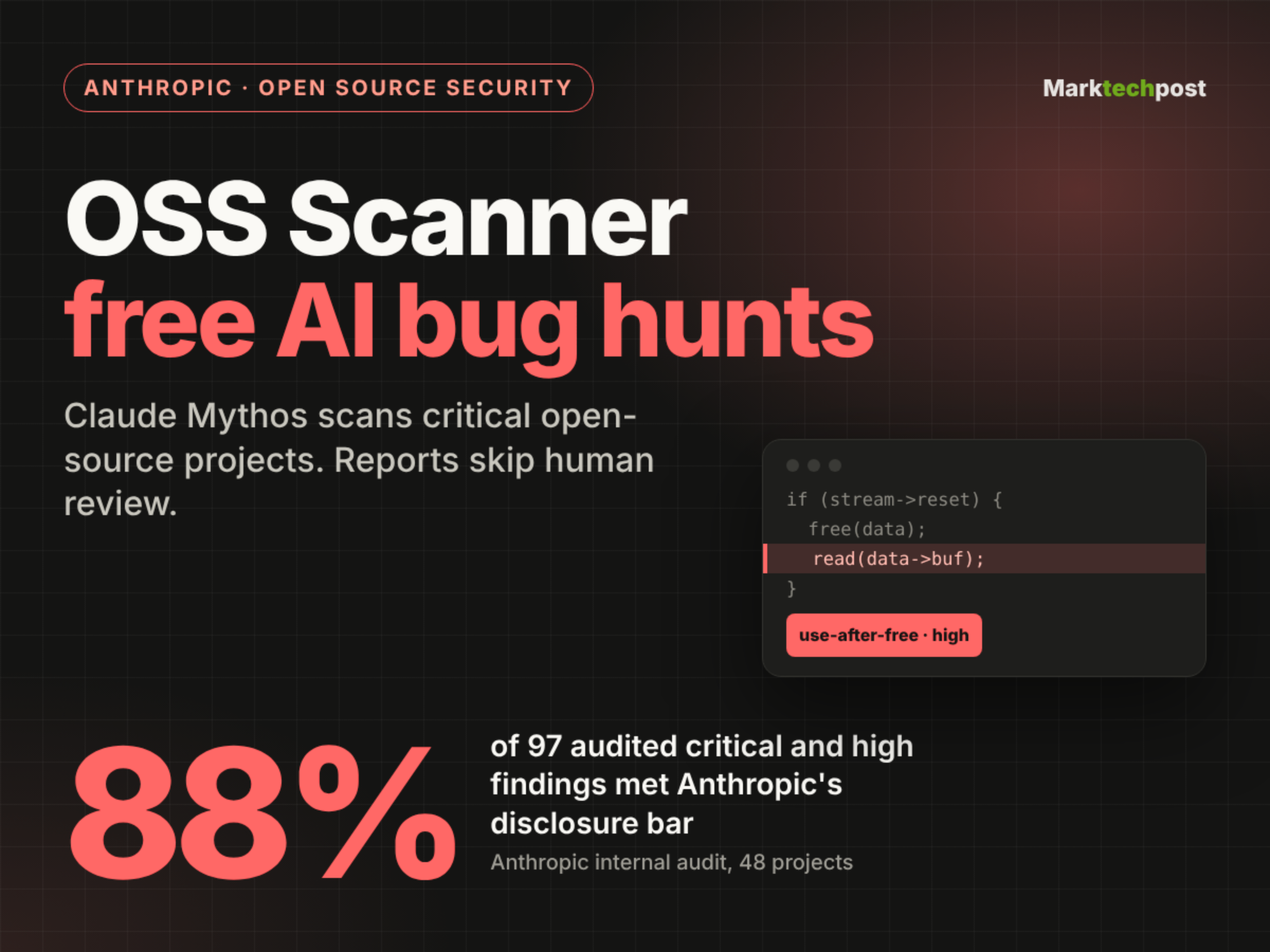
Anthropic launches OSS Scanner, a free AI-powered vulnerability scanner for critical open-source projects.

Anthropic launched OSS Scanner on October 8, 2026—a free, opt-in AI vulnerability-scanning tool powered by strong models such as Claude Mythos, designed specifically for critical open-source projects. As of October 19, it had onboarded 114 projects and, within 11 days, reported 77 high-severity and 803 medium-severity vulnerabilities (according to model ratings), with 88% of sampled audit results meeting its disclosure standards.

Anthropic Launches OSS Scanner, a Free AI Vulnerability Scanner

Why it matters:This tool represents a large-scale implementation of LLMs in the open-source security domain, characterized by zero cost, full automation, and offline auditing; however, bypassing the human review stage introduces risks of false positives and duplicate issues. Its accuracy metrics—88% detection rate and 1% false positive rate—and real-world project feedback (e.g., wolfSSL, curl) provide an empirical benchmark for the current state of AI‑driven vulnerability discovery.

Timeline and related coverage

Low-Cost Intelligence vs. Expensive Ambitions: DeepInfer, DSX POD, and AI Investment Expansion

Issue 958 of “The Sequence Radar” examines inference software, modular AI factories, and enterprise AI investments side by side: cheaper per-inference does not necessarily mean lower overall industry spending. This article is compiled from the original publication and supplemented with technical scope and delivery terms based on DeepSeek and NVIDIA’s official materials.

推理软件效率与模块化AI基础设施投入的编辑示意,非实际产品照片
Timeline and related coverage

Kimi releases K3.1 Pro: Terminal task capabilities top the charts, with simulation debugging and multimodal programming showcasing the nascent form of embodied intelligence.

On October 25, 2026, Kimi released the K3.1 Pro model, which ranked first in the Terminal-Bench 4.0 terminal task benchmark with a 67.2% success rate. Its capabilities—including autonomously fixing emulator errors, performing physics simulations, conducting audio analysis, constructing 3D scenes, and editing videos—point toward exploring pathways in embodied intelligence technology.

根据报道中的虚拟人行走训练和模拟器调试制作的编辑示意,非软件实拍截图

Why it matters:The material is based on a hands-on test report published with authorization from Titanium Media, covering authoritative third-party benchmark data (such as Artificial Analysis and Terminal-Bench 4.0), official self-test results, and the author’s multi-scenario functional validation. It highlights the K3.1 Pro’s substantial advancements in execution performance, simulation closed-loop capabilities, and multimodal programming, while clearly noting performance limitations and undisclosed information (e.g., Flash/Ultra has not yet been released), in compliance with fact-checking and source attribution requirements.

Timeline and related coverage

Taking on NVIDIA head-on to challenge Apple—Microsoft’s high-end AI PC gamble

Microsoft is courting local AI developers and high-end creators with the Surface Laptop Ultra, which features NVIDIA RTX Spark. The hardware brings large-capacity unified memory, CUDA, and RTX graphics capabilities to a portable device, but whether it can sustain competition against Macs will still depend on app optimization, agent-based experiences, and real-world workflows.

Why it matters:Ultimately, this competition comes down to whether on-device AI can genuinely boost creativity and development efficiency, and whether the associated costs—hardware, software, and migration—are justified. Hardware opens up new possibilities, but the ecosystem and real-world user experience determine how many users those possibilities can reach.

Timeline and related coverage

Sebastian Raschka has released an eight-video course titled “Building a Reasoning Model from Scratch.”

On October 24, 2026, Sebastian Raschka published an eight-part, over-11-hour hands-on video course on Python and PyTorch in Ahead of AI magazine (magazine.sebastianraschka.com), systematically covering the evaluation of inference models, scaling during inference, reinforcement learning (RLVR), and knowledge distillation, with all methods implemented using the pre-trained Qwen3-0.6B model.

Why it matters:This course is the author’s advanced technical educational offering, following “Building Large Language Models from Scratch.” It focuses on the core evolutionary direction of today’s mainstream LLMs—enhancing inference capabilities—covering the entire technical pipeline from setting up the foundational environment to GRPO reinforcement learning and self‑distillation. The author explicitly states that all implementations are “hand‑crafted from scratch,” fully reproducible, and highly instructive with significant engineering reference value.

Timeline and related coverage

TRIAD Release: The First Multimodal Large Model Evaluation Benchmark for All-Modal Ambiguity Resolution

On October 24, 2026, researchers published the paper arXiv:2610.30841v1 on arXiv, officially introducing the TRIAD benchmark—a new evaluation framework designed to assess the ability of text–image–audio tri-modal systems to resolve cross-modal ambiguities. The benchmark comprises 327 hand-crafted tri-modal samples, spanning 86 scenario groups and 18 categories of cross-modal ambiguity types.

TRIAD: Benchmarking Omni-Modal Ambiguity in Multimodal Large Language Models

Why it matters:This achievement directly addresses a core blind spot in current multimodal large-model evaluations: existing benchmarks focus on perception or reasoning under deterministic, single-modal inputs. In contrast, TRIAD is the first to systematically target “modal-complementary disambiguation” as its evaluation objective. Through rigorously designed leave-one-modal-out counterfactual tests, it reveals critical shortcomings—particularly in audio processing—and highlights weak scene-level robustness, thereby providing a reproducible diagnostic protocol and taxonomy for assessing next-generation all‑modal models.

Timeline and related coverage

Research reveals multicultural value-selection bias in large language models: national and linguistic cues are not interchangeable

A study published on October 24, 2026, on the arXiv platform (ID 2610.31199v1) found that when large language models (LLMs) are presented with both a national identity (as set by system prompts) and a secondary cultural cue—either an explicitly named country or an implicitly used query language—the two types of cues exert markedly different effects on value judgments: linguistic cues trigger stronger but oppositely directed biases, whereas explicit country naming, though weaker in impact, leads to more nuanced and value shifts that align more closely with the target country’s values.

Investigating Multi-Cultural Value Selection Biases in LLMs

Why it matters:This study, based on 1.6 million open-ended generated responses and the World Values Survey (WVS) standardized tests, is the first to systematically distinguish the roles of explicit national labels and implicit linguistic cues in cultural modeling, highlighting that equating the two today can distort assessments of LLMs’ cultural adaptability. The findings carry methodological implications and were published prior to the current date (2026-10-26), making them valid new insights.

Timeline and related coverage

The study proposes an ontology-driven behavioral analysis framework for Bengali-language cyberbullying, ODCBNA.

The paper, published on October 24, 2026, on arXiv (ID 2610.30885v1), proposes an offender-centric analytical framework called ODCBNA, which integrates ontology design, knowledge graph construction, behavior modeling, community analysis, and influence modeling, and conducts empirical analysis based on the Bengali-language cyberbullying corpus BenCoDiC.

From Perpetrators' Digital Footprints to Behavioral Communities: An Ontology-Driven Framework for Bengali Cyberbullying Analysis--- FULL VERSION

Why it matters:The material is an arXiv preprint, published on 2026-10-24—no later than the current date of 2026-10-26—with a clear source and a complete structure. The content focuses on methodological innovation and reproducible analytical results (such as identifying 1,063 perpetrators, detecting six Louvain communities, and ranking feature contributions), meeting the requirements for timeliness and factual accuracy in academic information.

Timeline and related coverage

Research reveals that reward model scoring exhibits significant prompt dependency: pairwise evaluation fails to detect this bias.

An AI research paper published on arXiv on October 24, 2026, points out that current mainstream pairwise evaluation methods automatically cancel out the scoring components common to all responses under the same prompt, leaving a critical “prompt-level bias” in reward models unexamined. Using human ratings as a benchmark, the authors conducted an audit of 18 publicly available scorers and found that, on the HelpSteer2 dataset, 6 models exhibited 34%–64% of their rating variance attributable to the prompt itself—whereas human ratings show virtually no such phenomenon.

What Pairwise Evaluation Misses: Reward Scores across Prompts

Why it matters:The study highlights a long-overlooked fundamental flaw in the alignment process of large language models: reward model scores are heavily biased toward the prompt text rather than the actual quality of the response. Its methodology—human‑reference auditing, prompt substitution, and variance decomposition—is reproducible, and its conclusions are grounded in empirical analysis across multiple mainstream open-source scorers, offering direct implications for preference optimization, RLHF, and safety‑assessment practices.

Timeline and related coverage

A Study on the Prompt Sensitivity of Tool-Augmented Language Models: Tools Improve Accuracy but Exacerbate the Impact of Statement Variability

A study published on October 24, 2026, on the arXiv platform (ID 2610.31148v1) indicates that, under tool-augmented conditions, the comparative robustness of six open-source language models across five domains and five problem formulations did not improve; on the contrary, while tools increased the accuracy of questions that programs could answer, they also heightened the sensitivity of model ranking changes across different phrasings.

Prompt Sensitivity in Tool-Augmented Model Comparisons

Why it matters:This study employs a newly designed matching protocol that decouples key stages in the entire tool-call process—such as call decision-making, tool responses, and no-call reports—and empirically demonstrates that “improved accuracy” does not necessarily translate into “greater stability.” It further highlights that interface design and instruction details significantly modulate the degree of sensitivity, offering direct guidance for model evaluation practices.

Timeline and related coverage

IndoNutriQA, the Indonesian clinical nutrition Q&A benchmark, has been officially released.

On October 24, 2026, the research team published a paper on arXiv (ID 2610.31256v1), introducing IndoNutriQA, the first expert-annotated question-answering benchmark for the Indonesian-language clinical nutrition domain. It comprises 911 question–answer pairs derived from real clinical reports, focusing on evaluation rather than training, and supports generative, extractive, and retrieval-augmented question-answering tasks.

IndoNutriQA: An Indonesian Clinical Nutrition Question Answering Benchmark

Why it matters:This benchmark fills the gap in high-quality publicly available evaluation data for low-resource languages—particularly Indonesian—in the clinical nutrition NLP domain. It features comprehensive structured metadata, question types that strictly adhere to the Nutrition Care Process (NCP), and has undergone expert validation and multi‑model benchmarking, ensuring a clear research focus and rigorous methodology.

Timeline and related coverage

New research casts doubt on the effectiveness of context-enhanced methods in reasoning: any gains in accuracy may be due to random fluctuations.

An AI research paper published on October 24, 2026, on arXiv (ID 2610.30983v1) systematically evaluated five context‑enhanced reasoning methods and found that the reported accuracy improvements may not reflect genuine gains in capability but could instead stem from undirected perturbations—correcting some predictions while simultaneously undermining others.

A Reality Check of Inference-Time Context Augmentation Methods

Why it matters:This paper for the first time establishes a unified evaluation framework that spans methods, models, and datasets, pointing out that relying solely on performance gains can easily obscure reliability shortcomings. In particular, it warns that filler-token–based approaches (which do not introduce new information) primarily perturb predictions near the decision boundary and should therefore not be deployed directly in real-world applications.

Timeline and related coverage

New research introduces the Cross-Language Poor-Condition Stimuli (CPOS) experimental paradigm, revealing the conditional transfer of hierarchical generalization capabilities in language models.

On October 24, 2026, arXiv published paper 2610.30960v1, introducing the Cross-Language Poor-Condition Stimulus (CPOS) experimental design to quantify language models’ ability to transfer hierarchical structural knowledge from a source language (L1) to a target language (L2) during cross-language continual training. The experiments show that this transfer partially holds but is imperfect, and it heavily depends on the specific language pair and the degree of lexical overlap.

Once a Tree, Always a Tree? Cross-lingual Transfer of Hierarchical Generalization in Language Models

Why it matters:This study is the first to construct a controllable cross-linguistic minimal-stimulus framework, directly testing whether “universal linguistic structures” constitute the cognitive basis for cross-linguistic transfer, rather than being driven solely by non-linguistic factors (such as positional encoding initialization). Its findings hold both methodological and theoretical value for understanding the mechanisms of grammar acquisition in large language models and multi-language alignment strategies.

Timeline and related coverage

A comparative study of the conceptual structures of 81 languages reveals an intertwined pattern of linguistic relativity and universality.

A study published on October 24, 2026, on the arXiv platform (ID 2610.30778v1) used two multilingual word‑embedding models to analyze the semantic relationships among 196 basic concepts across 81 languages. The findings revealed that cross‑linguistic correspondences for socio‑cultural concepts are significantly stronger than those for natural and motion‑related concepts, and this difference was consistently replicated across different models and classification methods. Within the socio‑cultural domain, the greater the geographic distance and the weaker the linguistic affinity, the larger the divergence in conceptual relationships.

Where meanings converge and diverge: Revisiting linguistic relativity across 81 languages

Why it matters:This study, grounded in large-scale cross-linguistic computational semantic analysis, provides new empirical evidence for linguistic relativity (the Sapir–Whorf hypothesis): it neither supports strong determinism nor outright universalism, but rather reveals their dynamic coexistence across different semantic domains. The findings exhibit model robustness and cross-classification consistency, and are explicitly confined to the linguistic structures encoded by the word‑embedding models employed, without extrapolation to cognitive processes or neural mechanisms.

Timeline and related coverage

Release of a new benchmark for Nepali–English mixed-language speech recognition and a two-stage adaptation framework from synthesis to real-world conditions

On October 24, 2026, researchers published a paper on arXiv (ID 2610.30860v1), introducing the first Nepali–English code-switching ASR benchmark for spontaneous podcast scenarios, comprising 13,044 real-world utterances (15.45 hours), and proposing a two-stage adaptation approach that combines synthetic and real data: first, fine-tuning with synthetic speech generated by a 0.95-hour multi-speaker TTS model as supervision; then, incorporating group relative policy optimization (GRPO) with script-based rewards.

Synthetic-to-Real Code-Switched ASR: A Spontaneous Nepali-English Podcast Benchmark

Why it matters:This work directly addresses the core challenges of script obfuscation and high error rates at switching points in code-switching ASR for low-resource languages, by rigorously auditing data to prevent machine translation leaks and acoustic loops, and by making all validation texts, timestamps, episode metadata, and reconstruction scripts publicly available. The experimental results are statistically significant (p ≤ 0.001) and demonstrate generalization stability on monolingual benchmarks.

Timeline and related coverage

New research introduces the ReflectPO framework, enhancing the autonomous error-correction capabilities of large language model agents in long-term tasks.

On October 24, 2026, arXiv published a research paper titled “ReflectPO: Reflection-Guided Policy Optimization for Long-Horizon LLM Agents” (ID 2610.30933v1), introducing a reinforcement learning framework called ReflectPO, designed to enhance the autonomous error-recovery capabilities of tool-augmented large language model agents in complex, multi-step, state-dependent tasks.

ReflectPO: Reflection-Guided Policy Optimization for Long-Horizon LLM Agents

Why it matters:This paper is a cutting-edge AI study recently published, focusing on a key bottleneck in the real-world deployment of LLM-based agents: the cumulative effect of early errors in long‑term tasks. Its proposed dual-component design—Reflection‑Guided Sampling and Tree‑Structured Credit Assignment—features methodological innovation and empirically outperforms multiple baselines across two benchmarking scenarios, making it a valuable technical reference.

Timeline and related coverage

WikiOriginQA released: A question-answering dataset for assessing cultural bias, automatically constructed based on the creation times of multilingual Wikipedia editions.

On October 24, 2026, the research team published a paper on arXiv (ID 2610.30677v1), introducing WikiOriginQA, a fully automated question-answering dataset that leverages the creation dates of Wikipedia editions in various languages to objectively characterize the origins of knowledge, with the aim of enhancing the scalability of cultural bias assessment.

WikiOriginQA: Automated Construction of a QA Dataset with Knowledge Origins for Analyzing Cultural Bias

Why it matters:This study proposes a method for generating culturally grounded provenance data at scale across languages without manual annotation, and experimental results demonstrate that large language models exhibit systematic performance advantages on Anglophone cultural-related tasks, providing a new tool for the quantitative analysis of cultural bias.

Timeline and related coverage