
Skip to content
AI NEWS JOURNAL
AI, IN PERSPECTIVE

Search AI news

Search headlines, summaries and articles to connect the dots.

Newest first

r/opensource just banned AI, non-English speakers and more

On Saturday evening, the r/opensource moderators issued new rules prohibiting the submission of any open-source projects that are used by, generated by, or targeted at AI; they also require that projects be at least one year old, have multiple maintainers and be actively maintained. Additionally, they explicitly stated that posts from non-English-speaking users will not be accepted, citing an inability to distinguish between AI-translated and AI-generated content.

r/opensource just banned AI, non-English speakers and more
Timeline and related coverage

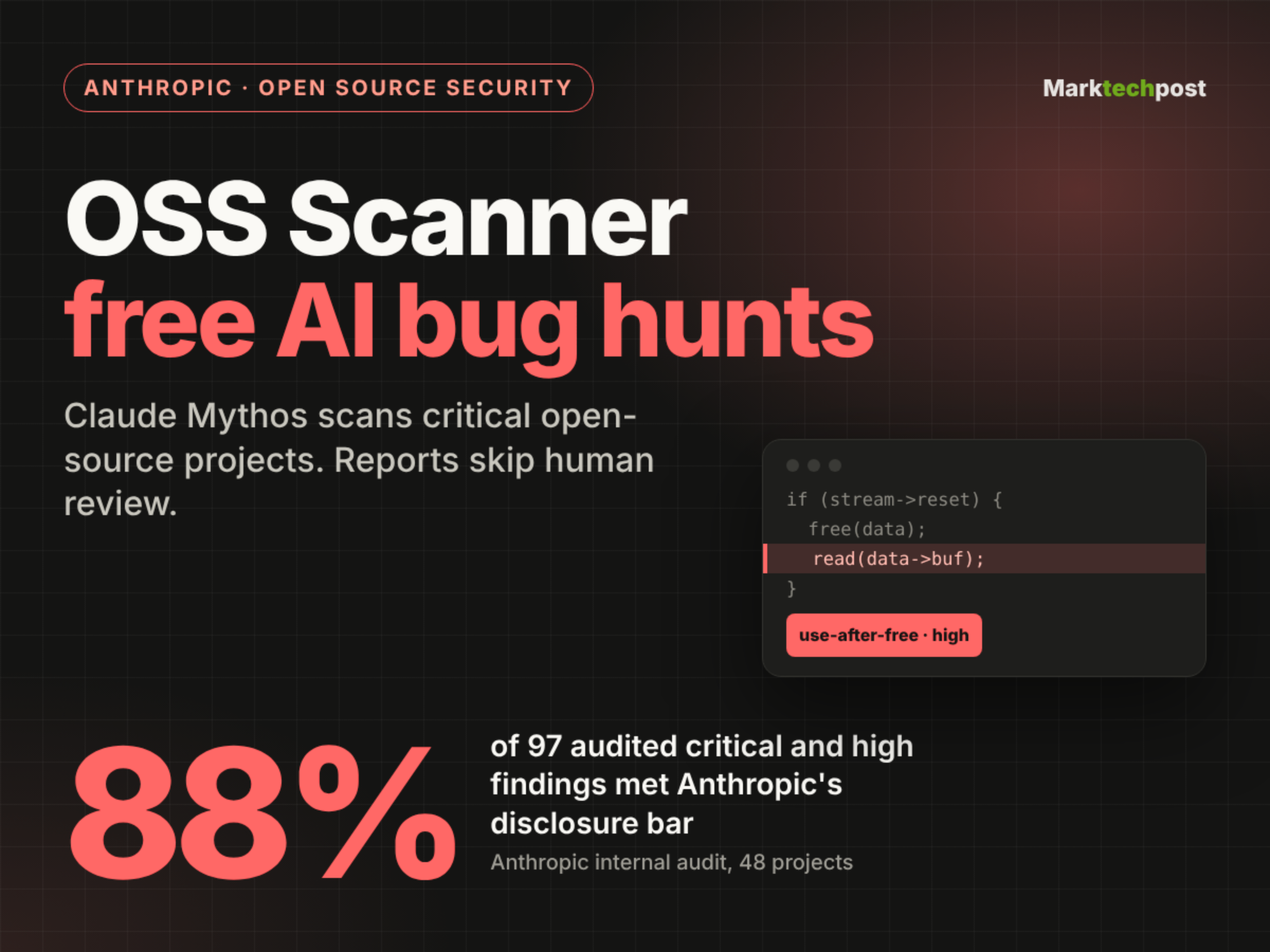
Anthropic launches OSS Scanner, a free AI-powered vulnerability scanner for critical open-source projects.

Anthropic launched OSS Scanner on October 8, 2026—a free, opt-in AI vulnerability-scanning tool powered by strong models such as Claude Mythos, designed specifically for critical open-source projects. As of October 19, it had onboarded 114 projects and, within 11 days, reported 77 high-severity and 803 medium-severity vulnerabilities (according to model ratings), with 88% of sampled audit results meeting its disclosure standards.

Anthropic Launches OSS Scanner, a Free AI Vulnerability Scanner

Why it matters:This tool represents a large-scale implementation of LLMs in the open-source security domain, characterized by zero cost, full automation, and offline auditing; however, bypassing the human review stage introduces risks of false positives and duplicate issues. Its accuracy metrics—88% detection rate and 1% false positive rate—and real-world project feedback (e.g., wolfSSL, curl) provide an empirical benchmark for the current state of AI‑driven vulnerability discovery.

Timeline and related coverage

A quarter of PRs are “AI garbage”! The Linux Foundation has released a new report: AI writes code 52% faster, yet open-source maintainers are even more exhausted.

On October 20, the Linux Foundation released a report indicating that generative AI reduces the time required for code writing by an average of 52%; however, open-source project maintainers estimate that roughly 25% of pull requests are low-quality “AI slop,” with this figure rising to 31% in large-scale projects. The report highlights that the efficiency gains have not been matched by corresponding reductions in review and governance costs, as only 35% of projects have established formal AI contribution policies, underscoring growing developer burnout and a trust deficit.

Timeline and related coverage