













THE NEXT THING, IN PERSPECTIVEIndependent AI news

The latest AI news, in focus.

Official announcements and industry reporting. Follow the timeline of AI.

Today's news

News feed
AI NEWS × FOXAIFind your next step

From the latest news to tools that work for you.

Explore AI tools

Discover AI tools

Swipe to explore →
ClaudeAI Assistants & Search

Claude is an AI assistant launched by Anthropic that can assist with writing, reading materials, analyzing data, and programming through conversation, and can organize some tasks into editable documents, spreadsheets, or presentation files. It’s ideal for individuals and teams who want to connect their ideas, materials, and drafts.

WritingAnalysisProgrammingFree entry availableView details
GeminiAI Assistants & Search

Gemini is Google’s AI assistant, which can assist with writing, planning, organizing information, and analyzing uploaded files through conversation. It can also use Deep Research to retrieve information on a topic and generate research reports.

Q&AWritingAssistantPricing unverifiedView details
MidjourneyImage Generation & Editing

Midjourney is an AI-powered creative tool that generates visual artworks from text and reference images. On the web-based Create page, you can enter prompts, compare generated versions, and then continue creating using features such as variations, editing, upscaling, or converting images to video.

Image GenerationText-to-imageVisual CreativityPaidView details
KreaImage Generation & Editing

Krea is an AI visual creation workspace that can generate images from text or reference images, compare different models and variants, and then perform editing, detail enhancement, and upscaling. It also provides access to video and other creative tools.

Image GenerationVideo3DPricing unverifiedView details
RunwayVideo & Animation

Runway is an AI platform that integrates video generation, visual editing, and creative workflows. Starting from text, images, or existing clips, users can generate or modify shots, then extend, upscale, and export them—serving concept shorts, advertisements, and other visual productions.

Video generationCreative VideoVisual CreationFree entry availableView details
SunoMusic & Audio

Suno is an AI music platform that creates songs from text descriptions, lyrics, and reference materials. Users can generate vocal tracks or instrumental music, then use features like editing, remixing, and audio track separation to further produce and share their creations.

Music generationsongAudioFree entry availableView details
ElevenLabsSpeech & Transcription

ElevenLabs is a platform that offers AI-powered voice generation, audio creation, and voice-enabled agents. Creators can produce voiceovers, audiobooks, podcasts, and localized content, while developers can leverage its APIs to integrate speech synthesis, transcription, and conversational capabilities.

VoiceoverText to speechVoice agentsFree entry availableView details
Notion AIOffice & Productivity

Notion AI is an AI assistant integrated into Notion workspaces, designed to search team knowledge, generate and edit pages, manage databases, and organize meeting notes. By leveraging the context of your workspace and connected apps, it helps you complete information retrieval, content organization, and follow-up tasks all within the same working environment.

Knowledge BaseDocumentOfficeFree entry availableView details
GammaOffice & Productivity

Gamma is an AI-powered tool for creating presentations, documents, web pages, and visual content. It can generate content starting from a goal, an outline, or existing materials, and then refine the final output through conversational prompts, layout adjustments, and free-form editing.

PPTPresentationDocumentFree entry availableView details
CursorCoding & Development

Cursor is an AI programming product designed to support software development tasks, assisting with code planning, modification, testing, and review within the code context, and offering usage options such as desktop, command-line, and cloud-based agents.

ProgrammingCodeAI IDEFree entry availableView details

AI, as it happens

1277 published stories
Research paper · 184 storiesClear filters ×
2026-10-26
Follow the timeline
12:00

The Path to NDE 4.0: A Review of Algorithms, Techniques, and Strategies for Autonomous Inspection

arXiv:2610.31704v1 Announce Type: new Abstract: Non-Destructive Inspection (NDI) is a cornerstone of modern quality assurance, critical for ensuring the safety and reliability of infrastructure and manufactured components without causing damage. This paper presents a comprehensive review of the current NDI landscape, analyzing the field through four distinct lenses, namely, computational algorithms, physical techniques, industrial applications, and research objectives. We synthesize a broad range of academic literature to illustrate the rapid evolution from manual, analog interpretation to a digitized, data-centric paradigm known as NDE 4.0. Our analysis highlights the dominance of ultrasound and visual inspection as primary physical techniques, while revealing a significant shift toward d

Copyright, privacy & ethicsRead original Timeline and related coverage
12:00

Query recall determines the retrieval performance of classical Arabic poetry: BM25 and dense encoders show markedly divergent behavior as query abstraction increases.

A recent study published on October 26, 2026, on arXiv (arXiv:2610.31821v1) shows that, in classical Arabic poetry retrieval tasks, the degree to which users retain fragments of poetic lines—such as whether they can recall half a line—plays a more critical role in determining retrieval performance than model capabilities. BM25 outperforms all dense encoders, including state-of-the-art models with 8B parameters, on “tip-of-the-tongue” queries, but falls significantly behind on abstract queries.

Why it mattersThis study, through systematic benchmarking using a bilingual corpus, a three-index model, and a dual-evaluation protocol, for the first time quantitatively reveals the dominant influence of query abstraction on different retrieval paradigms (lexical vs. dense), and—after being validated by both human annotators and open-source weight models—the conclusions demonstrate methodological universality and empirical robustness.
Model evaluations & benchmarksRead original Timeline and related coverage
12:00

The study uses the BabyView dataset to validate mechanisms of children’s cross-context word-meaning learning.

The paper (arXiv:2610.31842v1), published on October 26, 2026, trains a contrastive vision–language model using the BabyView corpus—comprising 2,441 hours of longitudinal first-person‑view video from 48 children—to examine the feasibility of the “cross-context learning” hypothesis in real‑world child experiences.

Why it mattersThe study is the first to systematically evaluate cross-context word-meaning learning on large-scale, naturalistic developmental data, revealing the critical role of pre-trained visual representations, the sparsity of learning signals, and the fundamental differences between model and child learning trajectories, thereby holding methodological significance for developmental cognitive modeling and AI language acquisition research.
Datasets & synthetic dataRead original Timeline and related coverage
12:00

Permission to Retry: A Study of Authorization and Recovery in AI Agent Workflows

arXiv:2610.31916v1 Announce Type: new Abstract: A durable agent can resume a consequential action while its authority changes and the action's external outcome remains uncertain. We study execution-time reliability of tool-using AI agents, isolating recovery decisions from language-model behavior. Checkpoint state, permission to dispatch, evidence of an external effect and permission to reconcile are distinct obligations. We present a finite conformance study that checks these obligations through histories scored against a provider effect ledger hidden from the recovering application. A prospectively frozen campaign executes 336 histories on native LangGraph and Temporal hosts, crossing 14 schedules, three provider contracts and four matched application policies. All 168 paired host cells

Agent frameworksRead original Timeline and related coverage
12:00

The study proposes a knowledge graph quality assessment framework for the era of large language models.

A paper published on October 26, 2026, on arXiv (ID 2610.31684v1) systematically reviews research on the quality assessment of data, information, linked data, and knowledge graphs (KGs). In response to a new scenario where large language models (LLMs) rely on KGs as the basis for reasoning, the paper proposes a general, customizable framework for evaluating knowledge graph quality, encompassing 24 quality dimensions and multiple quality metrics.

Why it mattersThis paper directly addresses the critical issue of knowledge trustworthiness in the context of the deep integration of large language models (LLMs) and knowledge graphs (KGs). For the first time, it integrates quality-assessment theories from multiple domains to construct a comprehensive evaluation framework tailored to real-world applications. Its publication date—2026-10-26—matches the current date, making it one of the most recent academic advances, and it was posted on the authoritative preprint platform arXiv, ensuring clear provenance and adherence to academic standards.
RAG & knowledge systemsRead original Timeline and related coverage
12:00

Latent Coherence: Do Frontier Language Models' Probability Judgments Obey the Law of Total Probability?

arXiv:2610.31833v1 Announce Type: new Abstract: LawZero's Scientist AI trains a Predictor toward the Bayesian posterior, with an objective that penalizes inconsistent probabilities among latent explanations. We ask whether current frontier language models, with no such training, are already consistent in this sense zero-shot: do their probability judgments satisfy the law of total probability, $P(X)=\sum_z P(z)P(X|z)$, when the latent $z$ must be inferred from records in the context? In separate single-turn calls, models are asked for $P(X)$, for $P(z)$ over the latent's states, and for $P(X|z)$; a causal family applies the same test to $P(y|do(x))$ and the back-door adjustment. Every query has an exact ground-truth probability, and a subset of items is asked in three wordings to separate

Papers & researchRead original Timeline and related coverage
12:00

Spatial Heuristic Strategy based Diffusion Reinforcement Learning for Online 3D Bin Packing

arXiv:2610.32241v1 Announce Type: new Abstract: Traditional heuristic methods have accumulated mature experience in core objectives, such as space utilization and layout compactness of 3D bin packing, relying on artificially designed rule-based logic. However, they exhibit obvious limitations in generalization ability and adaptability to dynamic scenarios. Diffusion reinforcement learning, which integrates the spatial search capability of reinforcement learning and the data distribution modeling capability of diffusion learning, has achieved certain progress in action distribution modeling and decision compliance constraints. Nevertheless, there remain issues including insufficient perception of the spatial topological structure in 3D bin packing and limited layout optimization capability.

Training, tuning & alignmentRead original Timeline and related coverage
12:00

Phronix: The Capability-Centric Learning Paradigm for Agents

arXiv:2610.31789v1 Announce Type: new Abstract: Scientific computing increasingly relies on large language model-based agents for performance engineering tasks such as instrumentation, analysis, and workflow porting. However, agent effectiveness depends heavily on the surrounding harness, which typically relies on manually written skills and curated memory. This limits autonomous learning, forcing agents to repeatedly rediscover solutions rather than retain and reuse knowledge from prior executions. We introduce Phronix, a capability-centric learning paradigm that enables agentic harnesses to acquire, validate, and refine reusable capabilities from their own executions. Phronix operates through a predictor-validator-corrector loop: MCP tools and associated skills propose solutions, tool ex

M&A & IPOsRead original Timeline and related coverage
12:00

DriveMind: Mind-Evolving Belief Tracking for Closed-Loop Autonomous Driving

arXiv:2610.32069v1 Announce Type: new Abstract: Recent multimodal large language models (MLLMs) can perceive a traffic scene, reason about it, and propose a driving action within a single model. However, existing MLLM-based drivers reason from scratch at each frame and commit to a single explanation, discarding earlier hypotheses about the scene. When the scene is ambiguous, the agent locks in on the wrong interpretation and acts on it before evidence accumulates. In this paper, we propose DriveMind, an MLLM-based driving framework that keeps several hypotheses about the scene alive at the same time and updates their weights as new frames arrive. Inspired by particle filtering, DriveMind propagates each hypothesis through a VLM, scores it against the current observation, and resamples to m

Autonomous driving & mobilityRead original Timeline and related coverage
12:00

GLP Networking API Specification

arXiv:2610.32583v1 Announce Type: cross Abstract: Multiagent deterministic GLP (madGLP) runs Grassroots Logic Programs (GLP) as agents that communicate solely by asynchronous message passing, and assumes fair delivery: every message sent is eventually delivered. Each agent runs on a person's smartphone, named by the person's public key. A grassroots platform depends on no global resource but the network, so agents must reach one another over Bluetooth Low Energy, on a local network, and across the Internet from behind NAT, via rendezvous servers anyone can run. What madGLP requires of such a network, and what the network requires of the platform, has not been specified. We specify the networking layer beneath madGLP. Anything that can be done in GLP is done in GLP: the layer provides only

Papers & researchRead original Timeline and related coverage
12:00

Distributional Alignment of LLMs and Its Generalization Properties

arXiv:2610.31687v1 Announce Type: new Abstract: Large language models are increasingly used to simulate and probe human behavior, e.g., for surveys. For these applications, a key property is that outputs satisfy distributional alignment: to match its output distribution with some reference (in this case, human) distribution. An obstacle in achieving distributional alignment is generalizing from small training data. In this work, we study (1) how to distributionally align LLMs; and (2) how aligned LLMs might generalize to unseen samples and unrelated topics and tasks. Using two large-scale benchmarks, we find that LLMs can indeed achieve distributional alignment and generalize to unseen questions of the same domain. Cross-topic generalization depends on the relationship between topics (e.g.

Training, tuning & alignmentRead original Timeline and related coverage
12:00

Kolibri: A Sovereign European Model on the Pareto Frontier

arXiv:2610.31945v1 Announce Type: new Abstract: This report introduces Kolibri, an English-German mixture-of-experts transformer with 78.1B total parameters and 3.46B active parameters per token, released as open weights under the Apache 2.0 licence. We built Kolibri for sovereign and specialised deployment, with a particular focus on German and on regulated domains such as public administration, industry, and aerospace. To support these settings, we control the full model-development process, including data, architecture, training infrastructure, post-training, and evaluation. We train Kolibri on 24T tokens across pre-training, mid-training, and long-context extension, with German accounting for more than 20% of the data mix by bytes. To reach this share, we complement German datasets wit

Model evaluations & benchmarksRead original Timeline and related coverage
12:00

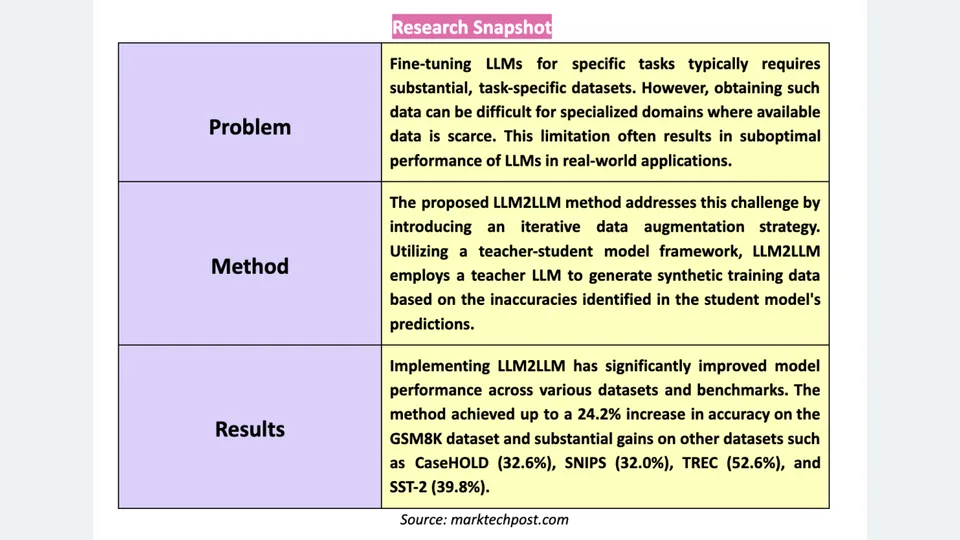
In LLM evaluation, relying solely on the overall F1 score to validate automated scorers carries the risk of misleading results: a new study underscores the need to calibrate for prompt-specific differences.

An arXiv paper (2610.31678v1) points out that, in interactive evaluations of large language models, relying solely on the overall accuracy or F1 score of automated scorers can mask prompt-specific errors, leading to misjudgments of prompt effects. Empirical evidence shows that the same scorer exhibits substantial variation in its false-positive rate across different prompts (2.6%–33.3%), and a seemingly significant 9.3-point effect shrinks to 2.3 points—and becomes non-significant—under dual-LLM review.

Why it mattersThis study, based on real experimental data (6 models, 180 fictional entity‑based questions, and 6 prompt conditions), reveals a widespread methodological flaw in current LLM evaluations: equating the scorer’s overall performance with its reliability on key benchmark tasks. Its central claim—that each prompt must be audited separately and uncertainty must be incorporated—rests on clear empirical evidence and offers actionable recommendations, making it highly timely (published on 2026‑10‑26) and backed by a credible source (the arXiv preprint platform).
Model evaluations & benchmarksRead original Timeline and related coverage
12:00

Understanding Communication Failures in Multi-Agent LLM Systems

arXiv:2610.32060v1 Announce Type: new Abstract: Multi-agent LLM systems aim to improve reasoning through debate, evidence sharing, and mutual correction, but interaction can also introduce failures that final accuracy alone cannot explain. Agents may converge too early, ignore dissent, suppress correct minority answers, or preserve a wrong framing across rounds. We present a corpus-grounded taxonomy of communication failures, built from 3,211 failed multi-round trajectories across medical QA, coding, finance, multi-hop reasoning, ethics, and embodied text tasks. Using this taxonomy, we analyze failure distributions across datasets and system designs, round-level error dynamics, recovery hardness, majority transitions, minority-signal suppression, and self-reported confidence. We find that

Agent frameworksRead original Timeline and related coverage
12:00

Behaviour analysis for large language model-driven agents

arXiv:2610.32087v1 Announce Type: new Abstract: Understanding language-agent behaviour requires learning how actions are organised across a trajectory and how this organisation relates to context and outcomes. We propose a general framework that connects data-driven behavioural discovery with analysis and experimental investigation. Categories developed from recorded activity define what is measured. Analyses preserve the behaviours' positions in the process and express their relationships as interpretable hypotheses. Statistical assessment and tests in held-out contexts examine the strength and scope of the evidence. Experiments, including prompt steering, then test how behaviour and outcomes change under deliberately varied conditions. A study of iterative self-reflection illustrates how

Model releases & updatesRead original Timeline and related coverage
12:00

PaperFormalizer: Author-in-the-Loop Autoformalization of Research Papers in Lean

arXiv:2610.31810v1 Announce Type: new Abstract: Even a carefully proofread paper can leave small gaps in its proofs or its stated assumptions. We introduce PaperFormalizer, a Lean-based agentic pipeline that helps authors find and close such gaps in their own papers and turn each paper into a Lean-verified version. Starting from the LaTeX source, PaperFormalizer transcribes the paper into a dependency graph of statements, audits each statement in natural language for faithfulness, ambiguity and correctness, and then formalizes and proves the statements in Lean against Mathlib, optional domain libraries and the author's personal toolkit. Only the author knows what a statement is meant to say and how a formalization gap in a result is best fixed. The pipeline therefore stops and asks the aut

Papers & researchRead original Timeline and related coverage
12:00

Towards Adversarially Robust Multigraph Neural Networks for Financial Crime Analysis

arXiv:2610.31718v1 Announce Type: new Abstract: Financial transaction networks are naturally represented as multigraphs, where repeated transactions between the same pair of accounts are modeled as distinct edges. Recently proposed multigraph neural network architectures leverage this structure explicitly to achieve a strong performance on anti-money laundering (AML) tasks. However, their robustness to adversaries that manipulate transaction structures to evade detection remains largely unexplored. We present the first scalable framework for structural attacks and adversarial training of multigraph neural networks using node-edge incidence matrices, adapting projected gradient descent and projected randomized block coordinate descent methods to optimize structural perturbations over such m

Copyright, privacy & ethicsRead original Timeline and related coverage
12:00

StackGen3D: Stable 3D Block Stack Generation from Multiview Silhouettes

arXiv:2610.31803v1 Announce Type: new Abstract: Generating physically stable 3D structures from visual specifications requires resolving geometric ambiguity while accounting for physical interactions among objects. We present StackGen3D, a framework for generating stable block assemblies conditioned on a given block inventory and three orthographic silhouettes. Our approach consists of two stages. First, we develop a physics-informed graph neural network (PI-GNN) that models support relations between blocks and serves as a fast stability predictor for curating a diverse dataset of stable structures. Second, we train a conditional flow-matching model on this dataset to capture the multimodal distribution of block configurations consistent with the target silhouettes. At inference time, ligh

Datasets & synthetic dataRead original Timeline and related coverage
12:00

LazyFlash: Forward-Dense, Backward-Sparse Attention for Accelerated Long-Context Fine-Tuning

arXiv:2610.31911v1 Announce Type: new Abstract: As large language models (LLMs) process increasingly long sequences, attention becomes a major computational bottleneck. Sparse attention mostly targets inference, yet many methods still train densely or cannot support sparse training, and their added complexity makes sparsity hard to turn into wall-clock speedups, leaving dense attention widely used in practice. This paper introduces LazyFlash, a forward-dense, backward-sparse attention method built on the observation that attention training is dominated by the backward pass. LazyFlash keeps the forward pass exactly dense, so the trained model remains a standard dense model that existing systems such as vLLM can serve without any change. For the backward pass, LazyFlash proposes a gradient-a

Training, tuning & alignmentRead original Timeline and related coverage
12:00

Democratizing LLM Training with the Edge: Challenges, Systems, and the Road Ahead

arXiv:2610.32215v1 Announce Type: new Abstract: The growing computational power of modern GPU data centers has let a few industrial giants train and deploy large language models (LLMs) on massive amounts of data. Yet the sheer scale of these models and their training data makes centralized development increasingly hard to sustain, and at the same time shuts out smaller institutions that hold relevant private data but lack comparable infrastructure. In this paper, we organize our positions on distributed LLM training around the pretraining and fine-tuning paradigms, covering federated learning, split learning, and decentralized approaches, and we assess their readiness for geo-distributed settings with heterogeneous hardware and unreliable connectivity. We then present a {\em unified} syste

Model releases & updatesRead original Timeline and related coverage
Every update links back to its source.
STAY CURIOUS. STAY INFORMED.

Stay informed about the changes that matter.

Give your curiosity direction. Make every day of reading count.

Subscribe via RSS