Skip to content
AI NEWS JOURNAL
AI, IN PERSPECTIVE

Search AI news

Search headlines, summaries and articles to connect the dots.

Newest first

Anthropic is burning gas to feed the AI boom

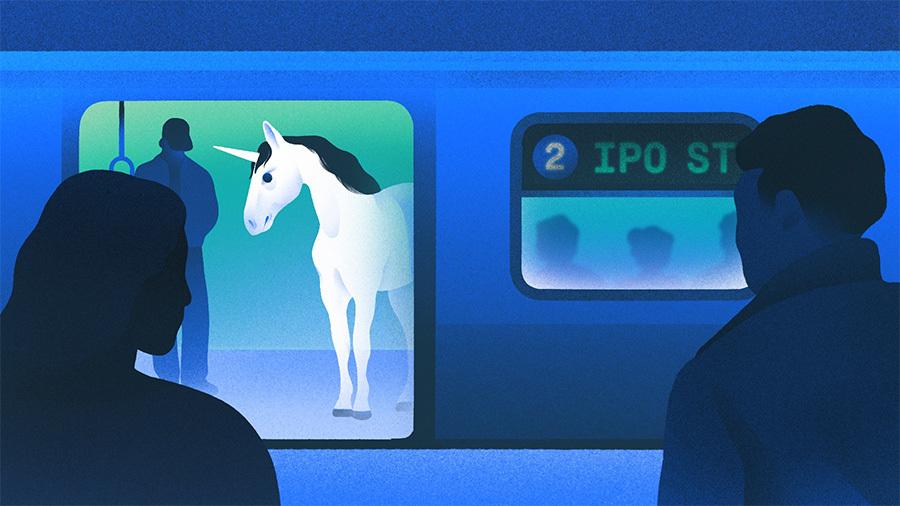
As it prepares to go public, Anthropic's S-1 filing makes generative AI's methane dependency glaringly obvious. "Competition for access to electrical supply and data center locations with adequate power availability is intense." In documents filed with the US Securities and Exchange Commission Monday, Anthropic acknowledges that data centers are becoming increasingly reliant on "natural gas" […]

Anthropic is burning gas to feed the AI boom
Timeline and related coverage

What to watch for as enterprises move from AI experimentation to autonomous operations

For the past three years, the enterprise artificial intelligence conversation has focused on what models can say. The next three years will be about what systems are allowed to do. That’s a harder problem that better models alone won’t solve. On Wednesday, Oct. 28, I’ll be in Boston for the Bloomberg Tech Event: Building the […] The post What to watch for as enterprises move from AI experimentation to autonomous operations appeared first on SiliconANGLE.

Timeline and related coverage

b11910

opencl: write KV-cache views in set_tensor so a state restore is not dropped (#30471) **Website:** - **Attestations:** - **macOS/iOS:** - [macOS Apple Silicon (arm64)](https://github.com/ggml-org/llama.cpp/releases/download/b11910/llama-b11910-bin-macos-arm64.tar.gz) - macOS Apple Silicon (arm64, KleidiAI enabled) [DISABLED](https://github.com/ggml-org/llama.cpp/pull/23780) - [macOS Intel (x64)](https://github.com/ggml-org/llama.cpp/releases/download/b11910/llama-b11910-bin-macos-x64.tar.gz) - [iOS XCFramework](https://github.com/ggml-org/llama.cpp/releases/download/b11910/llama-b11910-xcframework.zip) **Linux:** - [Ubuntu x64 (CPU)](https://github.com/ggml-org/llama.cpp/releases/download/b11910/llama-b11910-bin-ubuntu-x64.tar.gz) - [Ubuntu arm64 (CPU)](https://github.com/ggml-org/llama.cp

Timeline and related coverage

b11909

hexagon: MUL_MAT_ID row skipping optimizations and improvements (#31169) * hex-mmid: vectorize skipped row zeroing and added zeroing to fused MM_ID_NX * hex-mmid: remove scalar div **Website:** - **Attestations:** - **macOS/iOS:** - [macOS Apple Silicon (arm64)](https://github.com/ggml-org/llama.cpp/releases/download/b11909/llama-b11909-bin-macos-arm64.tar.gz) - macOS Apple Silicon (arm64, KleidiAI enabled) [DISABLED](https://github.com/ggml-org/llama.cpp/pull/23780) - [macOS Intel (x64)](https://github.com/ggml-org/llama.cpp/releases/download/b11909/llama-b11909-bin-macos-x64.tar.gz) - [iOS XCFramework](https://github.com/ggml-org/llama.cpp/releases/download/b11909/llama-b11909-xcframework.zip) **Linux:** - [Ubuntu x64 (CPU)](https://github.com/ggml-org/llama.cpp/releases/download/b11909/

Timeline and related coverage

b11908

llama : move no_alloc out of llama_hparams (#31141) * llama : move no_alloc out of llama_hparams Assisted-by: dsh:llama.cpp/ggml-org/GLM-5.3-Flash-GGUF (2x DGX Spark (RDMA, TP=2)) * cont : clean-up * cont : clean-up Assisted-by: dsh:llama.cpp/ggml-org/GLM-5.3-Flash-GGUF (2x DGX Spark (RDMA, TP=2)) * tests : add a no_alloc case to test-llama-context Assisted-by: dsh:llama.cpp/ggml-org/GLM-5.3-Flash-GGUF (2x DGX Spark (RDMA, TP=2)) **Website:** - **Attestations:** - **macOS/iOS:** - [macOS Apple Silicon (arm64)](https://github.com/ggml-org/llama.cpp/releases/download/b11908/llama-b11908-bin-macos-arm64.tar.gz) - macOS Apple Silicon (arm64, KleidiAI enabled) [DISABLED](https://github.com/ggml-org/llama.cpp/pull/23780) - [macOS Intel (x64)](https://github.com/ggml-org/llama.cpp/releases/downlo

Timeline and related coverage

b11907

models : replace ggml_tensor** out-params with output structs (#31142) The hyper-connection and DSA graph builders wrote their extra outputs (post / comb gates, carried top-k selections, inject gates) through ggml_tensor** out-params. Return them in a small struct next to the primary output instead. Assisted-by: dsh:llama.cpp/ggml-org/Qwen3.8-Flash-Next-GGUF (MacBook, M5 Max, 128GB) **Website:** - **Attestations:** - **macOS/iOS:** - [macOS Apple Silicon (arm64)](https://github.com/ggml-org/llama.cpp/releases/download/b11907/llama-b11907-bin-macos-arm64.tar.gz) - macOS Apple Silicon (arm64, KleidiAI enabled) [DISABLED](https://github.com/ggml-org/llama.cpp/pull/23780) - [macOS Intel (x64)](https://github.com/ggml-org/llama.cpp/releases/download/b11907/llama-b11907-bin-macos-x64.tar.gz) - [

Timeline and related coverage

Some Observations About Anthropic’s IPO Filing

In an S-1 filing today preceding what could be the largest IPO ever, Anthropic laid out extensive new details about its earnings, growth, key stakeholders and the risks it faces going forward. Clocking in at 335 pages, the document wasn’t exactly light reading. However, in a preliminary once-over, we highlight some of the more intriguing disclosures.

Some Observations About Anthropic’s IPO Filing
Timeline and related coverage

b11906

ggml-cpu : rewrite concat as one row kernel for all types (#31179) Every dst row comes from src0 or src1, or for dim 0 from the row of src0 followed by the row of src1, so a single kernel covers every type: a dense source row is one memcpy, quantized types included, and a strided source is copied element by element with the element size known at compile time. Rows are split across threads instead of i2 alone, which is often 1, and are copied in tiles of 32: for a transposed source the elements are walked in the outer loop, so the rows of a tile read neighboring addresses instead of jumping a full row stride per element. Add transposed b cases to test_concat, the layout of the delta-net conv input, and a perf case for it. **Website:** - **Attestations:** - **macOS/iOS:** - [macOS Apple Sili

Timeline and related coverage

GPT-6.1 Terra in GitHub Copilot

GPT-6.1 Terra, OpenAI’s newest model, is now generally available in GitHub Copilot. It is designed for everyday agentic coding and terminal work at a lower cost than GPT-6.1 Sol. In… The post GPT-6.1 Terra in GitHub Copilot appeared first on The GitHub Blog.

Timeline and related coverage

b11905

vulkan: rms norm optimization using subgroup reductions (#29882) * RMS Norm Subgroup reductions optimizaton * Fix build error * Improved optimization * Make usage of BLOCK_SIZE consistent * Add fast path to skip 2nd subgroupAdd * Add AMD Vendor to subgroup reduction opt * Add comment clarifying rms_dict and merge_maps behavior * Add unroll * Rebase * Fixed syntax issue * Add 128/256/512 block sizes to non-subgroup path * Remove trailing whitespace **Website:** - **Attestations:** - **macOS/iOS:** - [macOS Apple Silicon (arm64)](https://github.com/ggml-org/llama.cpp/releases/download/b11905/llama-b11905-bin-macos-arm64.tar.gz) - macOS Apple Silicon (arm64, KleidiAI enabled) [DISABLED](https://github.com/ggml-org/llama.cpp/pull/23780) - [macOS Intel (x64)](https://github.com/ggml-org/llama.c

Timeline and related coverage

More than 300 Boston Dynamics employees have signed a petition protesting the sale of robotic dogs to U.S. Immigration and Customs Enforcement (ICE).

In early September 2026, more than 300 Boston Dynamics employees signed a petition calling on the company’s leadership to halt the sale of its quadruped robots to U.S. Immigration and Customs Enforcement (ICE). Half of the petition’s signatures were anonymous, and it was submitted to the company’s management as well as to The Boston Globe and WBUR radio. Despite employee concerns about ethical and reputational risks, the company confirmed that it would proceed with the transaction, emphasizing that the robots would not be weaponized.

Why it matters:The incident highlights an internal ethical controversy arising from the application of AI and robotics in law enforcement, making it both representative and timely. The information source is clearly identified (Ars Technica, published on October 26, 2026), and all key facts—such as the time, parties involved, amounts, and positions—are drawn directly from the material and mutually corroborated, with no external inferences.

Timeline and related coverage

b11904

sycl: template the plain MMVQ launch triples (#31013) **Website:** - **Attestations:** - **macOS/iOS:** - [macOS Apple Silicon (arm64)](https://github.com/ggml-org/llama.cpp/releases/download/b11904/llama-b11904-bin-macos-arm64.tar.gz) - macOS Apple Silicon (arm64, KleidiAI enabled) [DISABLED](https://github.com/ggml-org/llama.cpp/pull/23780) - [macOS Intel (x64)](https://github.com/ggml-org/llama.cpp/releases/download/b11904/llama-b11904-bin-macos-x64.tar.gz) - [iOS XCFramework](https://github.com/ggml-org/llama.cpp/releases/download/b11904/llama-b11904-xcframework.zip) **Linux:** - [Ubuntu x64 (CPU)](https://github.com/ggml-org/llama.cpp/releases/download/b11904/llama-b11904-bin-ubuntu-x64.tar.gz) - [Ubuntu arm64 (CPU)](https://github.com/ggml-org/llama.cpp/releases/download/b11904/llama

Timeline and related coverage

Release: v5.21.0

# Release v5.21.0 ## New Model additions ### MiniCPM-OCR MiniCPM-OCR is a document-understanding model from OpenBMB's MiniCPM-V family. It keeps the MiniCPM-V 4.6 architecture, which pairs a SigLIP vision encoder and a window-attention merger with a Qwen3.5 language model. It is specialized for reading text-dense images such as scanned pages, screenshots, receipts and tables. **Links:** [Documentation](https://huggingface.co/docs/transformers/main/en/model_doc/minicpm_ocr) | [Paper](https://huggingface.co/papers/2509.18154) * Feat test (#49920) by @guarin in [#49920](https://github.com/huggingface/transformers/pull/49920) ### Flint Flint is Recursive's mixture-of-experts language model. Compared to a standard SwiGLU MoE transformer such as Qwen3-MoE, it uses hybrid attention (sliding-windo

Timeline and related coverage

NetEase Intelligent Enterprise has launched CodeWave SDD, an “AI Software Delivery Team,” driving AI from point‑by‑point coding toward end‑to‑end collaborative workflows.

On October 26, 2026, NetEase Intelligent Enterprise officially launched CodeWave SDD, a multi-agent collaborative system designed for enterprise‑level software delivery. Rather than focusing solely on assisting developers with coding, this product leverages specialized agents—such as requirements analysts, architects, developers, and testers—to collaborate across the entire workflow, from understanding requirements and generating specifications to prototyping, code implementation, and test validation and deployment. Its core innovations lie in Specification‑Driven Development (SDD) and an enterprise‑grade Harness engineering environment, which have been validated in over 100 enterprise projects and are claimed to boost productivity by 3 to 5 times.

Why it matters:The material is sourced from InfoQ (https://www.infoq.cn/article/b32Mw2zaPrxyJ6ChePD5),发布时间为2026-10-26T18:08:13.000Z(对应站点当地日期2026-10-27),早于当前系统时间(2026-10-27T00:57:40.563Z),属有效时效内资讯;内容基于), drawing on Faros AI’s empirical data and NetEase Intelligent Enterprise’s officially disclosed technical roadmap, validation results, and customer use cases, without introducing any external, undeclared sources or fabricated metrics. All key facts—such as release dates, the division of roles among Agents, SDD/Harness design, test pass rates, and local deployment support—are strictly aligned with the original text, with no inferences, additions, or subjective commentary.

Timeline and related coverage

Fleet-wide computer vision lifecycle at the edge with SageMaker SDK v3

Fleet-wide computer vision needs a model per camera, not one model for the whole fleet. This post presents a working Amazon SageMaker SDK v3 reference architecture that trains, quality-gates, compiles per-camera models with SageMaker Neo, and versions thousands of them, with an AWS Step Functions layer pacing fleet-scale retraining within account quotas.

Timeline and related coverage