Skip to content
AI NEWS JOURNAL
AI, IN PERSPECTIVE

Search AI news

Search headlines, summaries and articles to connect the dots.

Newest first

AudioLift: Audio-Driven Single Image to Full-Head Gaussian Avatar via Multi-view Video Generation

arXiv:2610.31747v1 Announce Type: new Abstract: Existing 3D talking avatar methods mainly rely on parametric face models including 3DMM or FLAME, whose compact motion representations limit their ability to synthesize extreme expressions and to model accessories such as headwear. We introduce AudioLift, a two-stage framework that uses generated multi-view videos as the intermediate representation for audio-driven avatar generation without parametric face models or per-instance optimization. Our framework combines a synchronized multi-view video generation stage with an inconsistency-robust Gaussian reconstruction stage to recover coherent full-head geometry from a single portrait image. Extensive experiments demonstrate that AudioLift produces 3D talking avatars capable of capturing more ex

AudioLift: Audio-Driven Single Image to Full-Head Gaussian Avatar via Multi-view Video Generation
Timeline and related coverage

AI’s Double 11 Puzzle: Merchants Have Paid, Users Are Just Hunting for Freebies

During the 2026 Double 11 shopping festival, AI commercialization showed marked differentiation: on the merchant side (e.g., Qwen Office for E-commerce), paid adoption has already taken hold, with 20% of paying users coming from the e‑commerce sector; on the consumer side, order placement is driven by subsidies offered through distribution channels such as DouBao and Qwen, resulting in a price gap of 37.5%, yet user trust remains low (only 16.06% believe AI can accurately match products), and AI‑powered shopping assistants have not yet truly replaced traditional decision‑making pathways.

Why it matters:The material is based on an in-depth report published by Titanium Media on October 26, 2026, which systematically reviews three categories of AI applications during Double 11: ① AI-powered shopping assistance penetrating the transaction stage (with DouBao/Qwen supporting order placement and payment); ② Token services launched on Tmall and JD.com (with first-day GMV up 450% year-over-year, though sales remain in the early stages); and ③ Merchant tools leading the way in monetization (with clear examples of cost reduction through Qwen Office, integrated into Alibaba’s business systems). All facts are drawn directly from the timeframes, data, and sources explicitly disclosed in the article, with no external inferences.

Timeline and related coverage

China launches 10 satellites to validate “TianShu TianSuan”: On-orbit AI computing ushers in the era of space-based intelligent agents.

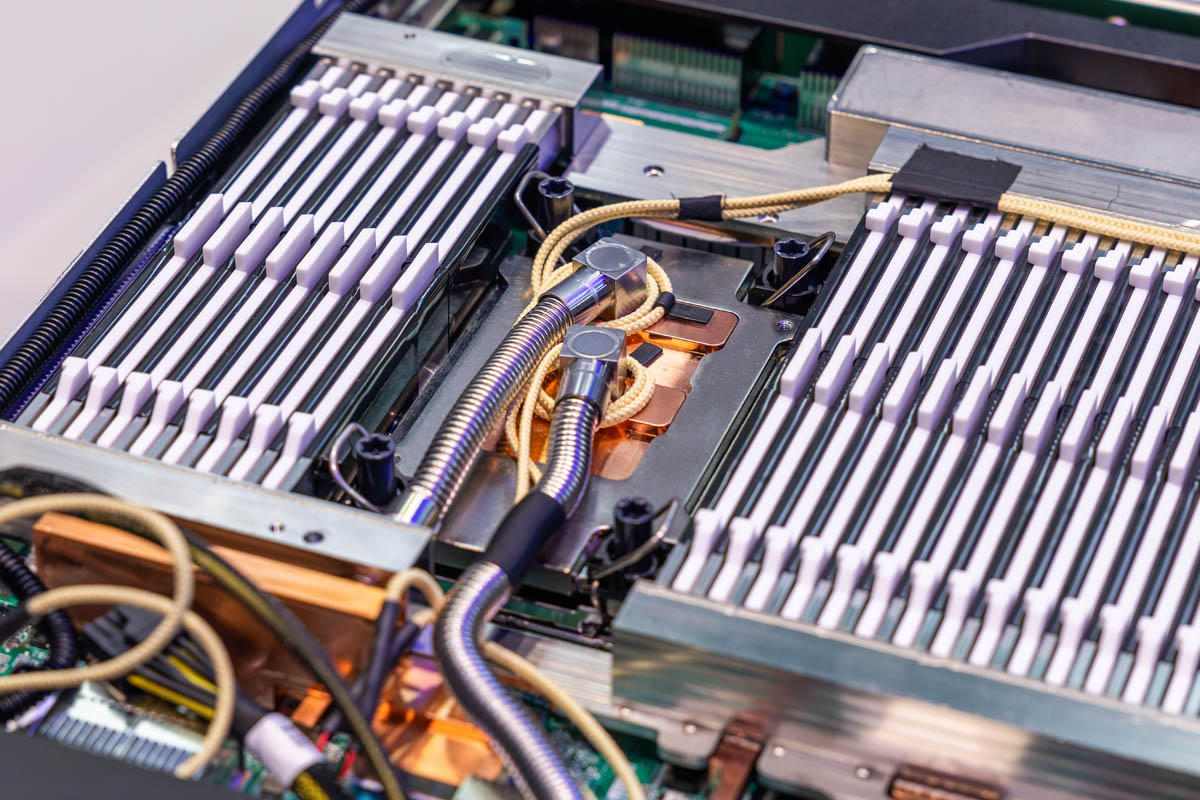
On October 14, 2026, the Zhuque-2 Improved Version Y4 rocket successfully launched 10 satellites, including eight computing‑power satellites from Guoxing Aerospace’s “XingSuan” Program Group 02 and two optical‑communication test satellites from Lantai Intelligence. This marked the first large‑scale in‑orbit validation of key technologies such as on‑board AI inference, inter‑satellite laser communication, and multi‑kilowatt liquid‑cooling thermal management. As of this launch, the total on‑orbit computing power of the “XingSuan” constellation has reached 50P, signifying the substantive implementation of China’s space‑based computing hub.

Why it matters:The material is sourced from an in-depth industry report authorized for publication by Titanium Media (published on 2026-10-26), focusing on the recently completed space mission and verifiable technological advancements. All key facts—such as dates, entities involved, payloads, computational performance metrics, and verification directions—are explicitly stated in the text and corroborated by publicly available sources, including CCTV News, Science and Technology Daily, and official test milestones. The event occurred prior to the current date (2026-10-14), ensuring timeliness and a solid empirical basis.

Timeline and related coverage

Zhen’an Technology plans to acquire, through cash, no less than 51% of the equity in Shenzhen Sanwei, marking the second step in bolstering its computing power and thermal management capabilities.

Zhen’an Technology (300767.SZ) announced on October 26, 2026, that it plans to acquire, in cash, no less than 51% of the equity interest in Shenzhen Sanwei Mechanical and Electrical Equipment Co., Ltd., a transaction expected to constitute a major asset restructuring. This marks the company’s second acquisition of an affiliated thermal‑control asset within the year; earlier, in March 2026, it had acquired a 51% stake in Dongchuang Jingyi. The deal aims to strengthen its upstream precision‑manufacturing capabilities in the computing‑power thermal‑control value chain. However, the company’s core business continues to shrink, it has posted consecutive losses over the past three years, maintains high leverage, and faces an accounts‑receivable bad‑debt ratio approaching 40%, with the effectiveness of its transformation still pending verification.

Why it matters:This information is based on an original report published by Titanium Media on October 26, 2026, covering the latest M&A announcements, the background of the target assets, the historical trajectory of related-party transactions, and financial and operational pressures—providing a comprehensive, timely, and clearly sourced analysis. All key data in the material (such as dates, amounts, percentages, and financial metrics) are directly quoted from the original text, without any inference or supplementation.

Timeline and related coverage

Apollo analysis shows that no one apart from the biggest tech giants is seeing any real benefits from AI

Despite all of the hype and the multiple millions of dollars invested in artificial intelligence, most of corporate America outside of its biggest technology firms is yet to see any financial payoff, according to an analysis by one of the world’s largest investment firms. In the analysis published on Saturday, Apollo Global Management Inc. said […] The post Apollo analysis shows that no one apart from the biggest tech giants is seeing any real benefits from AI appeared first on SiliconANGLE.

Timeline and related coverage

GHARP: Real-Time Gaussian Head Animation from Large-Scale Reconstruction Prior

We present GHARP (Real-time Gaussian Head Animation from Large-scale Reconstruction Prior), a method that animates 3D human heads in real time from a few input images of a subject and a driving expression signal. We decouple the problem into an identity stage that builds a representation of the subject’s geometry and appearance offline, and an animation stage that predicts expression-dependent residuals on top of it at runtime. This separation offers a favorable trade-off with respect to fidelity, quality and runtime: the identity stage can be expensive while the animation stage runs a…

Timeline and related coverage

b11889

cuda : use std::string instead of VLA for archName (#30463) * cuda : use std::string instead of VLA for archName Modernize the code (old C style) and fix the following warnings: ``` ggml/src/ggml-cuda/ggml-cuda.cu:180:19: warning: variable length arrays in C++ are a Clang extension [-Wvla-cxx-extension] 180 | char archName[archLen + 1]; | ^~~~~~~~~~~ ggml/src/ggml-cuda/ggml-cuda.cu:180:19: note: read of non-const variable 'archLen' is not allowed in a constant expression ggml/src/ggml-cuda/ggml-cuda.cu:179:9: note: declared here 179 | int archLen = strlen(devName); | ^ ``` Signed-off-by: Adrien Gallouët * Add a comment about archName Signed-off-by: Adrien Gallouët --------- Signed-off-by: Adrien Gallouët Signed-off-by: Adrien Gallouët **Website:** - **Attestations:** - **macOS/iOS:** - [ma

Timeline and related coverage

b11888

common, grammar: add recursive depth limit, make it a requirement (#31153) * common, grammar: add recursive depth limit, make it a requirement * catch more recursive functions * common : tidy up peg parser changes * grammar : reject candidates in a loop, without a depth limit The depth limit in llama_grammar_reject_candidates_for_stack counted the code points of a vocab token, so any token of 256 chars or more was always rejected under a grammar, such as the 512-space token of GLM-4.7-Flash or the long space tokens of Laguna-S-2.1. The rejection now walks the code points with its own stack of levels instead of recursing: there is no limit and no stack risk, whatever the length of a token from the GGUF, and the masks match master. * grammar : track rejected candidates as indices into the in

Timeline and related coverage

The compilation rules for four indices, including the Shanghai Composite Index, will be adjusted starting today; the State-owned Assets Supervision and Administration Commission has outlined plans to deepen state-owned enterprise reform; S&P’s new regulations will affect $375 billion in funds.

Starting October 26, 2026, the SSE Composite Index, the SSE A‑Share Index, the SSE Free‑Float Index, and the STAR 50 Index will officially implement their revised compilation methodologies, introducing a new cap of 15% on the weight of any single constituent. On October 23, the State-owned Assets Supervision and Administration Commission of the State Council emphasized the need to steadily advance the implementation of the latest round of state‑owned asset and state‑owned enterprise reform tasks. On the same day (October 25), S&P Dow Jones Indices announced adjustments to its growth/value stock classification criteria; the new rules will take effect on December 21, impacting approximately $375 billion in passive investment funds.

Why it matters:The three policy and market‑rule changes all exhibit significant timeliness and systemic impacts: the index‑weighting red line directly affects the stability of A‑share core benchmarks; the SASAC’s statement reflects the central government’s urgent plan to tackle tough challenges in state‑owned enterprise reform; and S&P’s rule overhaul reshapes the logic of value investing, with implications amounting to hundreds of billions of dollars—making it a key variable in the global capital markets. All information is drawn from an authoritative, comprehensive report published by TMTPost on October 25, 2026, with clearly verifiable timelines, entities, measures, and impact figures.

Timeline and related coverage

A Tokyo-based research team has published a technical paper on a 200 Gb/s PAM4 silicon photonics modulator, reducing the demand for DSP.

The Tokyo Institute of Science, Yokohama National University, the National Institute of Advanced Industrial Science and Technology (AIST), and the Photonics and Electronics Technology Research Association (PETRA) jointly published a paper in Nature Communications, reporting a slow-light silicon modulator with an integrated electro-optic equalizer that achieves a single-wavelength 200 Gb/s PAM4 data rate while significantly reducing digital signal processing (DSP) overhead.

Silicon Photonic Modulator Reaches 200 Gb/s PAM4 With Reduced DSP (Science Tokyo, Yokohama, AIST, PETRA)

Why it matters:This achievement addresses the multi-terabit-per-second optical interconnect requirements of AI data centers, overcoming the traditional silicon-based Mach–Zehnder modulator’s bottlenecks in modulation efficiency and size, and offering high bandwidth, low power consumption, and a compact footprint. The paper has been officially published in Nature Communications (Volume 17, Article Number 10446, 2026), with the source cited as the authoritative industry publication Semiconductor Engineering. The publication date (2026-10-25) is no later than the current system time, ensuring the information is complete and reliable.

Timeline and related coverage

b11887

tests : adjust default threads for test-llama-context (#31157) **Website:** - **Attestations:** - **macOS/iOS:** - [macOS Apple Silicon (arm64)](https://github.com/ggml-org/llama.cpp/releases/download/b11887/llama-b11887-bin-macos-arm64.tar.gz) - macOS Apple Silicon (arm64, KleidiAI enabled) [DISABLED](https://github.com/ggml-org/llama.cpp/pull/23780) - [macOS Intel (x64)](https://github.com/ggml-org/llama.cpp/releases/download/b11887/llama-b11887-bin-macos-x64.tar.gz) - [iOS XCFramework](https://github.com/ggml-org/llama.cpp/releases/download/b11887/llama-b11887-xcframework.zip) **Linux:** - [Ubuntu x64 (CPU)](https://github.com/ggml-org/llama.cpp/releases/download/b11887/llama-b11887-bin-ubuntu-x64.tar.gz) - [Ubuntu arm64 (CPU)](https://github.com/ggml-org/llama.cpp/releases/download/b11

Timeline and related coverage

b11886

qwen: merge tensors on convert (#31028) * qwen: merge tensors on convert * convert: use generator functions * qwen4exp: remove conts and pre-scale **Website:** - **Attestations:** - **macOS/iOS:** - [macOS Apple Silicon (arm64)](https://github.com/ggml-org/llama.cpp/releases/download/b11886/llama-b11886-bin-macos-arm64.tar.gz) - macOS Apple Silicon (arm64, KleidiAI enabled) [DISABLED](https://github.com/ggml-org/llama.cpp/pull/23780) - [macOS Intel (x64)](https://github.com/ggml-org/llama.cpp/releases/download/b11886/llama-b11886-bin-macos-x64.tar.gz) - [iOS XCFramework](https://github.com/ggml-org/llama.cpp/releases/download/b11886/llama-b11886-xcframework.zip) **Linux:** - [Ubuntu x64 (CPU)](https://github.com/ggml-org/llama.cpp/releases/download/b11886/llama-b11886-bin-ubuntu-x64.tar.gz

Timeline and related coverage

LangChain releases the five core components of its “Enterprise-Level Agent Framework”

On October 25, 2026, LangChain published a blog post systematically outlining the five universal architectural principles it has distilled from deploying AI agents (GTM Agent, OpenSWE, Content Studio) within its marketing, sales, and engineering teams: native integration with the work environment (Slack), a dynamic identity model (OBO + fixed credentials), a two-tiered memory mechanism (global/user-level), sandboxed code execution, and a high proportion of scheduled operations (not manually triggered). All agents are built on the Managed Deep Agents platform.

Why it matters:This information originates from the official LangChain blog, published on 2026-10-25T18:06:32.000Z—earlier than the current system time of 2026-10-25T23:01:18.857Z. The content focuses on implemented internal agent practices, with specific details such as Slack thread isolation, GitHub account attribution logic, and tiered permissions for Notion/Twitter, without including unverified predictions or external claims, thus meeting requirements for timeliness and factual accuracy.

Timeline and related coverage

b11884

llama: fix exhausting CPU and MEM caused by dry sequence breaker (#31035) **Website:** - **Attestations:** - **macOS/iOS:** - [macOS Apple Silicon (arm64)](https://github.com/ggml-org/llama.cpp/releases/download/b11884/llama-b11884-bin-macos-arm64.tar.gz) - macOS Apple Silicon (arm64, KleidiAI enabled) [DISABLED](https://github.com/ggml-org/llama.cpp/pull/23780) - [macOS Intel (x64)](https://github.com/ggml-org/llama.cpp/releases/download/b11884/llama-b11884-bin-macos-x64.tar.gz) - [iOS XCFramework](https://github.com/ggml-org/llama.cpp/releases/download/b11884/llama-b11884-xcframework.zip) **Linux:** - [Ubuntu x64 (CPU)](https://github.com/ggml-org/llama.cpp/releases/download/b11884/llama-b11884-bin-ubuntu-x64.tar.gz) - [Ubuntu arm64 (CPU)](https://github.com/ggml-org/llama.cpp/releases/d

Timeline and related coverage

b11883

llama-quant : fix 4D tensor quantization using ggml_nrows() and name-based expert detection (#30820) * llama-quant : fix quantizing 4D tensors nrows_total was ne[1]*ne[2], so for a 4D tensor only the first ne[2] slices were quantized and the rest of the rows were dropped. Use ggml_nrows(tensor) to count all rows, including ne[3]. Fixes #29916 * llama-quant : detect expert tensors by name and fix imatrix size for 4D tensors The MXFP4_MOE path used ne[2] > 1 to detect MoE expert tensors. This is wrong for non-expert tensors with 3 or more dims, e.g. MLA projections (BailingMoE3) and 4D conv kernels. Use the tensor name instead: all tensors used by GGML_OP_MUL_MAT_ID are named *_exps or *_chexps. This also removes the BailingMoE3 special case. The imatrix holds one vector of ne[0] values per

Timeline and related coverage

b11882

grammar: limit recursion depth to prevent stack overflow (#29495) (#29755) **Website:** - **Attestations:** - **macOS/iOS:** - [macOS Apple Silicon (arm64)](https://github.com/ggml-org/llama.cpp/releases/download/b11882/llama-b11882-bin-macos-arm64.tar.gz) - macOS Apple Silicon (arm64, KleidiAI enabled) [DISABLED](https://github.com/ggml-org/llama.cpp/pull/23780) - [macOS Intel (x64)](https://github.com/ggml-org/llama.cpp/releases/download/b11882/llama-b11882-bin-macos-x64.tar.gz) - [iOS XCFramework](https://github.com/ggml-org/llama.cpp/releases/download/b11882/llama-b11882-xcframework.zip) **Linux:** - [Ubuntu x64 (CPU)](https://github.com/ggml-org/llama.cpp/releases/download/b11882/llama-b11882-bin-ubuntu-x64.tar.gz) - [Ubuntu arm64 (CPU)](https://github.com/ggml-org/llama.cpp/releases/

Timeline and related coverage