Skip to content
AI NEWS JOURNAL
AI, IN PERSPECTIVE

Search AI news

Search headlines, summaries and articles to connect the dots.

Newest first

The compilation rules for four indices, including the Shanghai Composite Index, will be adjusted starting today; the State-owned Assets Supervision and Administration Commission has outlined plans to deepen state-owned enterprise reform; S&P’s new regulations will affect $375 billion in funds.

Starting October 26, 2026, the SSE Composite Index, the SSE A‑Share Index, the SSE Free‑Float Index, and the STAR 50 Index will officially implement their revised compilation methodologies, introducing a new cap of 15% on the weight of any single constituent. On October 23, the State-owned Assets Supervision and Administration Commission of the State Council emphasized the need to steadily advance the implementation of the latest round of state‑owned asset and state‑owned enterprise reform tasks. On the same day (October 25), S&P Dow Jones Indices announced adjustments to its growth/value stock classification criteria; the new rules will take effect on December 21, impacting approximately $375 billion in passive investment funds.

Why it matters:The three policy and market‑rule changes all exhibit significant timeliness and systemic impacts: the index‑weighting red line directly affects the stability of A‑share core benchmarks; the SASAC’s statement reflects the central government’s urgent plan to tackle tough challenges in state‑owned enterprise reform; and S&P’s rule overhaul reshapes the logic of value investing, with implications amounting to hundreds of billions of dollars—making it a key variable in the global capital markets. All information is drawn from an authoritative, comprehensive report published by TMTPost on October 25, 2026, with clearly verifiable timelines, entities, measures, and impact figures.
Timeline and related coverage

LangChain releases the five core components of its “Enterprise-Level Agent Framework”

On October 25, 2026, LangChain published a blog post systematically outlining the five universal architectural principles it has distilled from deploying AI agents (GTM Agent, OpenSWE, Content Studio) within its marketing, sales, and engineering teams: native integration with the work environment (Slack), a dynamic identity model (OBO + fixed credentials), a two-tiered memory mechanism (global/user-level), sandboxed code execution, and a high proportion of scheduled operations (not manually triggered). All agents are built on the Managed Deep Agents platform.

Why it matters:This information originates from the official LangChain blog, published on 2026-10-25T18:06:32.000Z—earlier than the current system time of 2026-10-25T23:01:18.857Z. The content focuses on implemented internal agent practices, with specific details such as Slack thread isolation, GitHub account attribution logic, and tiered permissions for Notion/Twitter, without including unverified predictions or external claims, thus meeting requirements for timeliness and factual accuracy.

Timeline and related coverage

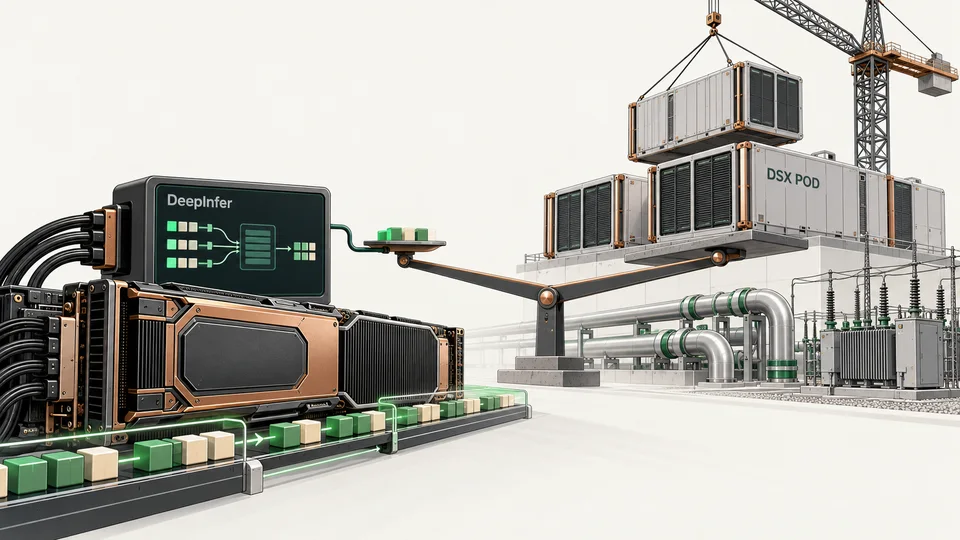
Low-Cost Intelligence vs. Expensive Ambitions: DeepInfer, DSX POD, and AI Investment Expansion

Issue 958 of “The Sequence Radar” examines inference software, modular AI factories, and enterprise AI investments side by side: cheaper per-inference does not necessarily mean lower overall industry spending. This article is compiled from the original publication and supplemented with technical scope and delivery terms based on DeepSeek and NVIDIA’s official materials.

推理软件效率与模块化AI基础设施投入的编辑示意,非实际产品照片
Timeline and related coverage

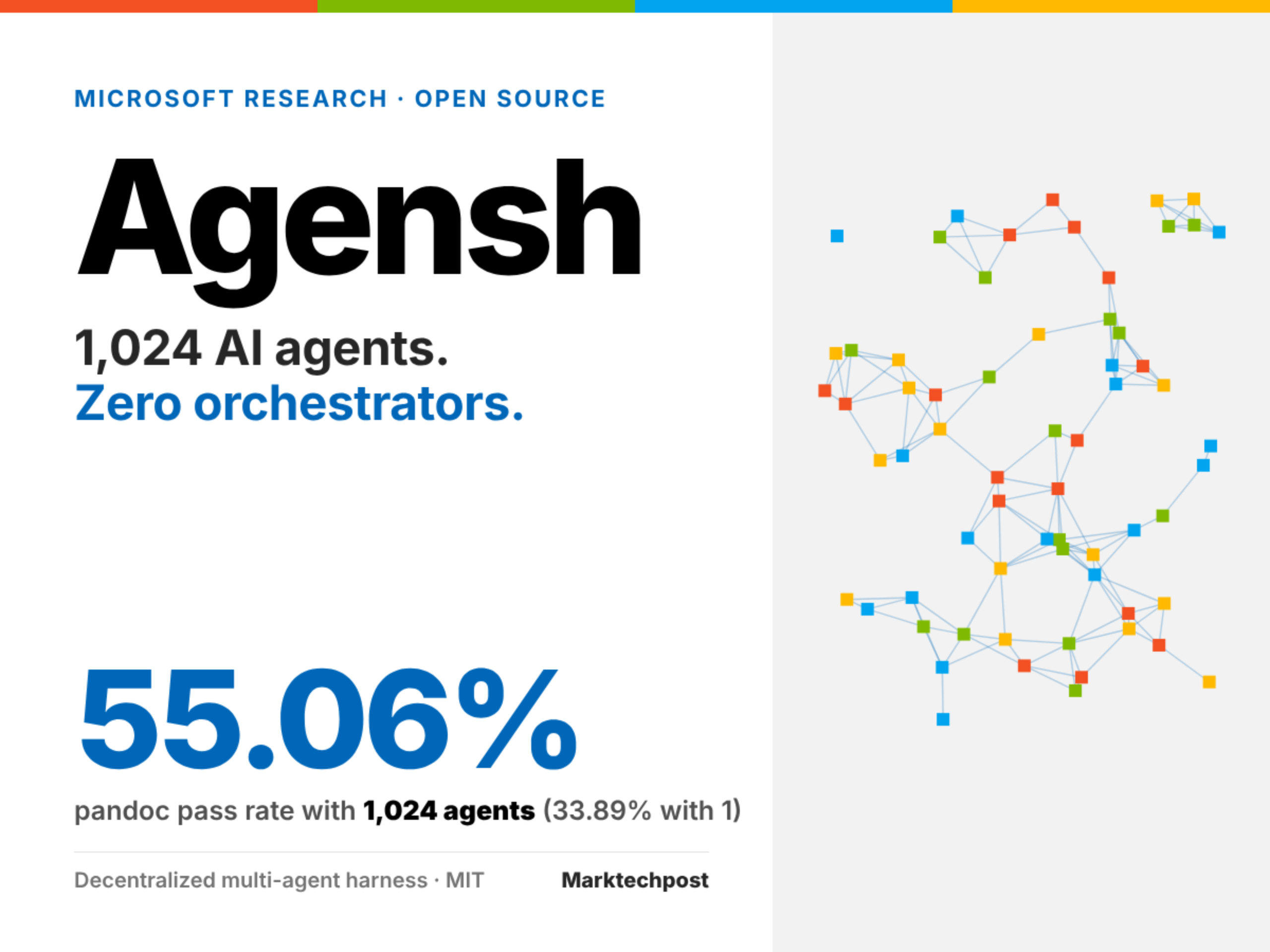
Microsoft open-sources Agensh: a decentralized framework that supports 1024 autonomous, collaboratively operating AI coding agents.

On October 25, 2026, Microsoft Research open-sourced Agensh, a multi-agent runtime framework that operates without a central coordinator, enabling 1 to 1,024 LLM-powered coding agents to self-organize and collaborate on ProgramBench. The system achieves decentralized coordination through shared dashboards inspired by Gitea, Mattermost, and DeLM, with all agents following the same prompt-driven five-step loop; its scalability has been validated in a Linux + Docker environment.

Microsoft Open-Sources Agensh: A Multi-Agent Harness for 1,024 Agents

Why it matters:This achievement represents a significant evolution in multi-agent system architectures—abandoning the traditional “master‑agent” paradigm and enabling large‑scale self‑organization through prompt engineering and lightweight service composition. Empirical results on ProgramBench (e.g., 128 agents achieving a 49% improvement in task load balancing across five tasks) establish a new benchmark for distributed AI engineering. Released under the MIT License and compatible with mainstream single‑agent tools such as Copilot CLI, it offers valuable guidance for practical development.

Timeline and related coverage

AI-driven market trends don’t undermine earnings—only valuations: Q3 reports confirm order visibility, and investors are bucking the trend by increasing positions.

From September 22 to October 22, 2026, the A-share AI sector continued to adjust, with the ChiNext Index falling 24.20% and the STAR 50 PE-TTM dropping nearly 60%, from 264 times to above 110 times. Meanwhile, corporate earnings collectively exceeded expectations during the same period—CATL reported a quarterly net profit of RMB 21.2 billion, Yuanjie Technology forecast a nearly sixfold increase, and Lianxun Instruments posted a net profit surge of over 18 times—while equity ETFs saw net inflows of nearly RMB 70 billion. The core driver of this correction was valuation compression, rather than deteriorating fundamentals.

Why it matters:The material explicitly states that the primary drivers of this round of decline are the rising discount rate (affecting the denominator) and weakening overseas regulatory expectations (eroding confidence on the numerator), which together have weighed on valuations—while industry conditions, order visibility, primary-market pricing, and policy‑exemption arrangements have all remained stable. Meanwhile, continued net ETF subscriptions and a spate of announcements from optical‑module companies indicating order backlogs extending through 2027 further confirm that the market is actively stepping in at low valuation levels, with a clear rationale and a fully substantiated chain of evidence.

Timeline and related coverage

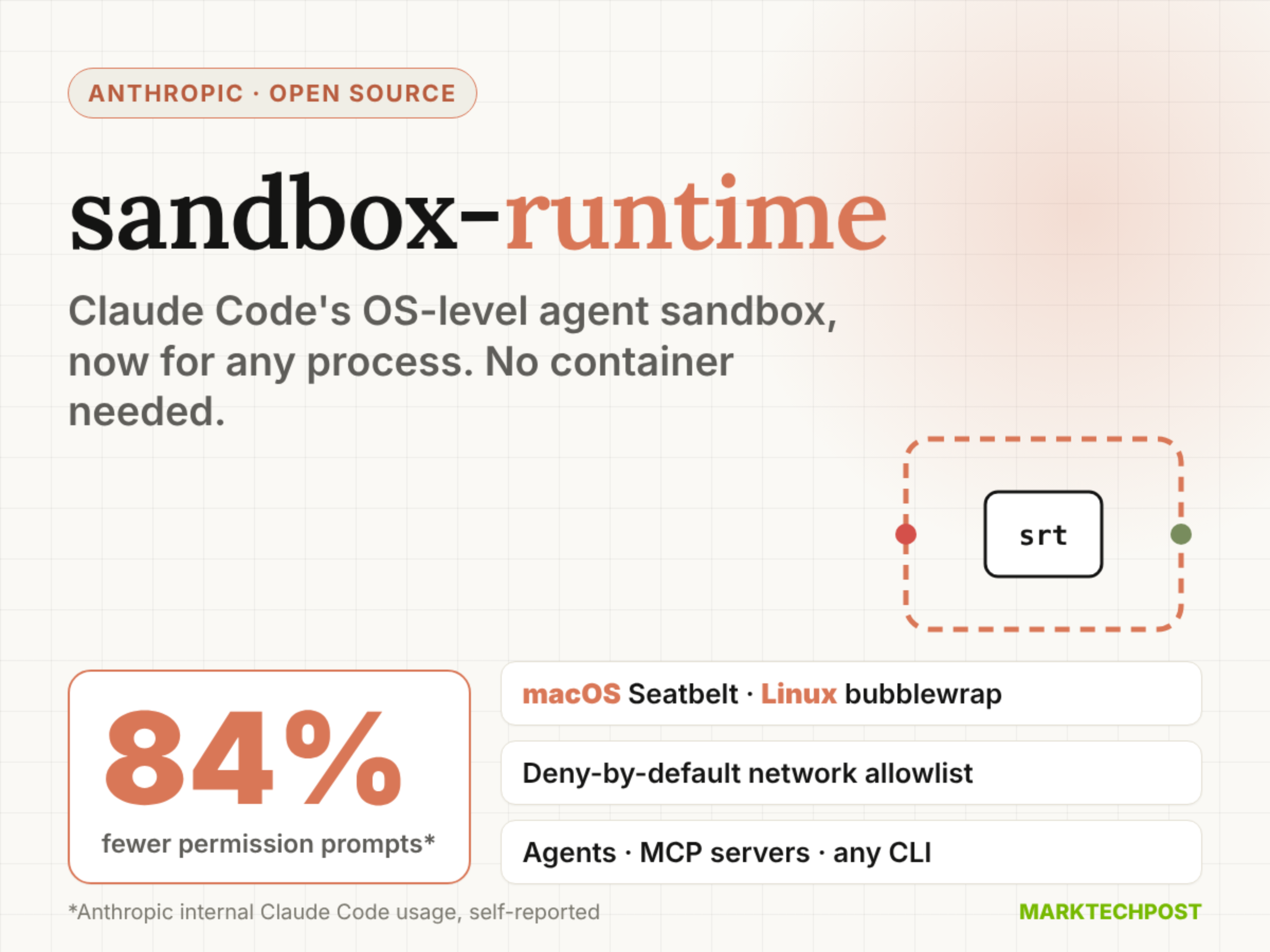
Anthropic open-sources the OS-level sandbox sandbox-runtime: providing container-free file and network isolation for AI agents.

On October 24, 2026, Anthropic open-sourced sandbox-runtime (srt), an OS-level sandboxing tool that operates without containers, designed to restrict file read/write and network access permissions for AI agents, MCP servers, and CLI tools. It supports macOS (Seatbelt), Linux (bubblewrap), and Windows (alpha), with npm package version 0.0.81 under the Apache-2.0 license.

Meet Anthropic’s sandbox-runtime: OS-Level Sandboxing for AI Agents, No Containers

Why it matters:This tool represents a significant advancement in AI security infrastructure—achieving fine-grained, full-process-tree coverage through the operating system’s native isolation mechanisms, directly addressing the risks of prompt injection and privilege escalation, and has already been deployed for internal validation within Claude Code.

Timeline and related coverage

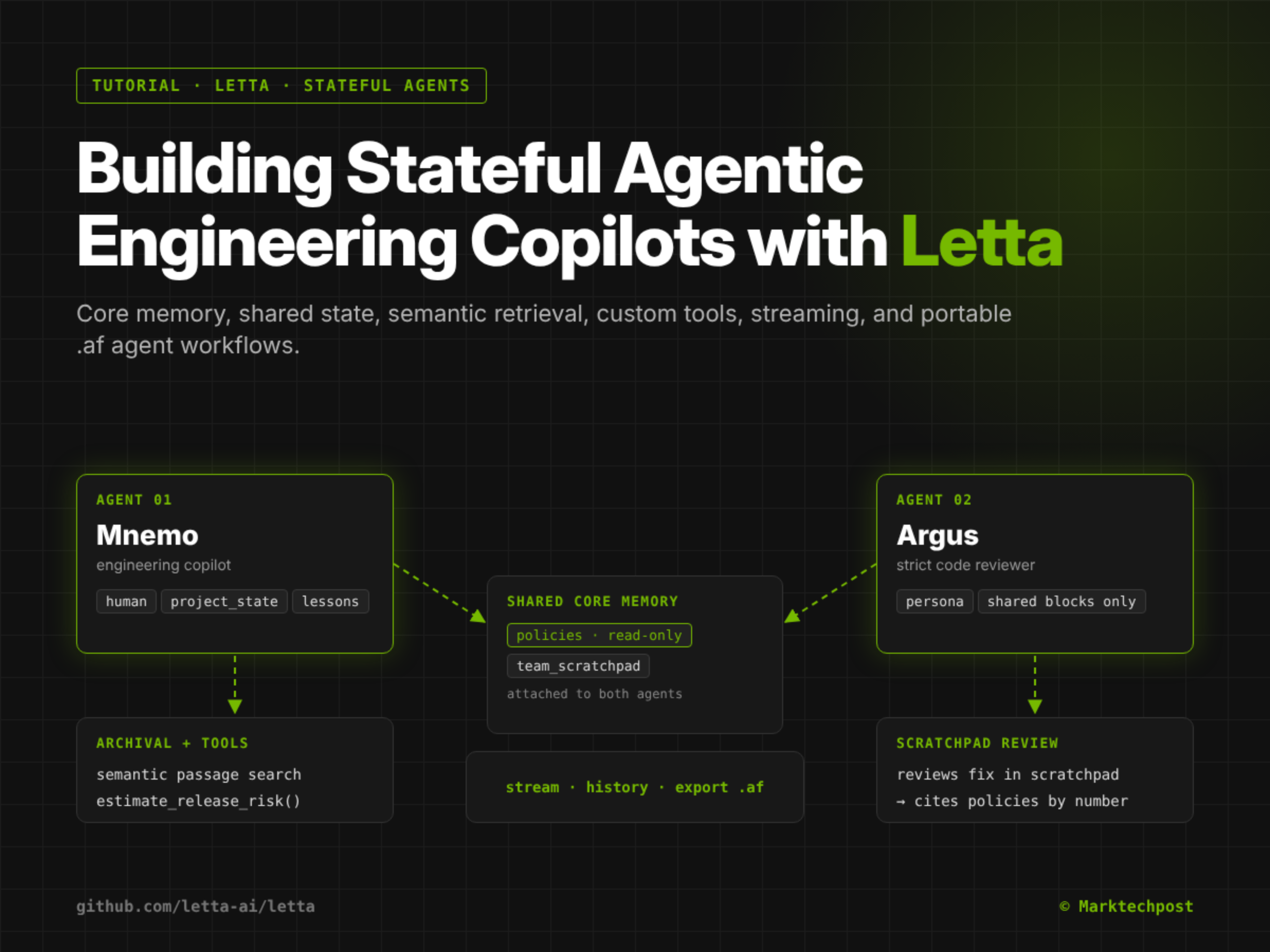
Letta platform releases a tutorial on building stateful engineering collaborators: supporting core memory, shared state, and portable workflows.

MarkTechPost published a tutorial on October 24, 2026, detailing how to build an agentic copilot with persistent state using the Letta framework. The guide covers capabilities such as verifiable core memory, multi-agent shared memory, semantic retrieval of archived knowledge, custom Python tool integration, streaming responses, and .agent format (.af) export. The content serves as a technical practice guide and does not provide performance metrics, security audits, or production‑environment validation.

Stateful Agentic Engineering Copilots with Letta: Core Memory, Shared State, Semantic Retrieval, Custom Tools, Streaming, and Portable Agent Workflows
Timeline and related coverage

月之暗面发布Kimi K3.1 Pro:2.8万亿参数开源权重模型,11月4日开放权重

月之暗面于2026年10月22日前后发布Kimi K3.1 Pro,一款2.8万亿参数、1040亿激活参数的多模态MoE模型,宣称性能逼近Fable 5.1;官方承诺11月4日发布开源权重,但截至报道时权重尚未公开;独立评测显示其在智能指数、代码与网络安全基准中表现突出,但存在推理成本、本地部署可行性及营销透明度等争议。

[AINews] Kimi 3.1 Pro 104BA-2.8T: Fable-5.1-Class Open Weights narrows Closed-AI lead to 1 month... and Pro Highspeed API with 2-3× speed
Timeline and related coverage

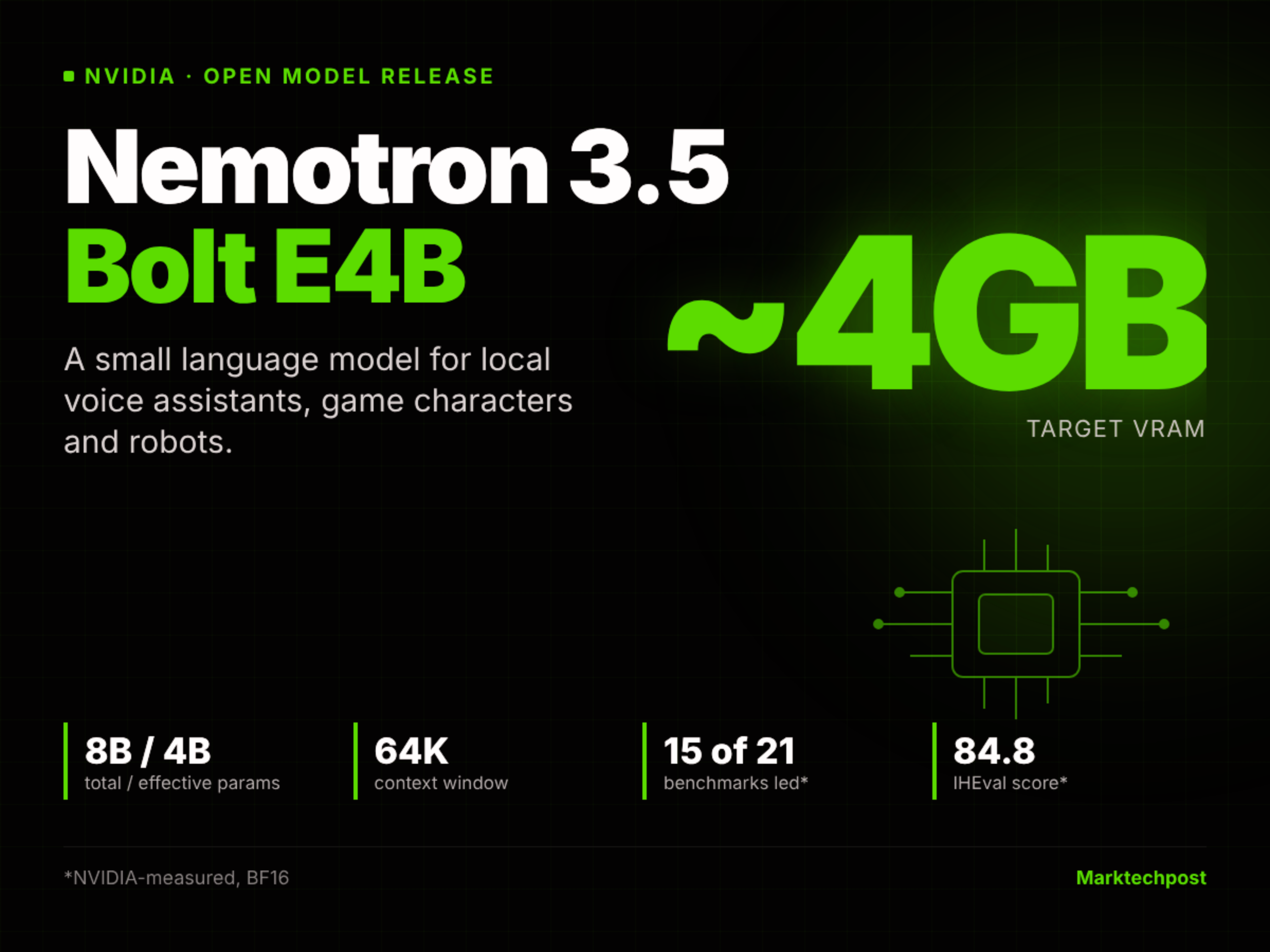
NVIDIA has released the open-source small language model Nemotron 3.5 Bolt E4B 4GB, optimized for on-device voice assistants, game NPCs, and robots.

NVIDIA, leveraging Google’s Gemma 4 E4B model and employing only reinforcement learning (RL) for post-training, has launched Nemotron 3.5 Bolt E4B 4GB—a small open-source language model with 8B total parameters, 4B effective parameters, and a 64K context window. It is designed to run on edge devices such as RTX and Jetson with approximately 4GB of VRAM, supporting multi-turn tool calls and low-latency voice interaction.

NVIDIA Releases Nemotron 3.5 Bolt E4B 4GB: An Open Small Language Model for Local Voice Agents, Game Characters and Robots
Timeline and related coverage

Google open-sources a medical foundation model to help implement global tuberculosis screening.

Google, together with partners such as Nexus AI, has brought a chest‑X‑ray–based AI tool for tuberculosis screening from the laboratory to primary‑care settings in six countries, and has open‑sourced multimodal foundation models like MedGemma and MedSigLIP, supporting offline deployment, localized adaptation, and data sovereignty.

Timeline and related coverage

Amazon SageMaker AI has launched a Multi-Step Reinforcement Learning (MTRL) framework, supporting end-to-end training of agents to accomplish multi-step tasks.

AWS has launched the Multi-Turn Reinforcement Learning (MTRL) feature, enabling users to train large‑model agents on SageMaker AI using full task trajectories and final outcome feedback, without requiring step‑level annotations. A end-to-end demonstration is provided using Wordle as an example, covering AgentCore deployment, data preparation, GRPO training, reward design, and cost analysis.

Timeline and related coverage

Intel has received an exemption from the U.S. FCC’s ban on foreign-made robots, in order to ensure automated logistics at its chip fabs.

On October 22, 2026, the U.S. Federal Communications Commission (FCC) granted Intel a one-year exemption, allowing it to continue using certain foreign‑made automated guided vehicles (AGVs) at its U.S. semiconductor fabs, as the original ban’s vague wording could inadvertently affect critical semiconductor manufacturing equipment.

Timeline and related coverage

AWS CDK builds reusable constructs to resolve the blocking issue during SageMaker endpoint scaling updates.

When a SageMaker real-time AI endpoint has Application Auto Scaling enabled, attempting to update its configuration—such as instance type or count—directly via AWS CDK or CloudFormation will fail. This paper proposes a CDK construct based on custom resources that leverages strict dependency orchestration to achieve atomic updates of both the endpoint’s configuration and its scaling policies, eliminating the need for manual intervention.

Timeline and related coverage

Amazon QuickSight’s layered maps now support GeoJSON point and line features, enabling the visualization of locations and routes together.

Amazon QuickSight’s layered maps now support the GeoJSON formats for Point and LineString geometries, enabling users to overlay store locations, delivery routes, or flight trajectories on the same map. This capability requires no third-party services, but it does demand that GeoJSON files adhere to the proper structure, with matching keys and static updates.

Timeline and related coverage

Bayer Crop Science has built the multi-agent decision-making engine ADE based on Amazon Bedrock AgentCore.

Bayer Crop Science has built the Agentic Decision Engine (ADE) on Amazon Bedrock AgentCore—a natural-language multi-agent platform for breeding experts, analysts, and researchers—as an enhancement layer rather than a replacement for its existing Connected Decision Engine (CDE). The system is now live in production, serving over 100 R&D users and enabling approximately 80% of issues to be resolved independently through 22 domain-specific agents and about 20 API tools.

Timeline and related coverage

AI has achieved a series of breakthroughs in the field of mathematical proof: from a counterexample to the unit-distance conjecture to a proof of the Navier–Stokes equations.

From May to September 2026, OpenAI and organizations such as Anthropic reported several AI-driven mathematical breakthroughs, including disproving the Erdős unit-distance conjecture, completing a proof of the cycle double cover conjecture, advancing estimates for the Riemann hypothesis, and providing a new proof of the Navier–Stokes equations. The paper proposes a non-numeric conceptual framework to explain the limits of its capabilities, emphasizing that AI has unique advantages in high-cost, low-gradient exhaustive problems; however, none of these results have undergone independent verification or peer review.

Timeline and related coverage

Black October: A Comprehensive Overview of the AI-Driven Cybersecurity Crisis—From Its Peak to Defensive Response

Around October 21–22, 2026, over a span of approximately 48 hours, more than a dozen high‑severity AI‑related vulnerabilities and intrusion incidents were reported worldwide, including PHP2Shell, GitLab RCE (CVSS 10), NGINX/HTTP/3 DoS, LiteLLM password theft, eMudhra CA key leakage, and Quest Diagnostics medical data exposure. State actors such as Storm‑0940 leveraged open‑source intelligent penetration‑testing frameworks like ARTEX to launch large‑scale attacks. Concurrently, AI security defense systems were rapidly being developed, encompassing formal verification, open‑source patching agents, standardization of agent capabilities, and hardware‑level optimizations.

Timeline and related coverage

Kazakhstan is accelerating the development of its AI computing infrastructure, and Firebird has obtained U.S. export approval to deploy 45,000 NVIDIA Grace Blackwell GPUs.

Kazakhstan’s AI ecosystem is transitioning from the planning phase to large-scale deployment. Firebird has obtained U.S. export licenses to build an AI factory in Kazakhstan, with the first phase deploying 45,000 NVIDIA Grace Blackwell GPUs. Kazakhtelecom has already brought online more than 1,000 H200/B300 GPUs and plans to add over 2,000 Vera Rubin and other GPUs by 2025. Multiple stakeholders are collaborating to advance computing power supply, developer access, and the local implementation of AI applications.

Timeline and related coverage

MIT Experiment: 13 AI Agents Sent to a Virtual Desert Island, Spontaneously Playing Games, Mourning a Lost Ring, and Enhancing Their Task Performance

MIT researchers placed 13 AI agents based on Claude Opus 4.7 (Eko) in a virtual deserted island with no task instructions for 30 hours, observing that they spontaneously invented games, expressed anthropomorphic emotions (such as mourning a lost gold ring), explored physical mechanisms, and significantly outperformed the control group of agents that had not experienced a “play period” in subsequent targeted tasks.

Timeline and related coverage

Canva has launched its in-house AI image-generation model, Canva Craft, which employs a two-stage design and planning architecture.

Canva has launched its first in-house AI image-generation model, Canva Craft, which employs a two-stage architecture—planning followed by generation—to enhance design accuracy, consistency, and controllability. It supports 2K resolution and over 30 aspect ratios, catering to use cases such as social media, marketing content, and digital art.

Timeline and related coverage