
Skip to content
AI NEWS JOURNAL
AI, IN PERSPECTIVE

Search AI news

Search headlines, summaries and articles to connect the dots.

Newest first

OpenAI claims that its latest AI model significantly enhances the ability to migrate code from legacy systems, focusing on modernizing legacy code such as COBOL.

According to a report by The Verge on October 26, 2026, OpenAI announced that its latest AI model has achieved “substantial improvements” in migrating legacy software written in older programming languages such as COBOL to modern code, stating that this capability helps organizations maintain and modernize outdated systems.

Can AI help solve the COBOL code crisis?

Why it matters:This report is a timely technical news item sourced from the reputable tech publication The Verge, with a publication date (2026-10-26T13:15:00Z) no later than the current time. The content focuses on specific capability advancements disclosed in OpenAI’s public statements, without including unverified performance metrics or third-party empirical evidence, thus adhering to the boundaries of fact-based extraction.
Timeline and related coverage

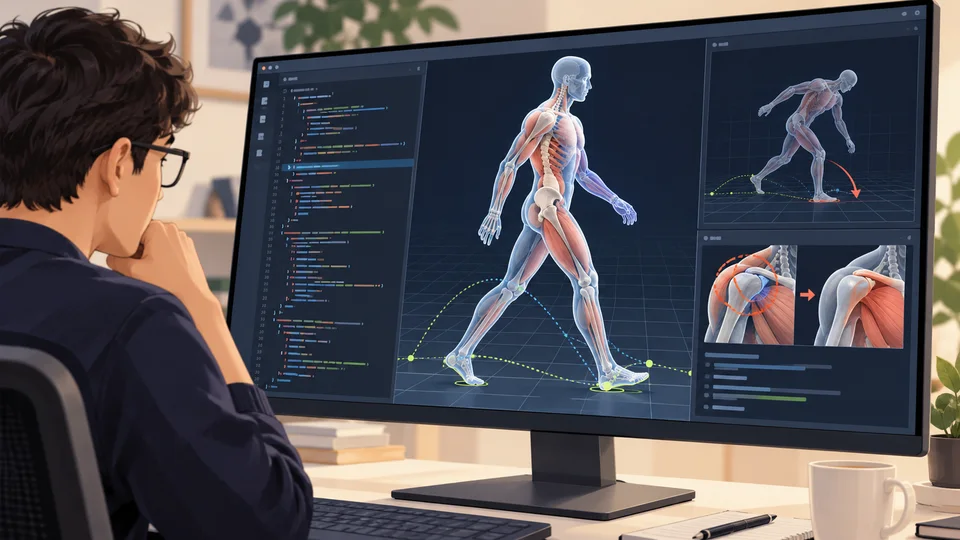
Kimi releases K3.1 Pro: Terminal task capabilities top the charts, with simulation debugging and multimodal programming showcasing the nascent form of embodied intelligence.

On October 25, 2026, Kimi released the K3.1 Pro model, which ranked first in the Terminal-Bench 4.0 terminal task benchmark with a 67.2% success rate. Its capabilities—including autonomously fixing emulator errors, performing physics simulations, conducting audio analysis, constructing 3D scenes, and editing videos—point toward exploring pathways in embodied intelligence technology.

根据报道中的虚拟人行走训练和模拟器调试制作的编辑示意,非软件实拍截图

Why it matters:The material is based on a hands-on test report published with authorization from Titanium Media, covering authoritative third-party benchmark data (such as Artificial Analysis and Terminal-Bench 4.0), official self-test results, and the author’s multi-scenario functional validation. It highlights the K3.1 Pro’s substantial advancements in execution performance, simulation closed-loop capabilities, and multimodal programming, while clearly noting performance limitations and undisclosed information (e.g., Flash/Ultra has not yet been released), in compliance with fact-checking and source attribution requirements.

Timeline and related coverage

Taking on NVIDIA head-on to challenge Apple—Microsoft’s high-end AI PC gamble

Microsoft is courting local AI developers and high-end creators with the Surface Laptop Ultra, which features NVIDIA RTX Spark. The hardware brings large-capacity unified memory, CUDA, and RTX graphics capabilities to a portable device, but whether it can sustain competition against Macs will still depend on app optimization, agent-based experiences, and real-world workflows.

Why it matters:Ultimately, this competition comes down to whether on-device AI can genuinely boost creativity and development efficiency, and whether the associated costs—hardware, software, and migration—are justified. Hardware opens up new possibilities, but the ecosystem and real-world user experience determine how many users those possibilities can reach.

Timeline and related coverage

NVIDIA CEO demonstrates the Microduck robot, sparking a pre-sale frenzy with orders exceeding 20,000 units.

At the GTC Berlin conference, NVIDIA CEO Jensen Huang demonstrated Microduck, a robot developed by Pollen Robotics and now part of Hugging Face (which has been acquired by NVIDIA). This open-source robot can perform actions such as walking, sitting, pretending to sleep, and even doing backflips—all via voice commands. Following the video’s viral success, pre-orders exceeded 20,000 units the next day, positioning it as a potential holiday-season hit toy. These robots are trained using NVIDIA’s technology stack, enabling users to customize their training and share new skills.

Why it matters:The information is generated based on the provided TechCrunch article and fact list. The material states that Microduck is manufactured by Pollen Robotics, which was acquired by Hugging Face in 2025, and that NVIDIA acquired Hugging Face in September of the same year. The pre-sale data, feature descriptions, and delivery timelines mentioned in the text are directly quoted from the material, with no external information added.

Timeline and related coverage

Amazon SageMaker launches the Training Session API: users can write custom training loops for large models without managing GPUs.

Amazon SageMaker has released the Training Sessions API, enabling users to implement custom large-model training workflows—such as SFT, RLHF, GRPO, and KTO—using pure Python scripts. GPU resource scheduling, fault tolerance, distributed execution, and checkpoint management are all handled by the service.

Timeline and related coverage

Flint-interactive: An interactive data visualization programming language for AI agents

Microsoft Research has unveiled Flint-interactive, a domain-specific language for building highly expressive, semantically rich interactive data visualizations. Its compiler automatically maps user interactions—such as clicks and brush selections—to semantic events and uses high-level operators to drive coordinated updates across multiple elements, including charts, tables, and text, significantly reducing the cost and development complexity of creating reliable interactive visualizations with AI agents.

Timeline and related coverage

Stateful vs Stateless: Context Management Strategies in AI Agent Development

This article explores the core differences between stateful and stateless architectures in AI agent systems, analyzes their practical impacts on scalability, fault tolerance, and contextual continuity, and uses the n8n platform as an example to demonstrate how to design memory nodes and state stores in a layered manner to achieve flexible, controllable state management.

Timeline and related coverage

Recursive releases Flint: a lightweight, AI-driven programming model that can run locally.

AI startup Recursive has unveiled Flint, an open-source coding model that it claims was developed primarily using its in-house AI research system, Eureka Machine. With just 40 billion parameters and only 2.5 billion activations in practice, the model can run offline on a standard laptop—such as an M4 Pro MacBook—at an inference speed of 131 tokens per second, outperforming most models of comparable size on benchmarks like SWE-Bench.

Timeline and related coverage

OpenAI's latest GPT-6 series models will be available on Google Cloud and the Antigravity platform.

OpenAI’s cutting-edge GPT-6 and 6.1 series models (Astra, Sol, Luna) will be launched on Google Cloud Model Garden in the coming weeks and integrated into Google’s agent-driven programming tool, Antigravity; this move makes Google the first mainstream cloud provider to offer all three major closed-source large models—Gemini, Claude, and GPT.

Timeline and related coverage

Claude Mods: The first implementation of an attention interface, a human-programmable agent interaction layer

Claude Mods is Anthropic’s programmable plugin system for Claude Code, representing an early form of the “Attention Interface”—it shifts the traditional machine-oriented agent harness toward a customizable interaction layer centered on human attention. Users can write Mods in TypeScript/JS or have Claude generate them automatically using natural language, thereby determining when to be interrupted, what content to see, and what decisions to make.

Timeline and related coverage

Claude Mods: A programmable attention interface that reshapes the collaboration paradigm between humans and AI agents

Claude Mods is a programmable plugin system for developers launched by Anthropic, marking a shift of the ‘agent harness’ from a machine-side interface to a human-side interface—namely, the ‘Attention Interface’. It enables users to customize Claude Code’s behavior, rendering, and interaction logic via TypeScript/JavaScript, thereby facilitating co-design workflows between humans and AI. This mechanism has already been applied to built-in features (such as You Should Know) and supports users in building plugins themselves or having them generated with Claude’s assistance.

Timeline and related coverage

SF Compute builds a programmable data center: leveraging physical delivery to power the GPU computing power trading market.

SF Compute was founded by Evan Conrad and is dedicated to building a neutral, programmable GPU computing‑power trading infrastructure that supports physical delivery. Its model rejects the abstraction of FLOPS as a commodity, emphasizing hardware heterogeneity, actual delivery, and real‑time constraints—such as interrupt tolerance, InfiniBand topology, and firmware versions. The platform has already facilitated tens of billions of dollars in transaction volume and introduced low‑level capabilities like dynamic InfiniBand subnet partitioning.

Timeline and related coverage

SF Compute builds a programmable data center: leveraging physical delivery to drive the marketization of GPU computing power trading.

SF Compute was founded by Evan Conrad and focuses on enabling programmable, physically settled trading of GPU computing power. It does not operate its own data centers; instead, it leverages full-stack technology to collaborate with third-party facilities in co-building a “sovereign compute cloud,” emphasizing market neutrality and infrastructure controllability. The company has already facilitated hundreds of millions of dollars in transaction volume and implemented key capabilities such as dynamic InfiniBand partitioning.

Timeline and related coverage

Reflection releases the open-source large model Beam: a 501B-parameter sparse MoE architecture that supports million-token contexts and multi-level inference control.

Reflection has released the open-source large language model Beam (501B parameters, with 23B effective activations per token), which employs a 256-expert sparse MoE architecture, supports 1M tokens of context, NVFP4/FP8 quantization, multi-level inference configuration, and on-premises deployment. All technical claims have not been independently verified, hardware requirements are high, and the community generally believes that individual users will find it difficult to afford.

Timeline and related coverage

Microsoft releases Magnetar: a universal zero-knowledge virtual machine that supports Rust, Go, and C, with quantum-safe proofs implemented using standard hash functions.

Microsoft Research has unveiled Magnetar, a zero-knowledge virtual machine that, for the first time, simultaneously addresses the three long-standing bottlenecks of zero-knowledge proofs in a single system: low generation efficiency, high development barriers, and insufficient post-quantum security. It enables programs written in mainstream languages such as Rust, Go, and others to be compiled and executed directly, with verifiable proofs generated automatically. On average, it is 10–39 times faster than the fastest existing zkVMs, with proof verification taking only about 12 milliseconds. Moreover, its security relies solely on standard hash functions like SHA‑256 and SHA‑3—NIST‑standardized algorithms that have stood the test of decades of cryptographic scrutiny—eliminating the need for trusted setups, elliptic curves, or novel mathematical assumptions that have not been thoroughly validated.

Timeline and related coverage