Skip to content
AI NEWS JOURNAL
AI, IN PERSPECTIVE

Search AI news

Search headlines, summaries and articles to connect the dots.

Newest first

Former Joonko CEO Pleads Guilty to Securities Fraud: False Customer and Revenue Statements Result in Personal Liability for the Founder

Joonko’s former CEO, Ilit Raz, pleaded guilty in October 2026 to federal securities fraud for misrepresenting to investors about the company’s customers, revenue, and AI capabilities, thereby fraudulently securing approximately $27 million in funding. He faces up to 20 years in prison. This case underscores that falsifying key business metrics can result in personal legal liability, and that directors and officers (D&O) insurance provides limited coverage in instances of established fraud.

When Traction Becomes Personal Exposure: What The Joonko Guilty Plea Means For FoundersWhen Traction Becomes Personal Exposure: What The Joonko Guilty Plea Means For Founders

Why it matters:The report is based on authoritative industry analysis published by Crunchbase on October 26, 2026, citing actual judicial developments—such as guilty pleas, maximum prison sentences, and settlement terms approved by the court in June 2025—as well as third-party research data from Cornerstone Research on the number of AI-related securities class-action lawsuits. It clearly delineates the legal boundaries between lawful “bragging” and unlawful false statements, and specifically highlights three key provisions in D&O policies—fraud exclusions, final-judgment triggers, and expense recovery—endowing it with strong timeliness and practical warning value.

Timeline and related coverage

This year’s 1024 may be the last Programmer’s Day.

Author | Wildcard Editor | Jingyu All day today, people on X have been discussing: “Happy 1024 Programmer’s Day—could this be the last one?” Coincidentally, the date fell on a Saturday. On Weibo, the trending topic was “This year’s Programmer’s Day comes with a day off,” accompanied by a caption noting that AI tools are taking over repetitive coding tasks, allowing programmers to finally enjoy a holiday without being interrupted by urgent requests. For the fifth consecutive year, Shadowstone has awarded golden keycaps to outstanding programmers; this year, they added an extra “F5” key, symbolizing continuous updates and iterations. At the award ceremony, a young colleague joked, “This year’s golden keycaps should really go to AI.” One organization’s holiday post put it even more bluntly: “For this year’s Programmer’s Day, we’ve expanded our hiring—anyone who can direct AI to do things counts as a programmer too.” Meanwhile, on Xiaohongshu, some programmers posted under the hashtag “The Ancient Era of Programming,” sorting through their old books: “Illustrated HTTP” was selling for three yuan per copy, while algorithm textbooks went for ten yuan each. Another post titled, “Programmers’ Books—Even Duoyu Won’t Take Them,” revealed that among the few copies eventually sold, the most expensive was none other than “The Mythical Man-Month.” A holiday has been given a day off, its recruitment pool expanded, and even its “bible” is now discounted on secondhand marketplaces. Holidays don’t usually die because they’re canceled—they perish when no one needs them anymore to affirm who they are. To understand this, we first need to trace the origins of this particular holiday. 01 From Coders’ Secret Code to Everyone’s Celebration 1024 was never an official holiday. Its distant cousin is Russia’s Programmer’s Day, established in 2009 as “Day 256.” When it reached China, the date became unstable due to leap years, so it was replaced with the more memorable figure of 2 to the power of 10. Around 2015, October 24 gradually became the de facto “Programmer’s Day.” This was once a secret code known only within the developer community. Growing up alongside it came an entire set of self-deprecating nicknames. Around 2006, “IT Migrant Workers” began circulating online; from 2009 to 2012, “coder” spread rapidly, followed by terms like “code slave” and “code livestock.” The premise of such self-mockery was a threshold: only those earning significantly more than their peers and performing work others couldn’t comprehend could afford to call themselves migrant workers. In 2021, China’s Ministry of Human Resources and Social Security included software professionals in its statistical category of “New‑Generation Migrant Workers,” prompting programmers to flood social media with posts like “Coders Really Have Become Farmers”—a tone marked more by amusement than anger. Then, this secret code stepped out of its niche. In 2020, CSDN


Timeline and related coverage

Phronix: The Capability-Centric Learning Paradigm for Agents

arXiv:2610.31789v1 Announce Type: new Abstract: Scientific computing increasingly relies on large language model-based agents for performance engineering tasks such as instrumentation, analysis, and workflow porting. However, agent effectiveness depends heavily on the surrounding harness, which typically relies on manually written skills and curated memory. This limits autonomous learning, forcing agents to repeatedly rediscover solutions rather than retain and reuse knowledge from prior executions. We introduce Phronix, a capability-centric learning paradigm that enables agentic harnesses to acquire, validate, and refine reusable capabilities from their own executions. Phronix operates through a predictor-validator-corrector loop: MCP tools and associated skills propose solutions, tool ex

Phronix: The Capability-Centric Learning Paradigm for Agents
Timeline and related coverage

Zhen’an Technology plans to acquire, through cash, no less than 51% of the equity in Shenzhen Sanwei, marking the second step in bolstering its computing power and thermal management capabilities.

Zhen’an Technology (300767.SZ) announced on October 26, 2026, that it plans to acquire, in cash, no less than 51% of the equity interest in Shenzhen Sanwei Mechanical and Electrical Equipment Co., Ltd., a transaction expected to constitute a major asset restructuring. This marks the company’s second acquisition of an affiliated thermal‑control asset within the year; earlier, in March 2026, it had acquired a 51% stake in Dongchuang Jingyi. The deal aims to strengthen its upstream precision‑manufacturing capabilities in the computing‑power thermal‑control value chain. However, the company’s core business continues to shrink, it has posted consecutive losses over the past three years, maintains high leverage, and faces an accounts‑receivable bad‑debt ratio approaching 40%, with the effectiveness of its transformation still pending verification.

Why it matters:This information is based on an original report published by Titanium Media on October 26, 2026, covering the latest M&A announcements, the background of the target assets, the historical trajectory of related-party transactions, and financial and operational pressures—providing a comprehensive, timely, and clearly sourced analysis. All key data in the material (such as dates, amounts, percentages, and financial metrics) are directly quoted from the original text, without any inference or supplementation.

Timeline and related coverage

Apollo analysis shows that no one apart from the biggest tech giants is seeing any real benefits from AI

Despite all of the hype and the multiple millions of dollars invested in artificial intelligence, most of corporate America outside of its biggest technology firms is yet to see any financial payoff, according to an analysis by one of the world’s largest investment firms. In the analysis published on Saturday, Apollo Global Management Inc. said […] The post Apollo analysis shows that no one apart from the biggest tech giants is seeing any real benefits from AI appeared first on SiliconANGLE.

Timeline and related coverage

Morning Briefing | iPhone Duo Falls Below IPO Price / WeCom Responds to Pornographic Traffic-Driving Messages / Leaked Report: Touchscreen MacBook Pro to Debut on Thursday

· OpenAI builds an “offline world” for AI, with models still communicating via CPU cache · The Reddit open-source community bans AI projects, even excluding AI‑translated posts #Follow iFanr’s official WeChat account: iFanr (WeChat ID: ifanr) for more exciting content delivered to you第一时间.

Timeline and related coverage

A roundup of the most anticipated AI-powered wearable devices in 2026: over ten new models, including Bee, Friend, Limitless, and more, make their debut.

On October 25, 2026, TechCrunch published a review summarizing more than ten AI-powered wearable devices, including Bee, Friend, Limitless, Muse Charm, Nirva, Omi, Plaud NotePin, Rabbit R1, Stream Ring, and others, covering their pricing, functional positioning, market availability, and privacy controversies.

The hottest AI wearables and gadgets you should know about

Why it matters:This report is an annual roundup of new products published by the authoritative tech media outlet TechCrunch on October 25, 2026. It covers both mainstream AI hardware manufacturers and startups, providing a comprehensive overview in terms of price, form factor, core features, release timelines, and points of contention. All statements are based solely on facts explicitly stated in the source material, with no speculation or extrapolation.

Timeline and related coverage

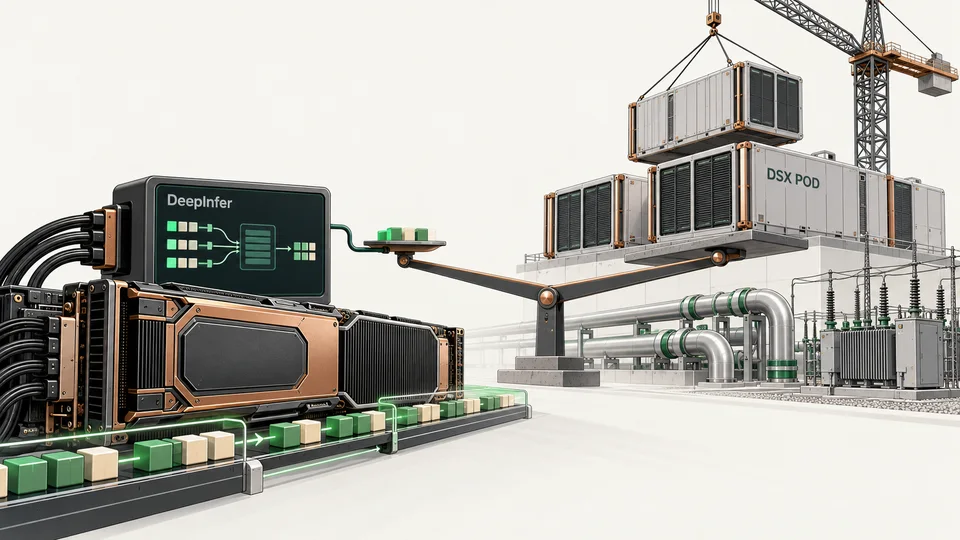
Low-Cost Intelligence vs. Expensive Ambitions: DeepInfer, DSX POD, and AI Investment Expansion

Issue 958 of “The Sequence Radar” examines inference software, modular AI factories, and enterprise AI investments side by side: cheaper per-inference does not necessarily mean lower overall industry spending. This article is compiled from the original publication and supplemented with technical scope and delivery terms based on DeepSeek and NVIDIA’s official materials.

推理软件效率与模块化AI基础设施投入的编辑示意,非实际产品照片
Timeline and related coverage

AI-driven market trends don’t undermine earnings—only valuations: Q3 reports confirm order visibility, and investors are bucking the trend by increasing positions.

From September 22 to October 22, 2026, the A-share AI sector continued to adjust, with the ChiNext Index falling 24.20% and the STAR 50 PE-TTM dropping nearly 60%, from 264 times to above 110 times. Meanwhile, corporate earnings collectively exceeded expectations during the same period—CATL reported a quarterly net profit of RMB 21.2 billion, Yuanjie Technology forecast a nearly sixfold increase, and Lianxun Instruments posted a net profit surge of over 18 times—while equity ETFs saw net inflows of nearly RMB 70 billion. The core driver of this correction was valuation compression, rather than deteriorating fundamentals.

Why it matters:The material explicitly states that the primary drivers of this round of decline are the rising discount rate (affecting the denominator) and weakening overseas regulatory expectations (eroding confidence on the numerator), which together have weighed on valuations—while industry conditions, order visibility, primary-market pricing, and policy‑exemption arrangements have all remained stable. Meanwhile, continued net ETF subscriptions and a spate of announcements from optical‑module companies indicating order backlogs extending through 2027 further confirm that the market is actively stepping in at low valuation levels, with a clear rationale and a fully substantiated chain of evidence.

Timeline and related coverage

AI Graveyard: A Continuously Updated List of Failed AI Projects and Startups

TechCrunch reported on October 25, 2026, reviewing several AI projects from 2023 to 2026 that failed to meet expectations, including startups and products such as Relay, Character.ai, Sora, and Humane AI Pin, as well as failed attempts or major adjustments by major companies like OpenAI, Apple, and Microsoft.

The AI graveyard: a running list of projects and startups that didn’t make it

Why it matters:This report provides an industry‑wide, phenomenon‑driven overview, with broad coverage and a clear timeline (including specific shutdown or delay dates), and cites S&P Global Market Intelligence data to substantiate the high attrition rate—42%—of enterprise‑level AI projects. It combines detailed case studies with structural analysis, making it a highly valuable reference.

Timeline and related coverage

Learning What to Ask for Tomorrow: Active Preference Acquisition for Long-Term Personalized Web Agents

arXiv:2610.31107v1 Announce Type: new Abstract: Web agents increasingly serve the same user across repeated online tasks such as booking travel, shopping, and scheduling, so their long-term usefulness depends on how well they know the user's preferences. Passive memory and personalization methods cannot obtain preferences the user never reveals, and clarification methods that value a question by its benefit to the current task overlook the benefit of reusing the answer in later tasks. We study Active Preference Acquisition (APA): which missing preferences are worth the cost of asking? We define the Prospective Personalization Value (PPV) of a missing preference as its expected cumulative utility gain over future tasks minus the effort and disclosure-risk cost of asking, and select question

Learning What to Ask for Tomorrow: Active Preference Acquisition for Long-Term Personalized Web Agents
Timeline and related coverage

OpenAI is pursuing $30 billion in new funding, aiming for a pre-money valuation of $1.25 trillion, while its IPO process has been put on hold.

According to TechCrunch, citing CNBC, OpenAI is in talks with Coatue and UAE investors for a new round of private financing worth approximately $30 billion, with a pre-money valuation of $1.25 trillion; if finalized, this would set a new record for the highest valuation among unlisted companies worldwide. Earlier, Bloomberg reported a target valuation of $1.4 trillion, though the terms have not yet been finalized. OpenAI filed confidential IPO documents in June 2026, following a previous funding round in March 2026 that valued the company at $852 billion.

Timeline and related coverage

Moshi launches a real-time AI trading recommendation engine, focusing on workflow integration and trustworthy modeling of high-noise data.

Moshi, a startup founded by Anekha Sokhal, a former JPMorgan energy derivatives trader, has launched a real-time AI recommendation engine for commodity and macro traders. The platform integrates multi-source structured and unstructured market data, emphasizing deep workflow coupling, private model building, and trustworthy signal extraction. Currently in its early stages, the company has no publicly disclosed funding, revenue, or user data.

Timeline and related coverage