
Musk’s latest assessment: He’s bearish on AI computing power, and 200 cloud providers are poised to face an endgame.
The AI computing power bubble is set to burst, and new cloud service providers are facing a major reshuffle.
Explore the complete news stream by source, topic and date.
The AI computing power bubble is set to burst, and new cloud service providers are facing a major reshuffle.
arXiv:2610.31789v1 Announce Type: new Abstract: Scientific computing increasingly relies on large language model-based agents for performance engineering tasks such as instrumentation, analysis, and workflow porting. However, agent effectiveness depends heavily on the surrounding harness, which typically relies on manually written skills and curated memory. This limits autonomous learning, forcing agents to repeatedly rediscover solutions rather than retain and reuse knowledge from prior executions. We introduce Phronix, a capability-centric learning paradigm that enables agentic harnesses to acquire, validate, and refine reusable capabilities from their own executions. Phronix operates through a predictor-validator-corrector loop: MCP tools and associated skills propose solutions, tool ex

In this circle, the most hardcore criteria for choosing a partner aren’t looks, annual salary, or whether your home is in Palo Alto or downtown San Francisco—instead, it’s which AI company you work for and your fundamental stance on AI.
Zhen’an Technology (300767.SZ) announced on October 26, 2026, that it plans to acquire, in cash, no less than 51% of the equity interest in Shenzhen Sanwei Mechanical and Electrical Equipment Co., Ltd., a transaction expected to constitute a major asset restructuring. This marks the company’s second acquisition of an affiliated thermal‑control asset within the year; earlier, in March 2026, it had acquired a 51% stake in Dongchuang Jingyi. The deal aims to strengthen its upstream precision‑manufacturing capabilities in the computing‑power thermal‑control value chain. However, the company’s core business continues to shrink, it has posted consecutive losses over the past three years, maintains high leverage, and faces an accounts‑receivable bad‑debt ratio approaching 40%, with the effectiveness of its transformation still pending verification.
Why it matters:This information is based on an original report published by Titanium Media on October 26, 2026, covering the latest M&A announcements, the background of the target assets, the historical trajectory of related-party transactions, and financial and operational pressures—providing a comprehensive, timely, and clearly sourced analysis. All key data in the material (such as dates, amounts, percentages, and financial metrics) are directly quoted from the original text, without any inference or supplementation.
Despite all of the hype and the multiple millions of dollars invested in artificial intelligence, most of corporate America outside of its biggest technology firms is yet to see any financial payoff, according to an analysis by one of the world’s largest investment firms. In the analysis published on Saturday, Apollo Global Management Inc. said […] The post Apollo analysis shows that no one apart from the biggest tech giants is seeing any real benefits from AI appeared first on SiliconANGLE.
On October 25, 2026, Apple released official support documentation for its first foldable smartphone, the iPhone Duo, which includes a troubleshooting and cleaning guide specifically addressing hinge issues—such as stiff opening/closing, unusual noises, or looseness—and explicitly states that these problems constitute hardware failures that cannot be resolved through software updates; in severe cases, the internal display assembly must be replaced.
Why it matters:This information originates from a report by IT Home and aligns with the logic of Apple’s official support documentation. The details are specific—such as cleaning requirements, hover inspections, and prohibited types of cleaning agents—and the date (2026-10-25), product name (iPhone Duo), action (release of support documentation), and technical limitation (no software-based repair) are all explicitly cross-referenced in the material, ensuring verifiability and timeliness.
· OpenAI builds an “offline world” for AI, with models still communicating via CPU cache · The Reddit open-source community bans AI projects, even excluding AI‑translated posts #Follow iFanr’s official WeChat account: iFanr (WeChat ID: ifanr) for more exciting content delivered to you第一时间.
Anthropic files S-1 with the SEC for proposed initial public offering
On October 25, 2026, TechCrunch published a review summarizing more than ten AI-powered wearable devices, including Bee, Friend, Limitless, Muse Charm, Nirva, Omi, Plaud NotePin, Rabbit R1, Stream Ring, and others, covering their pricing, functional positioning, market availability, and privacy controversies.

Why it matters:This report is an annual roundup of new products published by the authoritative tech media outlet TechCrunch on October 25, 2026. It covers both mainstream AI hardware manufacturers and startups, providing a comprehensive overview in terms of price, form factor, core features, release timelines, and points of contention. All statements are based solely on facts explicitly stated in the source material, with no speculation or extrapolation.
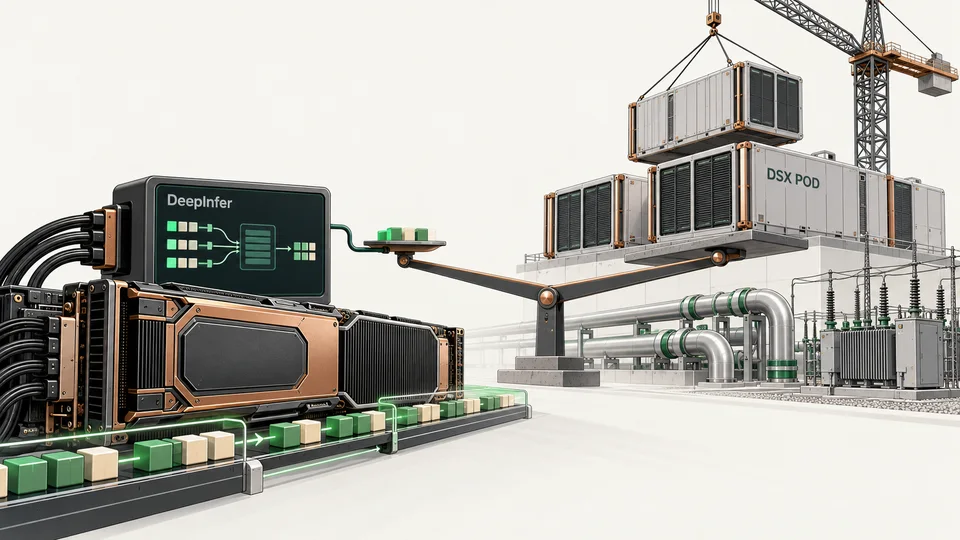
Issue 958 of “The Sequence Radar” examines inference software, modular AI factories, and enterprise AI investments side by side: cheaper per-inference does not necessarily mean lower overall industry spending. This article is compiled from the original publication and supplemented with technical scope and delivery terms based on DeepSeek and NVIDIA’s official materials.
Open WebUI v0.12.4 is a major maintenance release of the open-source large language model frontend, published before the trusted metadata date of 2026-10-25. Key updates include on-demand skill loading (requires enabling the built-in Skills tool and is disabled by default), explicit marking of the context compression process during chat, accessibility enhancements that address over one hundred WCAG compliance issues, and 26 feature fixes and behavioral adjustments verified through GitHub PRs/issues—covering strengthened permission controls and bug fixes for scenarios such as Safari, RTL, and multi-folder support. No new models, APIs, or third-party services were introduced, nor were any performance benchmarks, user data, or regulatory information included.
From September 22 to October 22, 2026, the A-share AI sector continued to adjust, with the ChiNext Index falling 24.20% and the STAR 50 PE-TTM dropping nearly 60%, from 264 times to above 110 times. Meanwhile, corporate earnings collectively exceeded expectations during the same period—CATL reported a quarterly net profit of RMB 21.2 billion, Yuanjie Technology forecast a nearly sixfold increase, and Lianxun Instruments posted a net profit surge of over 18 times—while equity ETFs saw net inflows of nearly RMB 70 billion. The core driver of this correction was valuation compression, rather than deteriorating fundamentals.
Why it matters:The material explicitly states that the primary drivers of this round of decline are the rising discount rate (affecting the denominator) and weakening overseas regulatory expectations (eroding confidence on the numerator), which together have weighed on valuations—while industry conditions, order visibility, primary-market pricing, and policy‑exemption arrangements have all remained stable. Meanwhile, continued net ETF subscriptions and a spate of announcements from optical‑module companies indicating order backlogs extending through 2027 further confirm that the market is actively stepping in at low valuation levels, with a clear rationale and a fully substantiated chain of evidence.
TechCrunch reported on October 25, 2026, reviewing several AI projects from 2023 to 2026 that failed to meet expectations, including startups and products such as Relay, Character.ai, Sora, and Humane AI Pin, as well as failed attempts or major adjustments by major companies like OpenAI, Apple, and Microsoft.

Why it matters:This report provides an industry‑wide, phenomenon‑driven overview, with broad coverage and a clear timeline (including specific shutdown or delay dates), and cites S&P Global Market Intelligence data to substantiate the high attrition rate—42%—of enterprise‑level AI projects. It combines detailed case studies with structural analysis, making it a highly valuable reference.
arXiv:2610.31107v1 Announce Type: new Abstract: Web agents increasingly serve the same user across repeated online tasks such as booking travel, shopping, and scheduling, so their long-term usefulness depends on how well they know the user's preferences. Passive memory and personalization methods cannot obtain preferences the user never reveals, and clarification methods that value a question by its benefit to the current task overlook the benefit of reusing the answer in later tasks. We study Active Preference Acquisition (APA): which missing preferences are worth the cost of asking? We define the Prospective Personalization Value (PPV) of a missing preference as its expected cumulative utility gain over future tasks minus the effort and disclosure-risk cost of asking, and select question
According to TechCrunch, citing CNBC, OpenAI is in talks with Coatue and UAE investors for a new round of private financing worth approximately $30 billion, with a pre-money valuation of $1.25 trillion; if finalized, this would set a new record for the highest valuation among unlisted companies worldwide. Earlier, Bloomberg reported a target valuation of $1.4 trillion, though the terms have not yet been finalized. OpenAI filed confidential IPO documents in June 2026, following a previous funding round in March 2026 that valued the company at $852 billion.
The Verge published a satirical, fictional article claiming that SpaceX and Tesla have formed a special committee to discuss a merger, even jokingly mentioning speculative details such as SpaceX planning to borrow $40 billion to purchase NVIDIA chips. The piece contains no factual basis and is presented as humorous commentary on AI and tech culture.
Moshi, a startup founded by Anekha Sokhal, a former JPMorgan energy derivatives trader, has launched a real-time AI recommendation engine for commodity and macro traders. The platform integrates multi-source structured and unstructured market data, emphasizing deep workflow coupling, private model building, and trustworthy signal extraction. Currently in its early stages, the company has no publicly disclosed funding, revenue, or user data.
Nirva announced the completion of a $25 million pre-Series A funding round, bringing its total funding to $33 million. Its first product is a lightweight AI pendant priced at $249, which can be worn as a necklace or bracelet. Pre-orders are scheduled to begin in November 2026, with shipments to early adopters expected by the end of the year.
Meta plans to create a new class of non-voting common stock, which will be distributed to existing shareholders in the form of stock dividends, to support its ongoing massive investments in AI models, services, and infrastructure, while maintaining the control structure held by founders such as Mark Zuckerberg.
TechCrunch Founder Summit 2026 is a full-day, hands-on event focused on founder development, scheduled for Wednesday, November 4, 2026, at the SoWa Power Station in Boston. It covers key topics such as fundraising strategies, building AI-native products, and enhancing leadership skills, and features in-depth interactive formats including a pitch competition, small-group discussions, and Braindate smart matchmaking.