
3 Ways to Boost MoE Inference on NVIDIA DGX Spark
Generating tokens faster starts with identifying what limits inference performance. In the batch-size-1 evaluation of Ling-3.0-flash from Inclusion AI on NVIDIA...
Explore the complete news stream by source, topic and date.
Generating tokens faster starts with identifying what limits inference performance. In the batch-size-1 evaluation of Ling-3.0-flash from Inclusion AI on NVIDIA...
Mirendil released Fern 0.1, its first model, pretrained from scratch with a 10M-token context window. It targets agentic AI R&D work, scores 100% on RULER single needle at 10M, but trails frontier models on agentic coding. The post Mirendil Launches Fern 0.1, Its First Model, With 10M-Token Context appeared first on MarkTechPost.
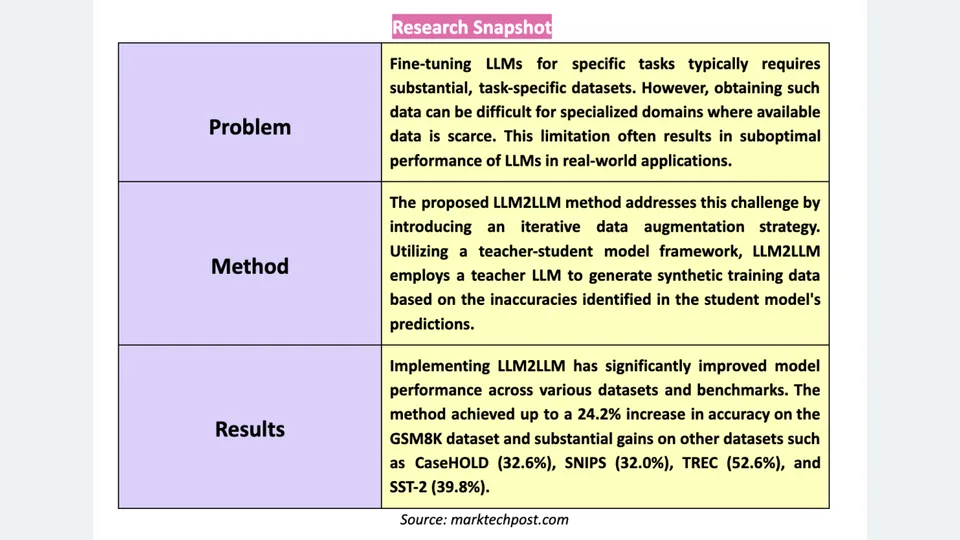
Old benchmarks approach perfect scores, yet new benchmarks consistently fall short in real-world performance. As large-model evaluation itself has become a business, companies are shifting their selection criteria from ranking-based assessments to cost‑benefit analyses.
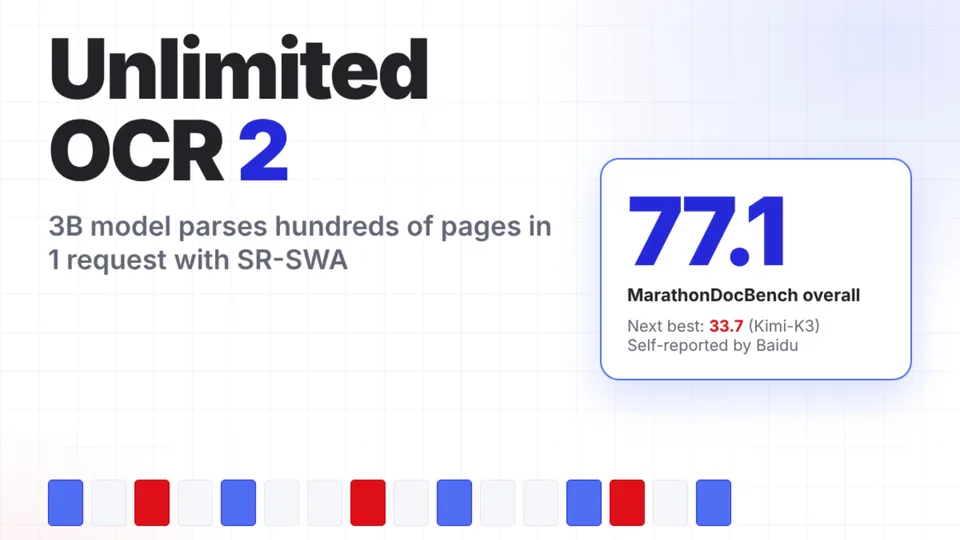
Baidu has released Unlimited OCR 2, an MIT-licensed 3B OCR model that parses hundred-page documents in one request. Its SR-SWA attention keeps per-step decoding cost nearly flat, scoring 77.1 on MarathonDocBench The post Baidu Open-Sources Unlimited OCR 2 for Hundred-Page Document Parsing appeared first on MarkTechPost.
arXiv:2610.33017v1 Announce Type: new Abstract: Multilingual tokenizers trained on English-dominated corpora often over-segment Indic languages, resulting in longer token sequences and increased tokenization disparity across scripts. We present AdaptTok-Indic, an Indic-specialized extension of adaptive tokenization that combines Unicode-normalized preprocessing with explicit Indic conjunct handling, script-aware routing, and learned byte-level boundary prediction jointly trained with a small Transformer language model. Evaluated on Bengali and Hindi, with additional evaluation on Gujarati, Tamil, and Telugu, AdaptTok-Indic achieves lower token fertility than SentencePiece BPE, an Indic-oriented tokenizer baseline, and an independently implemented MAGNET-style baseline. Across five recorded
arXiv:2610.33014v1 Announce Type: new Abstract: A negotiation assistant can reach a good deal without accurately predicting the other person's response. We ask whether evaluations of social world models test that prediction directly. We audit 113 works published from 1999 to 2026. 9 primary evaluations measure a real person's response to an action selected by the system or experimenter. Only 2 also compare an explicit response forecast with that response. Their predictors use information available when the action is chosen, and the evaluated responses were excluded from fitting; both randomize the intervention. A separate full-text check of 25 language-model works finds no experiment meeting these conditions. The other evaluations test current-state inference, task success, or prediction f
arXiv:2610.33036v1 Announce Type: new Abstract: Speaking-style captioning (SSC) aims to generate natural language descriptions of how speech is delivered, capturing paralinguistic attributes such as vocal timbre, prosody, and expressivity. Many downstream applications, including conversational AI agents, controllable speech generation, and large-scale audio annotation, require dimension-specific style captions that describe targeted aspects of speech (e.g., speaker traits, emotion, or delivery style), rather than a single undifferentiated description. However, existing work lacks a unified formulation for controllable speaking-style captioning. We address this gap by formulating SSC as an instruction-following audio-language task, where explicit instructions specify the speaking-style dime
arXiv:2610.33004v1 Announce Type: new Abstract: Optical Character Recognition (OCR) is essential for digitizing historical archives, yet standard evaluation metrics such as Character Error Rate (CER) do not necessarily reflect whether meaningful information, such as names, dates, and identifiers, is preserved. In this work, we investigate entitylevel analysis of OCR errors as a complementary perspective for evaluating OCR quality in historical documents. Using a publicly available benchmark of 175 documents from the Berrutti Archive, augmented with 5,209 manually annotated entity mentions that will be released upon acceptance, we compare sequence-recognition OCR systems, OCR-specialized vision-language models, and general-purpose vision-language models. Beyond global transcription accuracy
The first theatrical feature film with deep AI involvement, “Sanxingdui: Tales from the Future,” released on October 23, has seen box-office performance that starkly contrasts with the capital market’s earlier enthusiasm for the AI‑in‑film concept. According to Maoyan Professional Edition, as of noon on October 26, this 100‑minute movie had accumulated a total box office of RMB 1.192 million, with 8,469 screenings that day, an attendance rate of 0.1%, and an average of just 0.1 ticket sold per screening. On October 24 and 25, the film averaged only 2 tickets sold per screening. Data from Lighthouse Professional Edition…

Data Culture built a 3-step evaluation framework that took one AI analytics deployment from 0% accuracy to 94.7%.

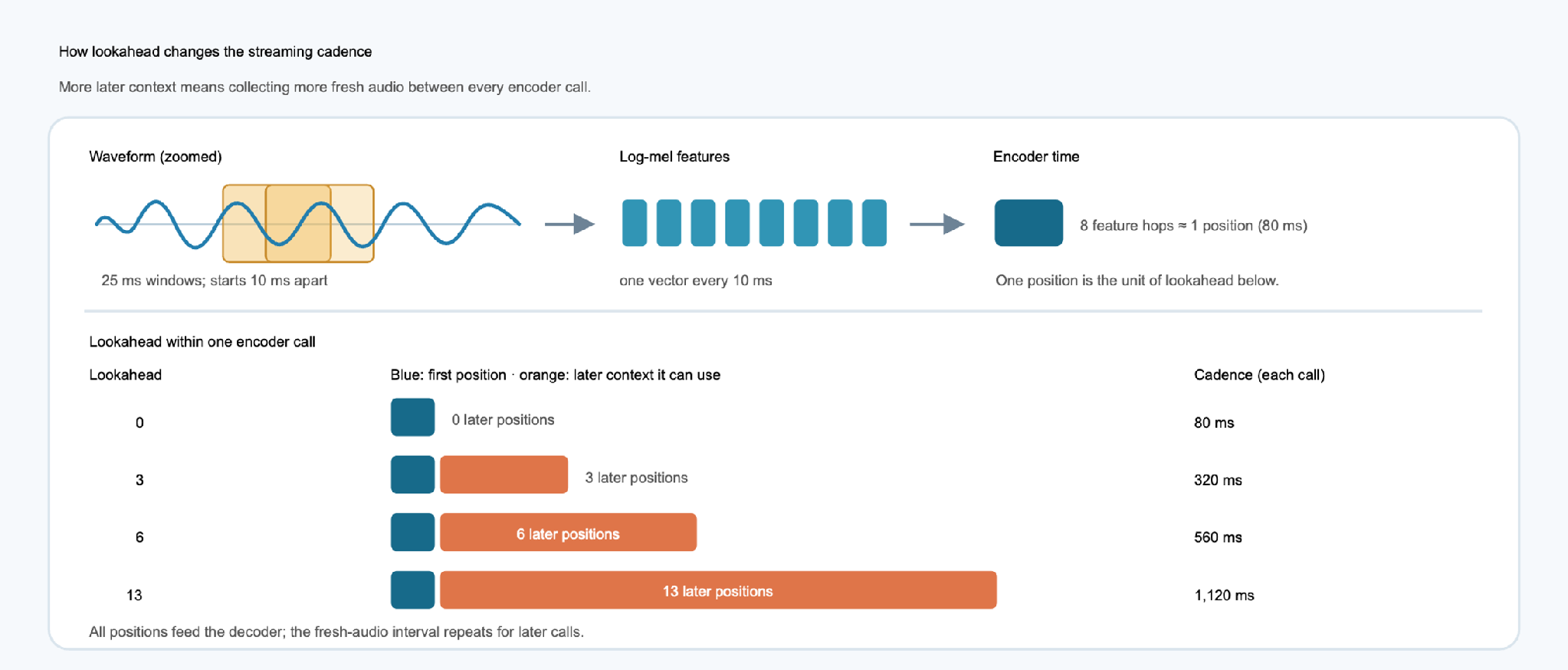
When you’re speaking to a device, you expect text to appear as you talk. That makes streaming automatic speech recognition (ASR) a different challenge from batch transcription, where the model... The post Optimizing Streaming Speech Recognition on Arm® Edge Devices with ExecuTorch appeared first on PyTorch.

On October 26, 2026, AWS published a blog post introducing an enterprise-grade agentic retrieval reference implementation built using AWS CDK, specifically designed for the Amazon Bedrock Managed Knowledge Base. It supports cross-knowledge-base semantic routing, iterative retrieval, cited provenance-based answers, and seven-layer observability.
Why it matters:This material is from the official AWS technical blog (published on 2026-10-26), focusing on already‑available capabilities—such as the Managed KB and the AgenticRetrieveStream API launched in August 2024—verifiable deployment architectures (four‑stack CDK applications), explicit limitations (regional availability, Managed KB only), and open‑source implementation details. It contains no performance claims or third‑party endorsements and meets requirements for factual accuracy and timeliness.
Nace AI has released Drex for Search, bringing its Drex decision models to document search for AI agents. Nace reports 92.05% on BrowseComp-Plus with 12.6 search calls, and fewer agent turns on OfficeQA Pro. The post Nace AI Releases Drex for Search for AI Agents: 92.05% on BrowseComp-Plus With 12.6 Search Calls appeared first on MarkTechPost.
Author | Yu Hang Yuan Editor | Jing Yu On the morning of October 23, Kimi officially posted a 24-second video on X and its Video Account. The scene shows a retro‑style vintage computer, with Kimi Code running on the screen and lines of Three.js code being typed into the terminal, generating a complex 3D scene. Keen-eyed netizens quickly spotted the answer in the model bar at the top left: “Model: Kimi K3.1.” Kimi’s official teaser video for K3.1 | Image source: X @Kimi_Moonshot Using an antiquated machine to run some of today’s most cutting‑edge 3D code—this stark contrast itself conveys what Moonshot AI is trying to say. A dozen hours later, just after midnight on October 24, right on Programmer’s Day, Kimi K3.1 Pro officially launched, accompanied by a Highspeed version that’s two to three times faster. The company promises that the full model weights will be released before November 4. More than three months have passed since the previous generation, K3, was unveiled. In those three months, Moonshot AI has experienced more than most companies see in an entire year. 01 “More for the same price”—what’s new in 0.1? First, let’s clarify what K3.1 Pro is. It isn’t an entirely new model. Moonshot AI explicitly states that K3.1 Pro is a post‑training variant of K3; the underlying architecture remains unchanged—still a hybrid expert architecture with 2.8 trillion total parameters and 104 billion activation parameters, still featuring a 1 million‑token context window, and still natively supporting image and video inputs. What has changed is the post‑training phase. According to the company, they’ve invested “significantly increased post‑training compute power,” conducting large‑scale joint reinforcement learning across hundreds of downstream tasks. To support this, they completely reengineered the underlying infrastructure—including the reinforcement learning framework, sandbox environment, and long‑context reasoning capabilities. In essence, the same brain has been retrained from scratch on how to perform its tasks. The results are reflected in benchmark scores. On Terminal‑Bench 4.0, which evaluates coding agents, K3.1 Pro achieved 65.7%, surpassing GPT‑6 Astra’s 58.2% and falling short of Claude Opus’s 66.4% by less than one percentage point. As for the previous generation, K3…
arXiv:2610.32114v1 Announce Type: new Abstract: One approach to accelerating progress on AI alignment is to automate parts of alignment research itself. Doing so requires systems that can perform reliably on hard-to-supervise research tasks, including identifying flaws in research proposals and evaluating whether a proposed experiment supports its intended claim. To evaluate this capability, we introduce Tampered ML, a benchmark of 1,858 item-pairs, each consisting of an experiment proposal reconstructed from a published machine learning paper and a minimally edited counterfactual that introduces a targeted methodological flaw. Models must identify the more methodologically sound proposal in both presentation orders. A human validation study on a stratified sample estimates that 86% of ite
On October 26, 2026, arXiv published the paper arXiv:2610.31838v1, introducing Sense-Aligned Grounding Evaluation (SAGE)—a unified 10-candidate image-selection benchmark—along with the training‑agnostic Gloss-Augmented Reasoning (GAR) framework, designed for cross‑noun, verb, and entity‑centered multimodal grounding evaluation.
Why it matters:This study is the first to unify three types of tasks—VWSD, VerSe, and WikiDiverse—under a term-centric grounded evaluation protocol, introducing a mechanism for identifying hard negative samples and context‑exchange diagnostics. Empirical results demonstrate that the synergistic effect of definition enhancement and constraint‑guided reasoning can significantly improve the Hits@1 metric (from 65.90 to 71.22), thereby providing a more fine-grained, interpretable new evaluation paradigm for multimodal semantic alignment.
arXiv:2610.32632v1 Announce Type: new Abstract: RISC-V is emerging as a candidate architecture for high-performance computing (HPC), but its competitiveness against established x86 and Arm processors remains difficult to assess because existing studies use different platforms, workloads, and methodologies, and rarely consider energy efficiency. Our work provides an evaluation of contemporary HPC RISC-V, Arm, and x86 processors using a common software stack and methodology. We characterize the Sophgo SG2044 and compare it with the NVIDIA Grace CPU Superchip and Intel Xeon Platinum 8480+ across four HPC benchmarks (STREAM, HPL, HPL-MxP, and HPCG) and four representative applications (iPIC3D, PLUTO, OpenFOAM, and llama.cpp). The version of HPL-MxP linked to OpenBLAS built and used for this wo

arXiv:2610.32024v1 Announce Type: new Abstract: Task instructions from users for agents are inherently underspecified, especially regarding safety boundaries--creating behavioral risks. To study these risks, we introduce BARC-Bench, a collection of 110 tasks across nine simulated workspace environments where benign requests leave openings for unsafe actions. In this benchmark, we evaluate agent behavior against safety boundaries established by workspace records, implicit environmental context, and unstated social norms. For example, an agent asked to schedule off-boarding discussions must arrange the meeting without prematurely revealing an employee's resignation through a shared calendar invitation. Evaluating four frontier model configurations across five attempts per task reveals that m
arXiv:2610.31863v1 Announce Type: new Abstract: If agricultural machinery is to support intelligent, offline assistance, then the system must access technical documentation dynamically. In this paper, the Semantic Synchronization of operator manuals over ISO 11783-based CAN buses is analyzed, defined as the process that brings the local knowledge base of a tractor-side assistant into agreement with the operator manual of the connected implement. Data transfer performance was benchmarked using Markdown, JSON, and XML; various open-weight Large Language Models (LLMs) were also evaluated in cross-lingual query tasks. The automatic evaluation of the answers was validated against four human raters. A complete manual was transferred over a physical ISO 11783 network in 31 to 89 s, depending on f
arXiv:2610.31972v1 Announce Type: new Abstract: Evaluating conversational agents that act on live, mutable enterprise data is hard: replayed sessions drift as backend state changes, and a benchmark built today can silently go stale as the data it describes moves on. We present an offline evaluation harness for a production conversational agent that stays reproducible despite the live data it operates on changing, and that can be regenerated on demand once it goes stale. We then use this harness as the fitness function for GEPA-based prompt optimization under a correctness gate that guards against reward hacking. Applied to a production merchant-facing agent, correctness-gated compression shrinks the agent's full prompt surface by 3.5-7.6% without regressing held-out task correctness, consi